Sugar-Free Chocolate The Ultimate Guide

Sugar-Free Chocolate: The Ultimate Guide for 2026

Ultimate Guide - 2026 Edition

Sugar-Free Chocolate:
Complete UK Guide

Everything you need to know - sweeteners, science, top brands, and expert buying tips for diabetics, keto dieters and health-conscious chocolate lovers.

· · 15 min read

6.2%
Sugar-free chocolate market CAGR 2024-2030
21%
Lower T2 diabetes risk with dark chocolate (BMJ 2024)
$5.5bn
UK chocolate market value 2024
40%
UK consumers actively seek healthier chocolate options

You love chocolate. But sugar? Not so much - or at least, not for your health. Whether you are managing diabetes, following a keto diet, watching your weight, or simply trying to cut back on sugar for your family, the great news is this: sugar-free chocolate in 2026 is genuinely delicious.

Gone are the chalky, artificial-tasting bars of a decade ago. Today's sugar-free options - led by innovative UK brands like Diablo Sugar Free - deliver the same velvety richness, satisfying snap, and complex cocoa flavour you expect from premium chocolate. The only thing missing is the sugar spike.

In this guide, we cover everything: what sugar-free chocolate actually is, which sweeteners are safest, the latest clinical evidence on blood sugar impact, the best brands in the UK right now, and exactly how to buy with confidence.

What Is Sugar-Free Chocolate?

Quick Answer

Definition

Sugar-free chocolate is chocolate made without added sugar, using natural or artificial sweeteners - such as erythritol, stevia, maltitol, or monk fruit - in its place. These sweeteners provide sweetness with little or no impact on blood sugar levels, making sugar-free chocolate suitable for people with diabetes, those on low-carb or keto diets, and health-conscious individuals.

Sugar Free vs No Added Sugar vs Reduced Sugar - UK Legal Definitions

These three terms are regulated under UK food labelling law. They are not the same thing, and understanding the difference could save you from accidentally consuming more sugar than you intended.

Term UK Legal Definition What It Means for You Blood Sugar
Sugar Free Max 0.5g sugars per 100g Virtually no sugar - suitable for strict low-sugar diets Minimal
No Added Sugar No sugars added during manufacturing May contain naturally occurring sugars from milk or fruit Low-Moderate
Reduced Sugar At least 30% less than comparable product Lower than standard, but may still contain significant sugar Moderate
Low Sugar Max 5g sugars per 100g Moderate reduction - always check the label carefully Moderate
Sugar Free
DefinitionMax 0.5g sugars per 100g
Blood SugarMinimal
No Added Sugar
DefinitionNo sugars added during manufacturing
Blood SugarLow-Moderate
Reduced Sugar
DefinitionAt least 30% less than comparable product
Blood SugarModerate
Low Sugar
DefinitionMax 5g sugars per 100g
Blood SugarModerate
💡 Pro Tip

Always verify by checking the "of which sugars" line on the Nutrition Facts panel - not just the front-of-pack claim. For truly sugar-free chocolate, this figure should be below 0.5g per 100g.

How Sugar-Free Chocolate Is Made

The manufacturing process is nearly identical to regular chocolate. Cocoa beans are fermented, roasted, and ground into cocoa mass. Cocoa butter is added for smoothness, and instead of sugar, one or more alternative sweeteners are blended in during the conching process. The result is then tempered - carefully heated and cooled - to achieve the distinctive glossy finish and satisfying snap you expect from quality chocolate.

The Sweetener Breakdown: What's Actually Inside Your Bar

Not all sugar substitutes are created equal. Here is a plain-English breakdown of the sweeteners you will encounter in sugar-free chocolate.

Erythritol

A sugar alcohol found naturally in fruits and fermented foods. It provides around 70% of sugar's sweetness with almost zero calories and a glycemic index of effectively zero. It is absorbed in the small intestine and excreted unchanged - meaning it does not raise blood glucose. The gold standard choice for keto and diabetic-friendly products.

Stevia (Steviol Glycosides)

Extracted from the leaves of Stevia rebaudiana, stevia is 200-300 times sweeter than sugar with zero calories and a zero glycemic index. Research has associated stevioside with a reduction in postprandial blood glucose in people with type 2 diabetes. On UK labels it appears as E960 (steviol glycosides).

Monk Fruit (Luo Han Guo)

Extracted from a small melon native to Southeast Asia. Monk fruit is 150-250 times sweeter than sugar, contains zero calories, and has a zero glycemic index. Unlike stevia, it lacks a bitter aftertaste - making it popular in premium sugar-free lines for its clean, neutral sweetness.

⚠️ Caution: Maltitol

Maltitol (E965) is the most controversial sweetener in sugar-free chocolate. It has a glycemic index of approximately 35 - significantly lower than sugar (65), but not zero. For strict diabetics or keto dieters, this glycaemic impact matters. It is also the sugar alcohol most likely to cause bloating, gas, or laxative effects in larger quantities. For strict blood sugar control, choose stevia or erythritol-sweetened alternatives.

Xylitol

A sugar alcohol found in birch trees and many fruits. Glycemic index of approximately 7, providing around 2.4 kcal/g. Xylitol has clinically proven dental health benefits. Important: Xylitol is extremely toxic to dogs. Keep all xylitol-containing products away from pets.

Complete Sweetener Comparison Table

Sweetener vs Sugar Calories GI Tolerance Best For
Erythritol 70% ~0.2 kcal/g 0 Excellent Keto, diabetics
Stevia 200-300x 0 kcal/g 0 Good Diabetics, calorie-free
Monk Fruit 150-250x 0 kcal/g 0 Good Premium, clean taste
Maltitol 90% 2.1 kcal/g 35 Moderate General consumers
Xylitol 100% 2.4 kcal/g 7 Moderate Dental health
Isomalt 50% 2.0 kcal/g 9 Moderate Confectionery
Erythritol
Sweetness70% of sugar
GI0 - No blood sugar impact
Best ForKeto, diabetics
Stevia
Sweetness200-300x sweeter than sugar
GI0 - No blood sugar impact
Best ForDiabetics, calorie-free preference
Monk Fruit
Sweetness150-250x sweeter than sugar
GI0 - No blood sugar impact
Best ForPremium products, no aftertaste
Maltitol
Sweetness90% of sugar
GI35 - Use with caution if diabetic
Best ForGeneral reduced-sugar consumers
Xylitol
SweetnessSame as sugar (100%)
GI7 - Very low
Best ForDental health, moderate sugar control
Isomalt
Sweetness50% of sugar
GI9 - Very low
Best ForConfectionery, cooking

Health Benefits of Sugar-Free Chocolate - Science-Backed

Sugar-free chocolate is not just a clever marketing concept - there is genuine science behind its benefits.

Blood Sugar and Glycemic Index

Dark chocolate already has a naturally low glycemic index of approximately 23-25. When sugar is replaced with erythritol, stevia, or monk fruit, the glycemic impact drops to near zero.

🔬 Key Study - BMJ 2024

A landmark study of 192,000+ participants followed for over 30 years found that those consuming at least five ounces of dark chocolate per week had a 21% lower risk of developing type 2 diabetes compared to those who rarely ate chocolate. No equivalent protective effect was found for milk chocolate. (Liu B et al., The BMJ, 2024)

Calorie Comparison

Chocolate Type (30g serving) Calories Sugar Net Carbs
Standard Milk Chocolate ~160 kcal ~17g ~18g
Standard Dark Chocolate (70%) ~155 kcal ~8g ~12g
Sugar-Free Milk (maltitol) ~130 kcal 0g added ~14g
Sugar-Free Dark (stevia/erythritol) ~115 kcal 0g added ~4g net
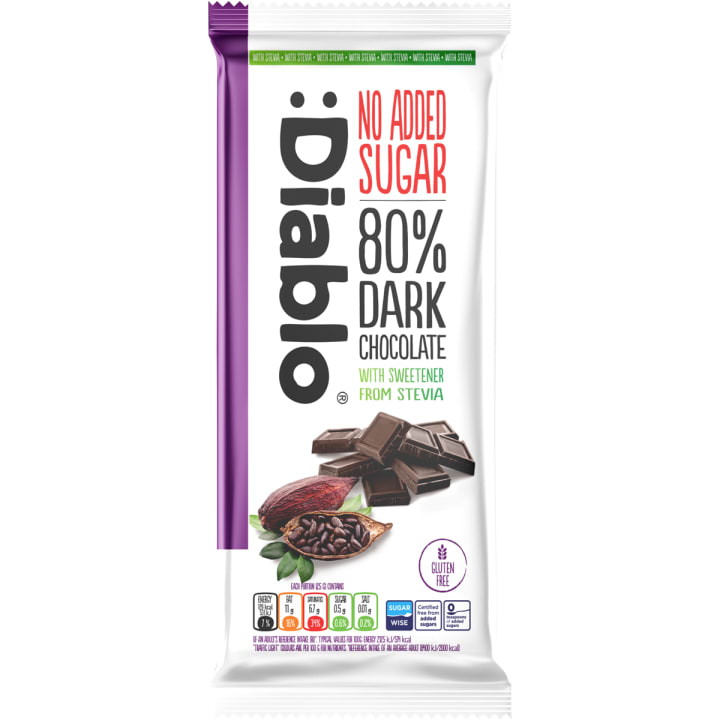
Diablo 80% Dark with Stevia ~120 kcal 0g added ~4g net
Standard Milk Chocolate
Calories~160 kcal per 30g
Sugar~17g
Net Carbs~18g
Sugar-Free Dark (stevia/erythritol)
Calories~115 kcal per 30g
Sugar0g added
Net Carbs~4g net carbs
Diablo 80% Dark with Stevia
Calories~120 kcal per 30g
Sugar0g added
Net Carbs~4g net carbs

Other Proven Benefits

  • Dental health: Sugar-free chocolate removes the fermentable substrate that cavity-causing bacteria feed on. Sweeteners like erythritol and xylitol actively inhibit bacterial adhesion to tooth enamel.
  • Antioxidants and flavanols: Cocoa is one of the richest dietary sources of polyphenols and flavanols. Higher cocoa percentage means higher flavanol content.
  • Cardiovascular support: Flavanols improve endothelial function, support healthy blood pressure, and reduce oxidative stress.

Best Sugar-Free Chocolate Brands in the UK (2026)

Brand Origin Sweetener UK Availability Keto Best For
Diablo Sugar Free UK/EU Stevia, Maltitol, Erythritol Excellent Stevia lines UK consumers, diabetics, gifting
Lily's Sweets USA Stevia + Erythritol Online only Yes Keto baking, variety
ChocZero USA Monk Fruit Online only Yes Premium taste
Montezuma's UK Coconut sugar / None Supermarkets Abs. Black Artisan, ethical
Rhythm108 UK Coconut blossom Health stores No Organic, vegan
Lindt 90%+ Swiss Very low sugar All supermarkets Caution Accessibility
Diablo Sugar Free - UK/EU
SweetenerStevia, Maltitol, Erythritol
AvailabilityExcellent
Best ForUK consumers, diabetics, gifting
Lily's Sweets - USA
SweetenerStevia + Erythritol
AvailabilityOnline only
Best ForKeto baking, variety
ChocZero - USA
SweetenerMonk Fruit
AvailabilityOnline only
Best ForPremium taste
Montezuma's - UK
SweetenerCoconut sugar / None
AvailabilitySupermarkets
Best ForArtisan, ethical sourcing

Diablo Sugar Free: Full UK Range Review

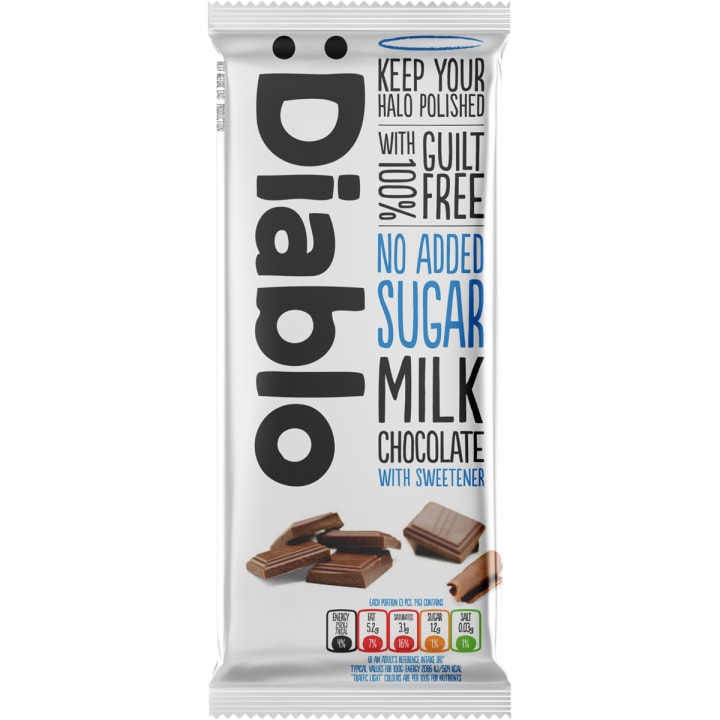
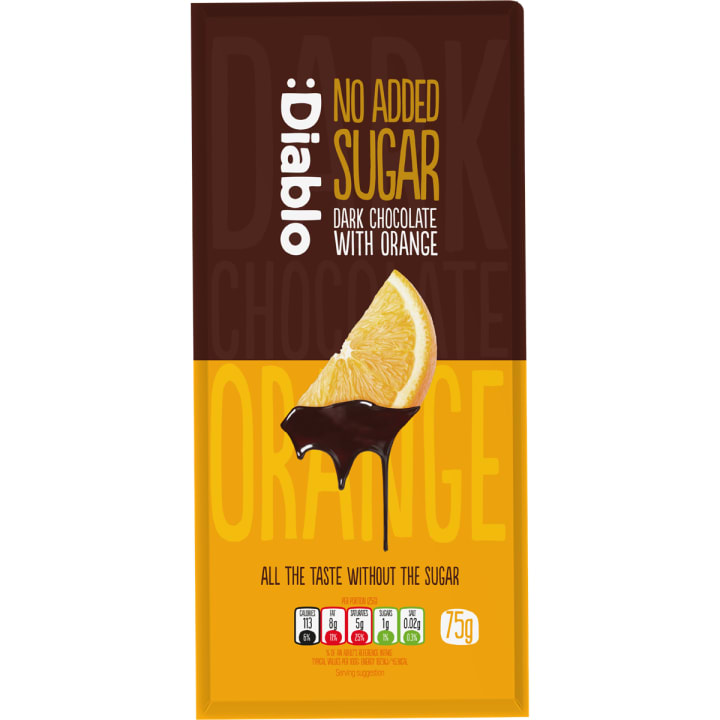
Diablo Sugar Free is the UK's leading dedicated sugar-free confectionery brand. With the tagline "All the Taste Without the Sugar," Diablo has built a comprehensive range that covers every chocolate occasion.

How to Read Sugar-Free Chocolate Labels in the UK

  1. Check the front-of-pack claim. Look for Sugar Free, No Added Sugar, or Reduced Sugar. Remember: these have different legal meanings.
  2. Read the Ingredients List. Ingredients are listed in descending order by weight. If a sweetener appears before cocoa mass, it is the dominant ingredient.
  3. Check the Nutrition Table. Look at "of which sugars" per 100g. For a truly sugar-free product, this should be under 0.5g per 100g.
  4. For keto - calculate net carbs. Net Carbs = Total Carbohydrates minus Fibre minus Erythritol.
  5. Identify sweeteners by their E-numbers. E420 = Sorbitol, E965 = Maltitol, E967 = Xylitol, E968 = Erythritol, E960 = Stevia.
  6. Look for the laxative warning. UK regulations require "excessive consumption may produce laxative effects" on products containing polyols.

Sugar-Free Dark Chocolate: A Special Focus

Dark chocolate deserves its own section - because when it comes to health benefits, it stands apart from milk and white varieties. When formulated as sugar-free with stevia or erythritol, dark chocolate becomes arguably the most nutritionally beneficial form of chocolate available.

📊 Glycemic Index Comparison

Standard milk chocolate GI: 45-60. Dark chocolate (70%+) GI: 23. Sugar-free dark chocolate with stevia/erythritol GI: near zero. For people with diabetes, this is a transformative difference in blood sugar management.

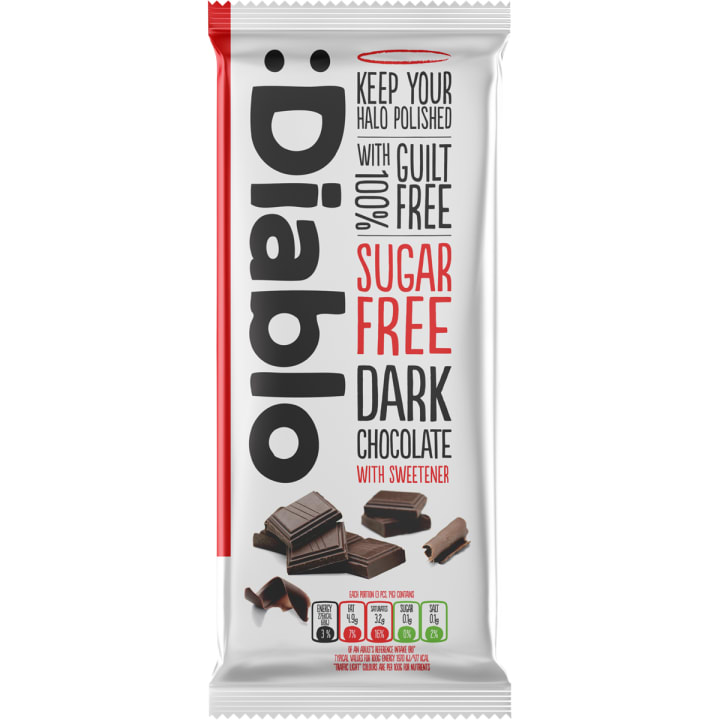
Shop Diablo Dark Chocolate

Sugar-Free Chocolate for Diabetics: Practical Guidance

What to Choose

  • Best choice: Dark chocolate (70%+ cocoa) sweetened with erythritol or stevia - lowest glycemic impact
  • Use with care: Maltitol-sweetened products (GI approx 35) - limit if strict about blood glucose
  • Avoid: Old-style "diabetic chocolate" sweetened with fructose or sorbitol

How Much Is Safe?

  • Start with 1-2 squares (around 10-15g) and monitor your blood glucose response
  • Pair chocolate with nuts, seeds, or protein to slow carbohydrate absorption
  • Always consult your diabetes care team before making dietary changes

A Note on "Diabetic Chocolate"

Historically, products labelled "diabetic chocolate" were sold in UK pharmacies, typically sweetened with fructose or sorbitol. UK Food Standards Agency guidance now advises against this labelling as potentially misleading. Modern sugar-free chocolate using erythritol or stevia is a far superior choice.

Best Picks for Diabetics

Sugar-Free Chocolate for Keto and Low-Carb Diets

  • Best keto choice: Erythritol-sweetened dark chocolate with net carbs as low as 2-5g per serving
  • Check for hidden carbs: Milk chocolate, even sugar-free, contains milk solids which add carbohydrates
  • Erythritol rule: Erythritol is not metabolised and is generally excluded from net carb calculations
  • Monk fruit: Zero net carbs - ideal for strict keto

A 30g serving of Diablo's Stevia Dark Chocolate 80% typically contains approximately 4g net carbs - well within daily keto allowances.

Top Keto-Friendly Picks

Sugar-Free Chocolate Gifts UK - The Complete Buying Guide

Best Gift Options from Diablo

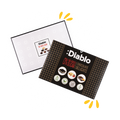
  • Luxury No Added Sugar Chocolate Box (14 pieces, 142g) - Six artisan flavours including noir, hazelnut, forest fruit, praline, and coffee.
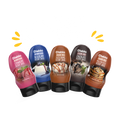
  • Chocolate Hampers - Curated combinations of chocolate bars, wafers, biscuits, and spreads.
  • Multipack Bar Sets - A variety of stevia-sweetened bars in a gift-ready bundle.

Gift Buying Tips

  • For strict diabetics or keto followers, choose stevia or erythritol-sweetened options only
  • Include a note explaining the sweeteners used — many recipients appreciate this transparency

Shop Gift Options

Sugar-Free Chocolate Recipes and Baking Tips

Recipe Recommended Chocolate Key Tips
Hot chocolate Unsweetened cocoa + erythritol or stevia 1 tbsp cocoa, sweeten to taste. Oat or almond milk work well
Brownies and cakes Sugar-free dark choc chips (erythritol) Reduce oven temp by 5-10C - sugar-free baked goods brown faster
Mousse and ganache Stevia dark chocolate bar 70%+ Melt gently over a bain-marie; pairs perfectly with whipped cream
Fondue Sugar-free milk or dark + coconut oil Add 1 tsp coconut oil per 50g for smooth dip-able consistency
Truffles Any sugar-free dark chocolate Roll in unsweetened cocoa powder rather than icing sugar
Hot Chocolate
UseUnsweetened cocoa + erythritol or stevia
Tip1 tbsp cocoa, sweeten to taste
Brownies and Cakes
UseSugar-free dark chocolate chips (erythritol)
TipReduce oven temp by 5-10C
Mousse and Ganache
UseStevia dark chocolate bar 70%+
TipMelt gently over a bain-marie
Truffles
UseAny sugar-free dark chocolate
TipRoll in unsweetened cocoa powder

Baking and Topping Essentials

Where to Buy Sugar-Free Chocolate in the UK

Online

  • Diablosugarfree.com - Full Diablo range; multipack deals; gift boxes; free UK delivery on orders over £45
  • Amazon UK - Wide selection; Subscribe and Save discounts; fast delivery
  • Holland and Barrett online - Good range of sugar-free and diabetic-friendly options

Physical Stores

  • Holland and Barrett - Most high street locations stock Diablo
  • Grape Tree - Stocks Diablo range across many UK locations
  • Sainsbury's and Waitrose - Montezuma's, Green and Black's 85%+, and select sugar-free options

Bestsellers to Try First

Frequently Asked Questions

Sugar-free chocolate can be a genuinely healthy choice, particularly for people managing blood sugar or following low-carb diets. A landmark 2024 BMJ study of 192,000+ participants found that regular dark chocolate consumption was associated with a 21% lower risk of type 2 diabetes. Enjoy it in moderation as part of a balanced diet.

Most people with diabetes can enjoy small amounts of high-quality sugar-free dark chocolate sweetened with erythritol or stevia on a regular basis. Products sweetened with maltitol (GI around 35) should be consumed more cautiously. Always monitor your blood glucose and consult your diabetes care team for personalised guidance.

For most people, erythritol and stevia are the gold standard sweeteners. Both have a glycemic index of zero and are well-tolerated. Monk fruit is an excellent third option with a clean taste profile. Maltitol is acceptable for general consumers but less suitable for strict keto or diabetic diets (GI approximately 35).

Yes. Sugar-free chocolate still contains calories from cocoa butter and cocoa solids. A 30g serving typically provides 115-140 kcal. It is lower in calories than regular chocolate, but not calorie-free.

"Sugar free" means no more than 0.5g of sugars per 100g. "No added sugar" means no sugars were added during manufacturing, but the product may still contain naturally occurring sugars from milk (lactose) or fruit. Always verify by checking the "of which sugars" figure on the nutrition panel.

Most sugar-free chocolate sweetened with stevia or erythritol is safe for children in moderate amounts. Be mindful of portion sizes - sugar alcohols can cause digestive discomfort in large quantities. Maltitol-sweetened products carry a laxative warning especially relevant for children.

Key Facts at a Glance

What it isChocolate made without added sugar, sweetened with erythritol, stevia, maltitol, or monk fruit
Best sweetenersErythritol (GI=0), Stevia (GI=0), Monk Fruit (GI=0). Use caution with Maltitol (GI=35)
Science saysDark chocolate with stevia/erythritol causes significantly lower blood glucose than conventional chocolate (BMJ 2024)
UK marketGrowing at 6.2% CAGR (2024-2030) - UK chocolate market valued at $5.5bn in 2024
Top UK brandDiablo Sugar Free - widest range, multiple sweetener options, available online and in UK stores
Key buying tipAlways check the full nutrition label - "no added sugar" is NOT the same as "sugar free"
Expert Sources and References
  1. Oliveira B, Falkenhain K, Little JP. Sugar-Free Dark Chocolate and Blood Glucose in Adults With Diabetes. Nutrition and Metabolic Insights. 2022. PMC8832613
  2. Liu B et al. Chocolate intake and risk of type 2 diabetes: prospective cohort studies. The BMJ. 2024.
  3. Harvard Health Publishing. Can dark chocolate help you avoid diabetes? March 2025. health.harvard.edu
  4. American Diabetes Association. Can People with Diabetes Eat Chocolate? diabetesfoodhub.org
  5. UK Food Standards Agency. Food Labelling - Sugar and Sweetener Claims. food.gov.uk

Ready to Indulge - Guilt Free?

Explore the UK's widest range of sugar-free chocolate. From rich 80% dark bars to creamy milk chocolate and artisan gift boxes - all the taste, none of the sugar.

Back to blog