 Chocolate Bars
 Dragees
 Cakes & Muffins
 Sweets & Gummies
 Cookies
 Dessert Sauces
 Wafers
 Spreads
 Muesli Bars
 Guilt-free Gifting
 Sales & Promotions

How to Bake with Sugar-Free Chocolate:
A Baker's Complete Guide
Everything you need to know about texture, sweeteners, temperature, and technique, so every bake comes out perfectly
How to Bake with Sugar-Free Chocolate
Baking with sugar-free chocolate produces excellent results once you understand a handful of key adjustments. Here is what every baker needs to know:
- Reduce oven temperature by 10 to 15 degrees C versus your standard recipe to prevent overbrowning without proper caramelisation
- Add a moisture booster such as Greek yoghurt or apple puree to compensate for reduced hygroscopic activity in sugar-free sweeteners
- Use powdered sweetener rather than granular to avoid a gritty texture in ganaches, frostings, and smooth batters
- Melt sugar-free chocolate slowly using a double boiler below 45 degrees C to prevent seizing
- Rest baked goods for 12 to 24 hours before serving for the best texture and flavour balance
- Polyol-sweetened chocolate bars such as Diablo SF Dark Chocolate 85g can be swapped 1:1 by weight in most recipes with these adjustments applied
You have cut out sugar. You are reading labels, planning meals and making smart choices every day. But baking still feels uncertain. The chocolate section of the supermarket feels like a minefield, and every recipe you love calls for ingredients you are trying to avoid.
Here is the truth: baking with sugar-free chocolate is not complicated. It requires a small number of targeted adjustments and the right products. Once you understand why those adjustments matter, every recipe becomes manageable. This guide covers all of it, from the science of what sugar does in baking, to specific technique changes, product recommendations from the Diablo Sugar Free range, and a full troubleshooting table for common failures.
This guide references peer-reviewed baking science and guidance from registered dietitians and food technologists. Product references are to verified Diablo Sugar Free products only. Always consult your physician or registered dietitian for personalised dietary advice if you are managing a health condition.
Why Sugar-Free Baking Requires Adjustment: What Sugar Actually Does
Most bakers think of sugar purely as sweetness. In reality, sugar performs at least four distinct structural and chemical functions in baked goods. Understanding each one tells you exactly which adjustments to make when you replace it with a sugar-free alternative.
Structure and Bulk
When sugar is creamed with butter, it creates thousands of tiny air pockets that give cakes their rise and tender crumb. Sugar also provides physical volume. High-intensity sweeteners like stevia are hundreds of times sweeter than sugar, so they are used in tiny amounts and are paired with a bulking ingredient whenever a recipe needs volume. Polyol sweeteners such as maltitol and xylitol supply that volume directly: because they are used in near-identical quantities to sugar, they provide comparable physical bulk and structure. That is why polyol-sweetened products are the straightforward choice for baking.
Moisture Retention
Sugar is hygroscopic, meaning it draws moisture from the surrounding environment and holds it within the baked good. This is why a well-made cake stays soft for several days. Erythritol is the weakest sugar substitute in this regard. Baked goods made predominantly with erythritol can turn noticeably dry and crumbly within 24 hours of baking. The practical fix is always to add a moisture-contributing ingredient: 2 tablespoons of plain Greek yoghurt, 3 tablespoons of unsweetened apple puree, or 1 tablespoon of sour cream per 250g of flour goes a long way toward restoring the softness that sugar would normally provide.
Browning and Caramelisation
The golden-brown colour on cookies, the dark crust on brownies, the caramel depth of a chocolate cake: these all come from the Maillard reaction and caramelisation, both of which require sucrose or reducing sugars. Erythritol does not caramelise in the same way as table sugar, which results in paler baked goods that can look underdone even when the internal temperature is correct. Allulose and xylitol perform significantly better in this area. For erythritol-heavy recipes, brush the surface with a light egg wash or milk wash before baking to encourage surface browning, and reduce oven temperature slightly while extending baking time.
Texture and Spread
Sugar in cookie dough melts during baking and causes the dough to spread outward into the characteristic flat, chewy disc. Without this melting behaviour, cookies stay compact and tend not to spread as expected. To compensate, flatten dough balls slightly before baking, increase butter by around 10 percent, and add one extra egg yolk for fat-based chewiness.
The more you understand the specific role sugar played in your original recipe, the easier it becomes to identify exactly which adjustments are needed. Structure failure, moisture failure and browning failure each have different solutions.
Types of Sugar-Free Chocolate for Baking: What to Choose and Why
Not all sugar-free chocolate behaves the same way in the oven. The sweetener used determines how the chocolate melts, how it browns, whether it seizes, and how much moisture it retains in the finished bake.
Polyol-Sweetened Chocolate: The Closest to Conventional
Polyol sweeteners are sugar alcohols, a class of carbohydrate that provides bulk and sweetness in place of sugar. Common polyols in chocolate products include maltitol, isomalt, xylitol, and erythritol. Of these, maltitol behaves most like sucrose in baking: it provides good bulk, moderate moisture retention, some surface browning, and a clean sweet flavour. This is why it is the most widely used sweetener in quality sugar-free confectionery.
The Diablo Sugar Free chocolate range uses polyol sweeteners throughout. The Diablo SF Dark Chocolate 85g (CHK-085-DKM-P15) contains 0.5g of sugar per 100g and is an excellent direct substitute for conventional dark chocolate in baked goods. The Diablo NAS Milk Chocolate 85g (CHK-085-MKM-P15) melts smoothly with excellent mouthfeel and works well in ganaches, drizzles, and coatings. Both can be chopped and used as chocolate chips, melted into brownie batter, or incorporated into cookie dough.
Diablo Sugar Free chocolates are labelled either SF (Sugar Free) or NAS (No Added Sugar). SF products contain no more than 0.5g sugar per 100g. NAS products contain no added sugar but may contain trace naturally occurring sugars from ingredients such as milk solids. If you are tracking sugars tightly, the SF label is the one that caps sugars at 0.5g per 100g. Both ranges are formulated to behave predictably in heat, which removes guesswork from your baking.
Erythritol-Based Chocolate
Erythritol provides a very low glycaemic impact and is widely used in strict keto and low-sugar baking. It is approximately 70 percent as sweet as sugar. In baking, erythritol can cause two specific challenges: a cooling sensation in the finished product (particularly noticeable in ganaches and frostings), and a tendency to recrystallise after cooling, which creates a slightly grainy texture. Both effects can be mitigated by using powdered erythritol rather than granular, and by adding a liquid fat such as cream or coconut oil to smooth ganaches and prevent recrystallisation.
Stevia and Monk Fruit Chocolate
High-intensity sweeteners like stevia and monk fruit provide sweetness without the bulk of sugar. Because they are used in such tiny quantities, they provide no physical bulk in baking. Commercial chocolate products that use stevia or monk fruit typically combine them with a bulking agent such as inulin, erythritol, or allulose to produce a bar that melts and behaves like conventional chocolate. When buying stevia-sweetened chocolate for baking, check that the bar contains a bulking ingredient so it will perform correctly in heat.
Sugar-Free Sweetener Comparison Table for Baking
Use this table as a quick reference when evaluating which sugar-free chocolate to use for a specific baked good. The performance categories reflect baking-specific behaviour, not just sweetness level.
| Sweetener | Sweetness vs Sugar | Baking Bulk | Browning | Moisture Retention | GI Impact | Best Used For |
|---|---|---|---|---|---|---|
| Maltitol | 90% | Excellent | Good | Good | Low to Medium (~35) | Cakes, cookies, ganache, coatings |
| Xylitol | 100% | Excellent | Good | Good | Low (~7 to 13) | Cakes, muffins, frostings |
| Allulose | 70% | Good | Excellent | Good | Near Zero (~1) | Brownies, caramel, fudge, custard |
| Erythritol | 70% | Good | Moderate | Weak | Zero (0) | Crispy cookies, no-bake recipes |
| Isomalt | 50% | Excellent | Moderate | Good | Very Low (~2) | Decorations, sugar work, coatings |
| Stevia (pure) | 200 to 300x | Pair with bulk | Pair with bulk | Pair with bulk | Zero (0) | Beverages and blended recipes |
| Monk Fruit (pure) | 150 to 200x | Pair with bulk | Pair with bulk | Pair with bulk | Zero (0) | Blended with erythritol or allulose |
Sources: Sur La Table baking science; National Geographic sweetener study; Quora culinary chemistry; Symega food technology. GI values are reference figures and vary by brand and processing.
Shop Diablo Chocolate Bars for Baking


10 Essential Sugar-Free Baking Tips
These are the most impactful adjustments you can make when baking with sugar-free chocolate. Apply them systematically and you will avoid the most common failures.
- Use powdered sweetener, not granular. Granular erythritol or xylitol does not dissolve fully into smooth batters, leaving a gritty texture in the finished bake. Run any granular sweetener through a food processor for 20 to 30 seconds before using it in ganaches, frostings, or fine-crumb cakes.
- Lower your oven temperature by 10 to 15 degrees C. Sugar-free sweeteners, particularly erythritol and stevia blends, cause faster surface browning without the corresponding caramelisation that signals internal doneness. Reduce temperature and extend baking time by 5 to 10 minutes. Always use a skewer or thermometer to confirm doneness rather than relying on colour alone.
- Add a moisture booster to every recipe. Compensate for the reduced hygroscopic activity of sugar-free sweeteners by adding one of the following per 250g of flour: 2 tablespoons of plain Greek yoghurt, 3 tablespoons of unsweetened apple puree, or 1 tablespoon of sour cream. This restores the softness that sugar normally provides.
- Do not overmix polyol-based batters. Batters made with polyol-sweetened chocolate are more sensitive to overmixing than conventional batters. Overworking the gluten alongside less-forgiving sweeteners produces a dense, rubbery crumb. Mix until just combined and stop.
- Melt sugar-free chocolate slowly and carefully. Sugar-free chocolate, particularly erythritol-based varieties, seizes more readily than conventional chocolate because the sweetener crystals can bind when exposed to sudden heat or trace moisture. Always melt over a double boiler at temperatures below 45 degrees C, or use a microwave in 20-second bursts, stirring between each interval. Keep all bowls and utensils completely dry.
- Rest baked goods for 12 to 24 hours before serving. Many sugar-free bakes improve dramatically overnight. Resting allows moisture to redistribute evenly through the crumb and reduces the initial cooling sensation that erythritol can produce. This is especially true for cookies and dense cakes.
- Increase fat slightly for richer mouthfeel. Since most sugar-free sweeteners do not contribute the same richness and emulsification as sucrose, adding 1 to 2 extra tablespoons of butter or a small splash of double cream significantly improves mouthfeel. This also helps mask any residual aftertaste from high-intensity sweetener blends.
- Flatten cookie dough before baking. Because sugar-free sweeteners do not melt and spread like sucrose during baking, cookie dough will spread less than expected. Gently press dough balls to about two-thirds of their height before baking to achieve a natural-looking spread.
- Choose polyol-sweetened products for the most predictable results. Quality sugar-free chocolate products from the Diablo range have been professionally formulated to perform well in heat. Using them removes variables around cocoa solids percentages and sweetener ratios that you would have to manage when using DIY chocolate or unfamiliar brands.
- Taste your batter and adjust before baking. The perceived sweetness of erythritol fades slightly after baking, so your batter should taste marginally sweeter than you want the finished product to be. If the raw batter tastes right, the baked result will often taste slightly less sweet. Adjust before you put it in the oven.
Temperature and Time Adjustments by Baked Good
This table provides specific guidance for the most common sugar-free chocolate bakes. All temperatures refer to conventional oven settings; for fan-assisted ovens, reduce temperature by a further 10 to 15 degrees C.
| Baked Good | Standard Temp and Time | SF Adjusted Temp and Time | Key Notes |
|---|---|---|---|
| Chocolate Layer Cake | 180 C / 30 to 35 min | 165 to 170 C / 38 to 42 min | Add yoghurt for moisture; test with skewer 5 min before end time |
| Fudgy Brownies | 175 C / 25 to 30 min | 160 to 165 C / 30 to 35 min | SF brownies firm significantly as they cool; pull when centre has a slight jiggle |
| Chocolate Chip Cookies | 180 C / 10 to 12 min | 170 C / 12 to 14 min | Flatten dough balls slightly; expect less spread than conventional recipe |
| Chocolate Muffins | 190 C / 18 to 20 min | 175 C / 22 to 25 min | Use paper cases; SF batters can stick to bare tin; add yoghurt to batter |
| Chocolate Tart Shell | 170 C / 15 to 18 min blind bake | 160 C / 18 to 22 min | SF pastry is more fragile; chill thoroughly before blind baking |
| Chocolate Ganache (stovetop) | Gentle simmer | Low heat only; below 50 C | Do not boil; SF chocolate seizes above 50 C; add cream in small additions |
| Chocolate Sauce or Drizzle | Gentle heat | Use Diablo SF Chocolate Dessert Sauce (SAC-360-CHK-P10) direct from bottle | No melting required; sets to a glossy finish; excellent ganache substitute |
Temperature adjustments are guidelines and may vary by oven, altitude, and specific sweetener used. Always verify internal doneness with a probe or skewer.
Sugar-Free Baking by Recipe Type
Chocolate Cakes
Cakes are the most forgiving application for sugar-free chocolate. Because eggs provide a large proportion of the structural work, the absence of caramelising sugar is less impactful than in cookies. The primary challenge is moisture. Adding yoghurt or apple puree to the batter, reducing oven temperature, and storing the finished cake in an airtight container addresses this reliably.
For a marble or swirl cake, the Diablo NAS Hazelnut & Chocolate Spread 350g (SPD-350-HZL-P12) can be dropped in tablespoons onto the batter and swirled through with a skewer before baking. Its smooth polyol-based formulation disperses evenly without creating pockets of concentrated sweetness. For a chocolate drizzle over a finished cake, warm the Diablo SF Chocolate Dessert Sauce 360g (SAC-360-CHK-P10) gently in a saucepan and pour over the cooled cake. It sets to a glossy, ganache-like finish without any melting or tempering required.
Brownies
Brownies are arguably the best application for sugar-free chocolate, because the dense, fudgy texture is created primarily by fat and eggs rather than sugar. A well-made sugar-free brownie can be nearly indistinguishable from a conventional one.
Chop the Diablo SF Dark Chocolate & Hazelnuts 85g (CHK-085-HZM-P15) into rough pieces and melt it with butter as the base. The hazelnut notes deepen the chocolate flavour and add texture. Bake at 160 to 165 degrees C and remove from the oven when the top is set but the centre retains a visible wobble. The brownie will firm to perfect fudgy consistency during 20 minutes of cooling on a wire rack. Do not be tempted to overbake to achieve firmness: SF brownies firm significantly after heat is removed.
Cookies
Cookies present the greatest challenge in sugar-free baking because sugar plays a unique and complex role in how a cookie spreads, develops its chewy-crisp texture, and holds together after cooling. Without it, cookies tend to be drier and more compact.
Chopping a bar of Diablo SF Dark Chocolate 85g (CHK-085-DKM-P15) into irregular chunks and folding them into cookie dough produces excellent results. The very low sugar content means the chocolate provides pure cocoa bitterness that contrasts well with the sweetness of the cookie base. For best texture, increase butter in the recipe by 10 percent, use a blend of erythritol and xylitol as the sweetener, and add one additional egg yolk. Flatten dough balls to about half their height before baking and allow the cookies to cool completely on the tray before moving them, as they are more fragile when warm.
Ganaches, Sauces, and Drizzles
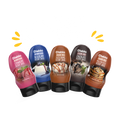
This is the easiest application for sugar-free chocolate. The Diablo SF Chocolate Dessert Sauce 360g (SAC-360-CHK-P10) eliminates the need to melt or temper chocolate entirely. It can be drizzled directly over cakes and cheesecakes, stirred through frosting, used as a dipping sauce, or warmed and poured as a warm chocolate sauce over desserts. The Diablo SF Salted Caramel Dessert Sauce 360g (SAC-360-SCM-P10) and Diablo SF Maple Syrup Dessert Sauce 390g (SAC-390-MPL-P10) pair naturally with chocolate-based bakes for layered flavour combinations.
For a made-from-scratch SF ganache, heat double cream to just below simmering, then pour over chopped Diablo NAS Milk Chocolate 85g (CHK-085-MKM-P15) and stir slowly until smooth. Add a small knob of butter at the end for gloss. Use powdered erythritol rather than granular if you need to sweeten further, and allow the ganache to cool before refrigerating, as rapid chilling can cause recrystallisation.
Shop Diablo Sauces and Spreads for Baking


Diablo Sugar Free Products: A Baker's Reference Guide
The following Diablo Sugar Free products have been selected specifically for their baking performance. All nutritional figures are sourced from verified COA data.
| Product (SKU) | SF or NAS | Sugar per 100g | Best Baking Use | Notes |
|---|---|---|---|---|
| Diablo SF Dark Chocolate 85g (CHK-085-DKM-P15) | SF | 0.5g | Brownies, chocolate chip cookies, melting into batter | Sugar free (≤0.5g/100g); balanced cocoa bitterness; direct replacement for dark chocolate |
| Diablo NAS Milk Chocolate 85g (CHK-085-MKM-P15) | NAS | 8.9g (naturally occurring) | Ganache, drizzle, cake coating, chocolate mousse | Smooth melt and excellent mouthfeel; great for finishing bakes; no added sugar |
| Diablo SF Dark Chocolate & Hazelnuts 85g (CHK-085-HZM-P15) | SF | 0.4g | Brownies, tart filling, chocolate bark, mousse | Hazelnut adds texture and depth; sugar free (≤0.5g/100g) |
| Diablo SF Chocolate Dessert Sauce 360g (SAC-360-CHK-P10) | SF | 0.5g | Ganache substitute, cake drizzle, frosting base, dessert sauce | Ready to use; no melting required; sets to glossy finish |
| Diablo NAS Hazelnut & Chocolate Spread 350g (SPD-350-HZL-P12) | NAS | 8.6g (naturally occurring) | Swirl cakes, tart bases, cookie filling, cheesecake topping | Smooth consistency; disperses evenly in batter without pockets |
| Diablo NAS Duo Hazelnut & White Choco Spread 350g (SPD-350-DUO-P6) | NAS | 8.3g (naturally occurring) | Marble cake, cookie filling, no-bake tart bases | Dual flavour creates visual and taste contrast in layered bakes |
| Diablo NAS Milk Chocolate Bubble Bar 30g (CHK-030-BBL-P24) | NAS | 9.8g (naturally occurring) | Decorating cakes and cupcakes, crumbling over frosting | Aerated texture creates a distinctive visual topping |
| Diablo SF Salted Caramel Dessert Sauce 360g (SAC-360-SCM-P10) | SF | 0.5g | Drizzling over chocolate bakes, layering in cheesecakes | Excellent pairing with dark chocolate; sugar free at 0.5g per 100g |
| Diablo NAS Dark Chocolate with Orange 75g (CHK-075-DKG-P12) | NAS | 2g (naturally occurring) | Chocolate orange cake, orange ganache, flavoured truffles | Natural orange flavour; distinctive aroma in baked goods |
| Diablo NAS 80% Dark Chocolate 75g (CHK-075-DKS-P15) | NAS | 1.1g (naturally occurring) | Intense chocolate recipes, fondants, flourless cakes | 80% cocoa; strong, bitter flavour profile for rich bakes |
All nutritional data sourced from verified Diablo Sugar Free COA documents. SF = Sugar Free (≤0.5g sugar per 100g). NAS = No Added Sugar (no sugar added during production; trace natural sugars from ingredients may be present). Always confirm current nutritional information on product packaging.
Shop More Diablo Baking Chocolate


If you are counting carbohydrates closely, the SF label is the one to read for. SF products contain no more than 0.5g sugar per 100g. NAS products contain no added sugar, and may contain trace naturally occurring sugars from ingredients such as milk solids or fruit. Both bake well; the distinction matters when you are logging figures.
Sugar-Free Baking: Understanding Sweeteners and Carbohydrates
Baking with no added sugar is not just about taste preference. Many people reducing their sugar intake, whether as part of a low-carb lifestyle, personal preference, or on the advice of a healthcare professional, will want to understand how polyol-sweetened products behave in the body. Always consult your physician or registered dietitian for personalised dietary advice.
Polyols and Carbohydrate Impact
Polyol sweeteners found in the Diablo range, including maltitol and isomalt, have a lower glycaemic index than sucrose. Maltitol, the most common polyol in quality sugar-free confectionery, has a glycaemic index of approximately 35, compared to sucrose at 65. The authorised wording is exact: consumption of foods containing maltitol instead of sugar induces a lower blood glucose rise after their consumption compared to sugar-containing foods (GB nutrition and health claims register). Polyols still count as carbohydrate, so a generous slice of SF chocolate cake will still contribute to your daily total.
Portion Awareness Framework
Minimal Portion
One square of Diablo SF Dark Chocolate 85g as a tasting piece during baking. The bar carries 0.5g sugars and 42g polyols per 100g. Sugar free as labelled.
Standard Portion
A small slice of SF chocolate cake or 2 to 3 SF cookies. Read the carbohydrate figure on each pack you baked with and log the serving against your daily target if you are tracking.
Track Your Response
Individual responses to polyols vary. If you are monitoring your carbohydrate intake, check with your healthcare professional about how to factor polyol-containing foods into your daily targets.
The Polyol Note
Polyols are absorbed slowly, which is the point. Products in which polyols exceed 10% of total content carry the statement: "excessive consumption may produce laxative effects." Serve a few pieces at a time and the gut adjusts. If you are baking for guests, tell them the products are made with polyol sweeteners so anyone with a sensitive digestive system can pace themselves.
Individual responses to polyol-containing foods vary considerably between people. Always follow the advice of your healthcare professional regarding carbohydrate intake and any dietary adjustments.
Troubleshooting: Common Problems and Fixes
| Problem | Most Likely Cause | Fix |
|---|---|---|
| Cake is dry and crumbly | Erythritol's weak moisture retention; overbaking | Add 2 tbsp Greek yoghurt to batter; reduce oven temp by 10 C; store in airtight container immediately after cooling |
| Ganache has a gritty texture | Granular sweetener not dissolved; erythritol recrystallisation | Use powdered sweetener only; warm cream to 45 C before adding chocolate; add 1 tsp coconut oil to suppress recrystallisation |
| Baked goods look pale and underdone | SF sweetener does not caramelise like sucrose | Brush with egg wash or milk wash before baking; try allulose or xylitol blend for better browning; extend bake time at lower temperature |
| Chocolate seized when melting | Water contamination; overheating above 50 C | Ensure bowl and utensils are bone dry; melt below 45 C; add 1 tsp coconut oil and stir gently to recover a seized batch |
| Cookies did not spread | Absence of sucrose crystallisation and melt during baking | Flatten dough balls to two-thirds height; increase butter by 10 percent; use polyol-based SF chocolate for more natural melt behaviour |
| Cooling sensation in mouth | Erythritol's endothermic dissolution on the tongue | Blend erythritol with monk fruit or allulose; rest baked goods 24 hours before serving; the sensation reduces significantly overnight |
| Brownies too hard after cooling | Overbaked; SF brownies firm significantly as they cool | Remove from oven 5 minutes earlier than you think; centre should wobble slightly when tin is moved; they will firm perfectly as they cool |
| Bitter aftertaste | High cocoa content without fat balance | Add 1 tsp vanilla extract to recipe; switch to Diablo NAS Milk Chocolate 85g for milder flavour; increase fat (butter or cream) slightly |
| Bake collapsed in the centre | High-intensity sweetener used without bulking agent; underbaking | Use polyol-based SF chocolate (maltitol or xylitol) for bulk; ensure oven is at full temperature before baking; do not open oven door in first 15 minutes |
| Frosting will not set | Liquid erythritol crystallisation failure; too much moisture | Use powdered erythritol or allulose; reduce liquid by 1 tbsp; refrigerate frosted cake for 20 minutes to help setting |
The Sugar-Free Baking Framework: A 4-Step Approach
Whether you are adapting a family recipe or starting from scratch, this framework applies to every sugar-free chocolate bake.
- Choose the right product for the application. Polyol-sweetened chocolate performs best in cakes, cookies and brownies. Ready-to-use SF sauces such as Diablo SF Chocolate Dessert Sauce (SAC-360-CHK-P10) are the simplest path for glazes and drizzles. SF-labelled Diablo products are the correct choice for strict low-sugar baking; NAS products are suitable for most reduced-sugar goals.
- Adjust your recipe systematically. Lower oven temperature by 10 to 15 C. Add a moisture booster such as yoghurt or apple puree. Use powdered sweetener in smooth applications. Increase butter slightly for richer mouthfeel. These adjustments take less than two minutes and make a substantial difference to the finished result.
- Bake conservatively and check early. Sugar-free bakes can overbrown on the outside while remaining correctly baked inside. Always check 5 minutes before the recipe end time. For brownies, remove when the centre still has a visible wobble. For cakes, check with a skewer: a few moist crumbs on the skewer is correct; wet batter means it needs more time.
- Rest before serving, and store correctly. Allow most SF baked goods to rest for at least 12 hours in an airtight container before serving. This one step resolves many texture issues. Store in an airtight container at room temperature for up to 3 days, or freeze for up to 3 months. SF baked goods generally have a shorter shelf life than conventional ones due to reduced hygroscopic activity, so smaller batches baked more frequently are better than large batches intended to last a week.
When serving sugar-free baked goods, pairing a small portion with a source of protein or fat can make for a satisfying combination. A slice of SF chocolate cake alongside a few walnuts or a tablespoon of Greek yoghurt works particularly well.
Frequently Asked Questions
References and Sources
- Sur La Table. How to Cook and Bake with Common Sugar Substitutes. learn.surlatable.com
- National Geographic. How Sugar Substitutes Stack Up. Anderson P. nationalgeographic.com
- Bigger Bolder Baking. Baking Without Sugar: Sugar Substitutes Guide. biggerbolderbaking.com
- Bakestarters. How to Reduce Sugar in Your Baked Goods. bakestarters.com
- Symega Food Technology. Baking with Sugar Alternatives: Types and Best Practices. symega.com
- Groovy Keto. How to Bake with Sugar-Free Chocolate Chips. groovyketo.co.uk
- Sugar Free Londoner. Sugar-Free Chocolate Chips. sugarfreelondoner.com
- Diablo Sugar Free COA Data. Master Nutritional Reference. Product Spec spreadsheet, visually verified, 91 products.
- Mayo Clinic. Artificial Sweeteners and Other Sugar Substitutes. Updated 2025. mayoclinic.org
Ready to Bake Without Compromise?
Diablo Sugar Free offers dark chocolate bars, milk chocolate, hazelnut spreads, and ready-to-use chocolate sauces, all made with sweeteners instead of sugar and packed with genuine chocolate flavour. Everything you need for confident, delicious sugar-free baking.
Shop Diablo Sugar FreeNo added sugar. No artificial colours. Just real chocolate, done properly.