 Chocolate Bars
 Dragees
 Cakes & Muffins
 Sweets & Gummies
 Cookies
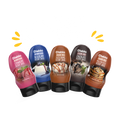 Dessert Sauces
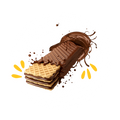 Wafers
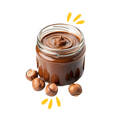 Spreads
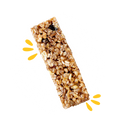 Muesli Bars
 Guilt-free Gifting
 Sales & Promotions

What Are Halal Sugar-Free Sweets?
Halal sugar-free sweets are confectionery products that meet two distinct requirements simultaneously: they comply with Islamic dietary law (halal), and they contain no added sugar or are genuinely sugar free. Here is what you need to know before you buy:
- +Halal certification means the product contains no pork-derived gelatine, no alcohol-based ingredients, and no prohibited (haram) E numbers
- +Sugar Free (SF) means no more than 0.5g of sugars per 100g. No Added Sugar (NAS) means no sugar was added in manufacturing, though natural sugars from fruit may still be present
- +Sugar alcohols (polyols) such as maltitol, sorbitol, isomalt, and xylitol are confirmed halal by Islamic scholars and are used to sweeten most sugar-free confectionery
- +Not all sugar-free sweets are halal. Many mainstream sugar-free gummies still use pork gelatine. Always check the certification and the ingredient list
- +Diablo Sugar Free offers over 90 no added sugar and sugar-free products across chocolates, gummies, cookies, cakes, wafers, spreads, and breakfast bars; halal suitability varies by product, so check each listing
- +Diablo and halal: the hard sweets, the 85 g chocolate bars, the sandwich cookies and the muffins carry a halal certificate; the gummies do not
Is Diablo halal certified?
Part of the range is, and each certificate covers one product, so there is no brand-wide answer. Our Fruit Flavoured Toffees are made with gelatine and carry a halal certificate; our Sugar Free gummies are also made with gelatine and do not. So gelatine on the ingredient list cannot answer this one; the certificate on the product can.
| Category | Certified halal | Not certified halal |
|---|---|---|
| Hard sweets | Sugar Free Butter, Cappuccino and Cream, Lemon and Cream, Mint and Cream, Strawberry and Cream, Fruit Flavoured Toffees; No Added Sugar Butter Filled with Chocolate | None |
| Chocolate | No Added Sugar Dark 85 g, Dark and Hazelnuts 85 g, Milk 85 g, Coated Milk Chocolate Buttons 22 g and 40 g, Dubai Chocolate 200 g | The 75 g bars, Luxury Chocolate Box 142 g, Chocolate Delights Box 115 g |
| Biscuits | Sugar Free Extra Dark Cocoa and Vanilla sandwich cookies 44 g and 176 g; No Added Sugar Choco Covered Cream Cookies 34 g and 136 g | All other cookie lines and the wafers |
| Cakes | Sugar Free Chocolate, Chocolate Chip and Vanilla Muffins (single and six), Marble Cake 400 g; No Added Sugar Apple Cake 450 g, Forest Fruit Cake 450 g, Lemon Cake 200 g, Cinnamon and Walnut Cake 200 g | Sugar Free Chocolate, Chocolate Chip and Orange Flavour Cakes 200 g |
| Other | No Added Sugar Apricot and Strawberry Jams with Chia Seeds 230 g | Gummies, muesli bars, dessert sauces, chocolate spreads |
From the certificate record for each Diablo product. Recipes change, so read the pack in your hand before you rely on this list.
If you are Muslim and trying to reduce your sugar intake, you have probably already discovered how difficult it is to find sweets that tick both boxes. Most halal sweets are loaded with refined sugar. Most sugar-free sweets use pork gelatine. The products that sit at the intersection of genuinely halal and genuinely sugar-free are fewer, but they do exist, and this guide will help you find them.
We cover what makes a sweet legally halal, which sweeteners are permitted under Islamic law, the difference between Sugar Free and No Added Sugar, and a full breakdown of the best product categories available, with real nutritional data from the Diablo Sugar Free range.
All nutritional figures in this guide are sourced from verified Certificate of Analysis (COA) documents for Diablo Sugar Free products. Figures are per 100g unless stated otherwise. Always check the current product label, as formulations can be updated. If you have diabetes or a related condition, consult your physician or registered dietitian before making dietary changes.
What Makes a Sweet Halal? A Practical Checklist
The word halal means permissible in Arabic. For confectionery, it applies to the full supply chain: the ingredients, any processing aids, and the manufacturing environment. A product can use entirely plant-based ingredients and still fail halal certification if it was manufactured on shared equipment with haram products and adequate cross-contamination controls were not in place.
The four main things that can make a sweet non-halal (haram) are:
- Pork-derived gelatine. This is the most common problem in mainstream confectionery. Gummy sweets, marshmallows, soft jellies, and many coated candies almost always contain pork gelatine unless the label specifically says otherwise. It appears on the ingredient list simply as "gelatine" with no qualifier.
- Non-halal animal gelatine. Even beef-derived gelatine is only halal if the animal was slaughtered according to Islamic rites. Gelatine sourced from animals that were not halal-slaughtered is impermissible regardless of species.
- Alcohol-based flavourings. Ethanol is frequently used as a carrier solvent for artificial flavourings. Where alcohol appears in the ingredient list as a carrier, this is a concern for stricter halal interpretations. Reputable halal-certified confectionery brands use alternative carrier systems.
- Prohibited E numbers. E120 (carmine, from insects), E441 (pork gelatine), and certain E471 to E475 emulsifiers derived from non-halal animal fats can all render a product impermissible. A halal certification covers E number screening as part of its scope.
If a product carries a recognised halal certification logo from a credible body such as the Halal Food Authority (HFA) or the Halal Monitoring Committee (HMC), the ingredient and process screening has been done for you. For uncertified products, you need to verify the gelatine source, check the E numbers, and confirm that flavourings are alcohol-free.
UK Halal Certification Bodies: Who to Trust
| Certification Body | Abbreviation | Scope and Standards | Notes for Confectionery Buyers |
|---|---|---|---|
| Halal Monitoring Committee | HMC | Strictest UK standard; full supply chain audit required | Covers ingredients and full manufacturing process including cross-contamination controls |
| Halal Food Authority | HFA | Well-established; widely accepted across the UK | Most commonly seen on confectionery, bakery, and snack products |
| IFANCA | IFANCA | US-based; internationally recognised | Common on imported products sold in the UK |
| Islamic Society of North America | ISNA | Internationally recognised | Seen on some imported confectionery |
| Self-declaration ("suitable for halal diet") | None | No independent verification | Lower trust; requires independent ingredient verification by the consumer |
Note: Certification standards and bodies can change. Always verify current certification status directly with the brand.
Are Sugar Alcohols (Polyols) Halal? The Definitive Answer
Sugar alcohols, also known as polyols, are the sweeteners used in almost all sugar-free confectionery. They appear on labels as maltitol (E965), sorbitol (E420), isomalt (E953), xylitol (E967), erythritol (E968), and mannitol (E421), among others.
The question of whether these are halal comes up frequently, because the word "alcohol" appears in their name. The answer, confirmed by multiple Islamic scholarly bodies, is that polyols are permissible (halal).
Are Polyols Halal?
Yes. Sugar alcohols (polyols) are halal. Despite containing the word "alcohol," they do not contain ethanol, which is the specific intoxicating substance prohibited under Islamic law. They are carbohydrates, not intoxicants, and they are not produced through alcoholic fermentation. Multiple Islamic jurisprudence authorities confirm this ruling, including Darul Uloom Azaadville, IslamQA, and Darul Ihsan. Both Saudi Arabia and Qatar, countries with some of the world's most rigorous halal standards, officially permit the use of sorbitol, mannitol, maltitol, lactitol, and xylitol in confectionery and bakery products.
Darul Uloom Azaadville states directly: "the mere resemblance of the chemical formula of sugar alcohols with the chemical formula of ethanol is not valid grounds to render it haraam." The prohibition in Islam targets intoxicating khamr, not every molecule that shares a chemical suffix with ethanol.
| Polyol | E Number | Halal Status | Glycaemic Impact | Common Use | Blood Glucose Notes |
|---|---|---|---|---|---|
| Isomalt | E953 | Halal | Very low | Hard sweets, sugar-free toffees | Very low glycaemic index |
| Xylitol | E967 | Halal | Very low (GI approx. 7) | Chewing gum, mints, some chocolates | Toxic to dogs; keep away from pets |
| Erythritol | E968 | Halal | Negligible | Baked goods, chocolates | Glycaemic index near zero |
| Sorbitol | E420 | Halal | Low | Candies, spreads, sauces | Absorbed slowly; enjoy in sensible portions |
| Maltitol | E965 | Halal | Moderate (GI approx. 35) | Widely used in chocolate and cookies | A lower and slower blood glucose rise than sugar |
| Mannitol | E421 | Halal | Low | Coatings, dusting agent | Lower sweetness than other polyols |
Halal rulings sourced from Darul Uloom Azaadville, IslamQA, and Darul Ihsan. GI values are reference figures and vary by product and individual.
While all polyols are halal, their reference GI values differ. Every polyol produces a lower and slower blood glucose rise than sugar, and each still contributes carbohydrate, so use the "of which polyols" line on the label when counting. Always read the ingredient list to identify which polyol is used, and anyone managing diabetes should lean on their care team for personal advice.
Sugar Free vs No Added Sugar: The Difference That Matters
These two claims appear on labels throughout the Diablo Sugar Free range, and understanding the distinction is important whether your priority is strict sugar limits, calorie control, or simply reducing refined sugar in your diet.
| Sugar Free (SF) | No Added Sugar (NAS) | |
|---|---|---|
| Legal definition | No more than 0.5g sugars per 100g | No sugar or sugar-containing ingredient added during manufacture |
| Can it still contain sugar? | Trace amounts only (under 0.5g/100g) | Yes, naturally occurring sugars from fruit or milk may be present |
| How is it sweetened? | Polyols and/or high-intensity sweeteners only | Naturally occurring sugars from ingredients, plus polyols in some products |
| Typical Diablo examples | Diablo SF Gummy Bears 75g, Diablo SF Chocolate Muffin 45g | Diablo NAS Apricot Muesli Bar 30g, Diablo NAS Milk Chocolate 85g, Diablo NAS Apple Cake 450g |
| Lowest sugar option? | Yes; the lowest sugar content available | Sugars occur naturally; check the label figure |
| Best for general sugar reduction? | Yes | Yes; eliminates all added refined sugar |
As a practical example: the Diablo No Added Sugar Dark Chocolate 85 g (CHK-085-DKM-P15-24M) contains just 0.5g of naturally occurring sugar per 100g and 42g of polyols, delivering a rich chocolate experience with no added sugar. The Diablo NAS Milk Chocolate 85g (CHK-085-MKM-P15-18M) contains 6.7g sugar per 100g from naturally occurring milk solids and cocoa, with no refined sugar added at all.
For the lowest possible sugar intake, SF products are the more conservative choice. For general sugar reduction, both categories remove all refined added sugar.
The Best Halal Sugar-Free Sweet Categories: A Complete Guide
The Diablo Sugar Free range covers every major confectionery format, giving halal consumers a genuinely comprehensive set of options across 10 product categories. Here is what each category offers, with verified nutritional data.
Chocolates
Chocolate is the most consumed confectionery category in the UK. The Diablo range covers milk, dark, and white chocolate across multiple formats, all made without added sugar. A 25g serving of Diablo NAS Milk Chocolate with Almonds (CHK-075-ADS-P15) delivers 121 kcal and just 1.6g of naturally occurring sugar. Of the bars below, the three 85 g bars carry a halal certificate and the 75 g bars do not.
Diablo No Added Sugar Dark Chocolate 85 g
Rich, intense dark chocolate with 0.5g naturally occurring sugar per 100g and 42g polyols per 100g. Per 14g serving: 67 kcal, 6.6g carbohydrates, 5.9g polyols.
Diablo No Added Sugar Dark Chocolate and Hazelnuts 85 g
Dark chocolate with whole hazelnuts. 1g naturally occurring sugar per 100g, 42g polyols per 100g. Per 14g serving: 68 kcal, 6.4g carbohydrates.
Diablo NAS Milk Chocolate 85g
Smooth, creamy milk chocolate. 6.7g naturally occurring sugar per 100g (no added sugar), 49.87g polyols per 100g. Per 14g serving: 66 kcal.
Diablo NAS 80% Dark Chocolate 75g
High-cocoa bar with intense flavour. 1.1g sugar per 100g, 20g polyols per 100g, 10g protein per 100g. Per 25g serving: 129 kcal.
Diablo NAS Dark Chocolate with Orange 75g
Dark chocolate with orange flavour. 2g sugar per 100g, 8g fibre per 100g. Per 25g serving: 112 kcal, 0.5g sugar.
Diablo NAS Milk Chocolate with Hazelnuts 75g
Milk chocolate with whole hazelnuts. 6.7g naturally occurring sugar per 100g, 44g polyols per 100g. Per 25g serving: 124 kcal.
Shop Diablo Chocolates


For gifting, the Diablo NAS Luxury Chocolate Box 142g (CHK-142-LCB-P5) offers an elegant assortment at 48 kcal per 10g serving, and the Diablo NAS Chocolate Delights Box 115g (CHK-115-DLT-P6) provides 49 kcal per 10g serving. Neither box carries a halal certificate, so for a halal gift choose from the certified lines above.
Gummies and Sweets
This is the category where halal compliance matters most. Standard gummy sweets almost universally use pork-derived gelatine, and this is the category where the label check matters most. The Diablo Sugar Free gummy range removes the sugar; it does contain gelatine and does not carry a halal certificate.
Diablo SF Gummy Bears 75g
Classic gummy bear format, sugar free. A consistent favourite for children and adults looking for the gummy texture without refined sugar.
Diablo SF Cola Bottles 75g
Cola-flavoured gummy bottles, sugar free. The cola format is one of the most requested in sugar-free confectionery.
Diablo SF Gummy Drops 75g
Mixed fruit-flavoured gummy drops, sugar free. A versatile option for sharing or as a personal treat.
Shop Diablo Gummies


Every line in the hard sweets range below is certified halal, including the Fruit Flavoured Toffees, which are made with gelatine:
- Diablo SF Butter Sweets 75g (SWT-075-BTR-P16)
- Diablo SF Cappuccino and Cream Sweets 75g (SWT-075-CAP-P16)
- Diablo SF Lemon and Cream Sweets 75g (SWT-075-LMN-P16)
- Diablo SF Mint and Cream Sweets 75g (SWT-075-MNT-P16)
- Diablo SF Strawberry and Cream Sweets 75g (SWT-075-STR-P16)
- Diablo SF Fruit Flavoured Toffees 75g (SWT-075-TFE-P16)
- Diablo NAS Butter Filled with Chocolate Sweets 75g (SWT-075-CHF-P16)
Shop Diablo Sweets


Cookies and Biscuits
Sugar-free cookies offer a more substantial sweet snack than hard candy, and the Diablo range covers 16 SKUs in this category. The cookie lines in this table are not on our certified list; the sandwich cookies under wafers below are.
| Product | SKU | Type | Energy (per 100g) | Sugar (per 100g) | Polyols (per 100g) |
|---|---|---|---|---|---|
| Diablo SF Chocolate Chip Cookies 130g | COK-130-CHP-P12 | SF | Check label | 0g added | Check label |
| Diablo SF Coconut Cookies 150g | COK-150-CCN-P12 | SF | Check label | 0g added | Check label |
| Diablo NAS Butter Cookies 135g | COK-135-BTR-P12 | NAS | Check label | Naturally occurring only | Check label |
| Diablo NAS Hazelnut Cookies 135g | COK-135-HZL-P12 | NAS | Check label | Naturally occurring only | Check label |
| Diablo NAS Almond Cookies 145g | COK-145-ALM-P12 | NAS | Check label | Naturally occurring only | Check label |
| Diablo NAS Digestive Cookies 150g | COK-150-DGV-P18 | NAS | Check label | Naturally occurring only | Check label |
| Diablo NAS Peanut Butter & Cream Cookies 100g | COK-100-PBC-P18 | NAS | 86 kcal per serving | 1g per serving | Check label |
| Diablo NAS Cookies & Cream (Dark Chocolate) 128g | COK-128-BRN-P27 | NAS | 85 kcal per serving | Less than 1g per serving | Check label |
Per-serving figures for COK-100 and COK-128 products are from US-format COA labels (serving size 16.5g to 16.7g). All cookies are No Added Sugar or Sugar Free as indicated. Always check the current product label.
Shop Diablo Cookies and Biscuits


Cakes and Muffins
Sugar-free baked goods are among the most valued products in the Diablo range, particularly for special occasions including Eid, Ramadan, and family celebrations where a celebratory treat is expected but sugar restriction is a priority.
| Product | Type | Net Weight | Energy (per 100g) | Sugar (per 100g) | Polyols (per 100g) |
|---|---|---|---|---|---|
| Diablo SF Chocolate Muffin 45g | SF | 45g | 386 kcal | 0g | 19g |
| Diablo SF 6 Chocolate Muffins 270g | SF | 270g | 386 kcal | 0g | 19g |
| Diablo SF Chocolate Chip Muffin 45g | SF | 45g | 377 kcal | 0g | 18.8g |
| Diablo SF Vanilla Muffin 45g | SF | 45g | 387 kcal | 0g | 19.5g |
| Diablo SF Marble Cake 400g | SF | 400g | 387 kcal | 0g | 19.5g |
| Diablo SF Chocolate Cake 200g | SF | 200g | 380 kcal | 0g | 21g |
| Diablo NAS Apple Cake 450g | NAS | 450g | 295 kcal | 0g added | 16g |
| Diablo NAS Forest Fruit Cake 450g | NAS | 450g | 261 kcal | 0g added | 14g |
| Diablo NAS Lemon Cake 200g | NAS | 200g | 387 kcal | 0g added | 19.5g |
All figures are per 100g from verified COA data. SF = Sugar Free (under 0.5g sugar per 100g). NAS = No Added Sugar. The 45g Chocolate Muffin contains 174 kcal per muffin.
Shop Diablo Cakes and Muffins


Breakfast Bars
Diablo's No Added Sugar muesli bars carry an important nutritional bonus beyond sugar reduction: they are fortified with folic acid, vitamin D and iron, with the exact values printed on each pack. This makes them one of the few confectionery-style products in the range that also contribute to micronutrient intake.
| Product | SKU | Energy (per 100g) | Sugar (per 100g) | Polyols (per 100g) | Protein (per 100g) |
|---|---|---|---|---|---|
| Diablo NAS Apricot Muesli Bar 30g | BRB-030-APC-P28 | 326 kcal | 7.5g (naturally occurring) | 21g | 6g |
| Diablo NAS Cranberry & Raspberry Muesli Bar 30g | BRB-030-CRN-P28 | 314 kcal | 5g (naturally occurring) | 21g | 6g |
| Diablo NAS Hazelnut Muesli Bar 30g | BRB-030-HZL-P28 | 354 kcal | 4g (naturally occurring) | 22g | 7g |
| Diablo NAS Lime Muesli Bar 30g | BRB-030-LIM-P28 | 328 kcal | 3g (naturally occurring) | 23g | 6g |
| Diablo NAS Yoghurt & Muesli Bar Strawberry 30g | BRB-030-YST-P32 | 387 kcal | 6g (naturally occurring) | 30g | 5g |
| Diablo NAS Yoghurt & Muesli Bar Apple 30g | BRB-030-YAP-P32 | 387 kcal | 5g (naturally occurring) | 30g | 5g |
All sugars in BRB products are naturally occurring from fruit and muesli ingredients. No refined sugar added. All BRB products include Folic Acid, Vitamin D, and Iron fortification per 100g. See individual product labels for full data.
Shop Diablo Breakfast Bars


Wafers and Sandwich Cookies
Cream-filled wafers have a lighter calorie profile than dense cookies, making them a popular choice for lighter snacking. The Diablo range includes both individual and multipack formats.
- Diablo NAS Cream Filled Milk Chocolate Wafer 30g (WFR-030-CHK-P24): Per 30g wafer, 150 kcal, 15.6g carbohydrates, 10.5g polyols. A compact, controlled-portion option.
- Diablo NAS Cream Filled Milk Chocolate Wafers 150g (WFR-150-MCH-P22): a crisp cream-filled, chocolate-coated wafer; check the label for full nutrition data.
- Diablo NAS Coconut Cream Flavour Wafers Thins 150g (WFR-150-CCN-P28): Per 100g data only; check label for serving size.
- Diablo NAS Chocolate Cream Flavour Wafers Thins 150g (WFR-150-CHK-P28): 467 kcal per 100g, 1.5g sugar per 100g, 32g polyols per 100g.
- Diablo SF Vanilla Cookie with Cocoa Cream 176g (SND-176-VNL-P12): Sugar Free sandwich cookie format.
- Diablo SF Extra Dark Cocoa Cookie with Vanilla Cream 176g (SND-176-DRK-P12): Sugar Free, deep cocoa flavour.
Shop Diablo Wafers and Sandwich Cookies


Spreads and Dessert Sauces
Sugar-free spreads and sauces extend the range into everyday use, allowing you to add sweetness to breakfast, baking, and desserts without adding refined sugar. The peanut butters in particular offer a meaningful protein contribution.
| Product | SKU | Type | Energy per serving | Protein per serving | Notes |
|---|---|---|---|---|---|
| Diablo NAS Peanut Butter Crunchy 350g | SPD-350-CPB-P12 | NAS | Check label | Check label | No added sugar peanut butter; sugars occur naturally |
| Diablo NAS Peanut Butter Smooth 350g | SPD-350-SPB-P12 | NAS | Check label | Check label | No added sugar peanut butter; sugars occur naturally |
| Diablo NAS Hazelnut & Chocolate Spread 350g | SPD-350-HZL-P12 | NAS | Check label | Check label | No added sugar spread |
| Diablo SF Chocolate Dessert Sauce 360g | SAC-360-CHK-P10 | SF | Per 100g data only | Check label | Sugar Free chocolate sauce for desserts |
| Diablo SF Salted Caramel Dessert Sauce 360g | SAC-360-SCM-P10 | SF | Per 100g data only | Check label | Sugar Free salted caramel sauce |
| Diablo SF Maple Syrup Dessert Sauce 390g | SAC-390-MPL-P10 | SF | Per 100g data only | Check label | Sugar Free maple syrup alternative |
Peanut butter and sauce products: check the current product label for full per-serving data.
Shop Diablo Spreads and Dessert Sauces


How to Read a Halal Sugar-Free Label: A 5-Step Checklist
Once you understand the terminology, reading a confectionery label as a halal sugar-free consumer becomes straightforward. Use this checklist every time you buy.
- Find the halal certification logo. Look for HMC, HFA, IFANCA, or an equivalent recognised body. A printed logo is more reliable than a self-declaration phrase like "suitable for halal diets." If there is no logo, check the brand's website for the certification document before purchasing.
- Identify the claim: SF or NAS. Sugar Free (SF) means no more than 0.5g sugars per 100g. No Added Sugar (NAS) means refined sugar was not added, but natural sugars may be present. For the strictest sugar limits, choose SF. For general clean eating, both work.
- Check the gelatine status. If the product is a gummy, marshmallow, or soft candy, look for "halal gelatine," "beef gelatine (halal certified)," "fish gelatine," or "pectin" as the gelling agent. The word "gelatine" alone, with no qualifier, almost always means pork-derived.
- Identify which polyol is used. Under the carbohydrates section, look for "of which polyols." If you are managing your sugar intake, note which polyol is used: every polyol produces a lower and slower blood glucose rise than sugar, and the "of which polyols" figure tells you how much carbohydrate to count. The sweetener is named in the ingredient list, not just the nutrition table.
- Check the E numbers. A certified halal product will have pre-screened these. If you are buying an uncertified product, watch for E120 (carmine, insect-derived), E441 (pork gelatine), and any E471 to E475 emulsifiers that may be animal-derived without specification.
On a UK-format nutrition label, you will see the carbohydrate section broken down as: of which sugars: Xg and sometimes of which polyols: Xg. A high polyols figure alongside a low or zero sugars figure is exactly what you want to see in a genuinely sugar-free product. The polyols provide sweetness with a lower and slower blood glucose rise than sucrose.
Who Should Be Buying Halal Sugar-Free Sweets?
The overlap between halal and sugar-free serves several distinct audiences who have historically found it difficult to source products that meet both requirements simultaneously.
Muslims Managing Diabetes or Pre-Diabetes
British South Asian communities, which include a significant proportion of the UK's Muslim population, face a disproportionately high risk of Type 2 diabetes. For Muslim consumers already managing diabetes, standard halal confectionery presents a problem: most certified halal sweets contain high levels of refined sugar. Confectionery without added sugar that also meets halal requirements closes that gap on the shelf; personal dietary decisions still belong with their care team.
Health-Conscious Muslim Consumers
Research cited by Farrelly and Mitchell (2025) identifies younger British Muslims as driving demand for confectionery that fits contemporary dietary preferences including calorie control, reduced sugar, and clean-label formulations. This cohort is actively seeking products that align with both religious compliance and modern nutritional awareness.
Fitness and Nutrition-Focused Consumers
Anyone tracking macronutrients or following a structured diet knows how quickly sugar can displace other dietary priorities. Sugar-free confectionery sweetened with polyols and high-intensity sweeteners allows for a satisfying sweet treat without the carbohydrate and calorie loading of standard confectionery. The Diablo NAS Peanut Butter range, made from roasted peanuts with no added sugar, is particularly relevant for fitness consumers; the label lists full protein figures.
Parents Reducing Family Sugar Intake
Parents looking to moderate children's sugar consumption, whether for dental health, energy management, or general nutrition goals, benefit from having halal-compliant, no added sugar options that children will actually enjoy. Sweet and chocolate formats made without added sugar, checked against halal requirements product by product, remove the need for compromise.
B2B and Wholesale Buyers
With over 6.5% of the UK population identifying as Muslim, and growing mainstream consumer interest in reduced-sugar products, halal sugar-free confectionery represents a coherent commercial category for supermarkets, health food stores, gym nutrition outlets, and online retailers. Diablo Sugar Free's range spans 91 products, providing the depth needed to build a meaningful category presence.
Full Category Comparison: Halal Sugar-Free Sweets at a Glance
| Category | Best For | Diablo Example | Claim | Sugar per 100g | Polyols per 100g | Halal certificate |
|---|---|---|---|---|---|---|
| Hard Sweets | Traditional treat lovers; toffee fans | Diablo SF Butter Sweets 75g | SF | 0.5g | 91.3g | Yes |
| Gummies | Children; those wanting classic gummy format | Diablo SF Gummy Bears 75g | SF | 0.1g | Polyol-based | No |
| Dark Chocolate | High-cocoa preference; the lowest sugar figures | Diablo No Added Sugar Dark Chocolate 85 g | NAS | 0.5g (natural) | 42g | Yes |
| Milk Chocolate | Classic chocolate preference; gifting | Diablo NAS Milk Chocolate 85g | NAS | 6.7g (natural) | 49.87g | Yes |
| Cookies | Snack seekers; portion-controlled biscuits | Diablo SF Chocolate Chip Cookies 130g | SF | 0.2g | Polyol-based | No |
| Muffins and Cakes | Celebrations; Eid and Ramadan treats | Diablo SF Chocolate Muffin 45g | SF | 0g | 19g | Yes |
| Wafers | Light snacking; lower calorie option | Diablo NAS Chocolate Cream Flavour Wafers 150g | NAS | 1.5g (natural) | 32g | No |
| Breakfast Bars | On-the-go; vitamin fortification | Diablo NAS Hazelnut Muesli Bar 30g | NAS | 4g (natural) | 22g | No |
| Spreads | Everyday breakfast; protein contribution | Diablo NAS Peanut Butter Smooth 350g | NAS | Check label | No added sugar | See the pack |
| Dessert Sauces | Dessert topping; baking | Diablo SF Chocolate Dessert Sauce 360g | SF | 0.5g | 53g | No |
SF = Sugar Free (under 0.5g sugar per 100g). NAS = No Added Sugar. Naturally occurring sugars from fruit, milk solids, or cocoa are present in NAS products. All figures from verified COA data.
Frequently Asked Questions
References and Sources
- Darul Uloom Azaadville / Darul Ifta. Sugar Alcohols. iftadua.co.za. December 2024.
- IslamQA / Fiqh.islamonline.net. Is Sugar Alcohol Halal? February 2026.
- Darul Ihsan. Sugar Alcohol. islamqa.org.
- Eat Halal. Sugar Alcohols Contain ALCOHOL: Wrong. eathalal.ca. Includes regulatory data from Saudi Arabia and Qatar on permitted polyols.
- ResearchAndMarkets / Globe Newswire. United Kingdom Halal Food Market Analysis Report 2025. October 2025.
- Farrelly and Mitchell. Halal Sweets in the UK Market. farrellymitchell.com. February 2025.
- Muslim Council of Britain. 2025 Census Report.
- UK Office for National Statistics. Muslim Population Statistics.
- Future Market Insights. Sugar-Free Sweets Market Size, Demand and Trends 2025 to 2035. April 2025.
- Diablo Sugar Free. COA (Certificate of Analysis) nutritional data. All product figures in this article are sourced from verified COA documents.
Explore the Diablo Sugar Free Range
Over 90 products across chocolates, gummies, cookies, cakes, wafers, spreads, and breakfast bars. All made without added sugar. All formulated for people who refuse to give up life's sweet moments.
Shop Diablo Sugar FreeNo added sugar. Made with sweeteners. Genuine taste, done right.