 Chocolate Bars
 Dragees
 Cakes & Muffins
 Sweets & Gummies
 Cookies
 Dessert Sauces
 Wafers
 Spreads
 Muesli Bars
 Guilt-free Gifting
 Sales & Promotions

Eating Sweet with Diabetes:
The Practical Guide
An evidence-based, dietitian-referenced guide to enjoying sweet foods while keeping a close eye on your sugar intake.
Can You Eat Sweet with Diabetes?
Yes. People with diabetes can eat sweet foods as part of a well-managed diet agreed with their healthcare team. What matters is not whether a food is sweet, but how it fits your overall carbohydrate plan. Here is what the evidence shows:
- +Low-GI fruits such as berries, apples, and cherries provide natural sweetness with fibre that slows glucose absorption
- +Dark chocolate (70%+ cocoa) has a glycaemic index of approximately 23, making it one of the lowest-GI conventional sweet choices available
- +Sugar replacers such as maltitol, isomalt, and erythritol produce a lower blood-glucose rise after consumption than sugar, an EFSA-approved statement for these sweeteners
- !Portion and timing both matter: eating a small sweet portion after a balanced meal blunts the glucose response considerably
- !"Sugar-free" does not mean carbohydrate-free. Always check the total carbohydrate figure on the nutrition label, not just the sugar line
- !Polyols are absorbed slowly, which is the point. Packs over 10% polyols note that excessive consumption may produce laxative effects, so enjoy a few pieces at a time
You cut back on puddings. You said no to the birthday cake. You spent a full minute in the supermarket aisle turning over a biscuit packet to read the label. And you are still craving something sweet.
Here is the truth: giving up sweetness entirely is not a medical requirement for most people with diabetes. The belief that sweets are completely off the table is one of the most persistent myths in diabetes nutrition. What matters is understanding how different foods affect your blood glucose, and making deliberate, informed choices with your healthcare team.
This practical guide covers eating sweet while watching your sugar intake from the ground up: the science of glucose response, a full sweetener comparison, how to read labels, the role of timing and portion size, and how no-added-sugar and sugar-free confectionery is made. Every claim is grounded in peer-reviewed research and registered dietitian guidance.
This guide references guidance from the American Diabetes Association, NHS, Diabetes UK, and peer-reviewed research indexed in PubMed and The BMJ. It is intended for general education. It is not medical advice, and no food or product described here is presented as a treatment for, or as specially suitable for, any medical condition. Always consult your physician or registered dietitian for personalised dietary advice. Individual blood glucose responses to food vary significantly between people.
How Blood Sugar Actually Works: What Every Sweet Lover Needs to Know
When you eat any carbohydrate, your digestive system breaks it down into glucose. That glucose enters the bloodstream, and the pancreas responds by releasing insulin, a hormone that moves glucose from the blood into cells where it is used for energy. In people without diabetes, this process happens automatically and efficiently.
In type 1 diabetes, the pancreas produces little or no insulin, so it must be supplied through injections or a pump. In type 2 diabetes, the body either does not produce enough insulin or the cells have become resistant to its effects. In both cases, glucose can accumulate in the bloodstream, causing raised blood sugar readings.
The practical implication is straightforward: the speed and volume at which carbohydrates enter the bloodstream matters enormously. A food that releases glucose slowly and gradually is far preferable to one that causes a rapid surge. This is where the glycaemic index becomes an essential tool.
Understanding the Glycaemic Index
The Glycaemic Index (GI) ranks foods from 0 to 100 based on how quickly they raise blood glucose compared to pure glucose, which scores 100. Low-GI foods (55 and below) digest slowly and cause a gradual, manageable rise. High-GI foods produce rapid spikes that are harder to manage.
| GI Category | GI Score | What This Means | Sweet Examples |
|---|---|---|---|
| Low GI | 55 or below | Slow, gradual glucose rise. Generally preferred for blood sugar management | Cherries, dark chocolate 70%+, berries |
| Medium GI | 56 to 69 | Moderate glucose response. Manageable in small portions with food | Oat biscuits, ice cream, pears, ripe banana |
| High GI | 70 or above | Rapid blood glucose rise. Best strictly limited or avoided | Regular sweets and gummies, white chocolate, sugary drinks |
Source: American Diabetes Association; Diabetes UK. GI values are approximate averages and vary by brand, ripeness, and preparation method.
The Carbohydrate Budget Framework
GI alone does not tell the whole story. The total amount of carbohydrates you consume in a sitting also determines how significantly your blood sugar rises. This is why most diabetes healthcare teams work with patients to establish a personal carbohydrate budget per meal.
The American Diabetes Association cites a commonly used starting range of 45 to 60 grams of carbohydrates per main meal, though this is highly individual and should be agreed with your healthcare provider. The practical implication for sweet lovers is powerful: if you plan to include a sweet treat with your meal, you offset carbs elsewhere in that same meal.
- Skipping the bread roll at dinner frees up room for a small dessert or a couple of no-added-sugar biscuits without exceeding your budget
- Choosing an option with a lower carbohydrate load per serving reduces the trade-off compared to a standard sweet equivalent
- Monitoring with a glucose meter at 90 to 120 minutes after eating a new sweet food gives you real, personal data that is far more valuable than any general guideline
A Practical Guide to Sweet Choices: What Works and Why
Fresh Fruit: Nature's Most Underrated Sweet
Fresh fruit is one of the most effective tools for people managing their sugar intake, and one of the most misunderstood. Many people with diabetes are told to avoid fruit because it contains sugar. The reality is more nuanced: most fresh fruits have a low-to-medium glycaemic index, and they come packaged with fibre, which meaningfully slows glucose absorption.
- Berries (strawberries, raspberries, blueberries) are among the lowest-GI fruits available, providing natural sweetness with 6 to 12g of carbohydrate per 150g serving and meaningful antioxidant content
- Apples and pears have a GI of approximately 36 to 40. One small apple (around 120g) delivers approximately 15g of carbohydrate alongside fibre that buffers its glucose impact
- Cherries are one of the lowest-GI fruits, scoring around 22, making them an excellent sweet snack option
Most diabetes specialists, including the NHS, confirm that people with diabetes do not need to dramatically reduce their fruit intake. The key is portion size. A handful of berries or one small piece of fruit as a snack fits comfortably into most carbohydrate budgets. It is large quantities of fruit juice, which strips out the fibre, that cause problems.
Dark Chocolate: A Well-Researched Sweet Treat
Dark chocolate with at least 70% cocoa content has been more studied than almost any other sweet food. Its glycaemic index of approximately 22 to 23 places it firmly in the low-GI category. A 28g serving typically delivers around 13g of carbohydrate, less than you might expect for a confectionery product.
The reason dark chocolate handles blood sugar comparatively well comes down to its composition: cocoa butter (a fat that slows gastric emptying), dietary fibre from the cocoa solids, and a substantially lower sugar content than milk or white chocolate. Note that these are general observations about dark chocolate as a food category; individual products vary, and cocoa percentage and portion size both matter.
Sugar-Free and No-Added-Sugar Confectionery: How to Choose Wisely
Sugar-free and no-added-sugar chocolates, biscuits, wafers, gummies, and sweets are made with sweeteners instead of added sugar. They represent a useful category for people watching their sugar intake, provided you know how to read the label. Not all products are the same, and the sweetener used shapes the blood glucose impact.
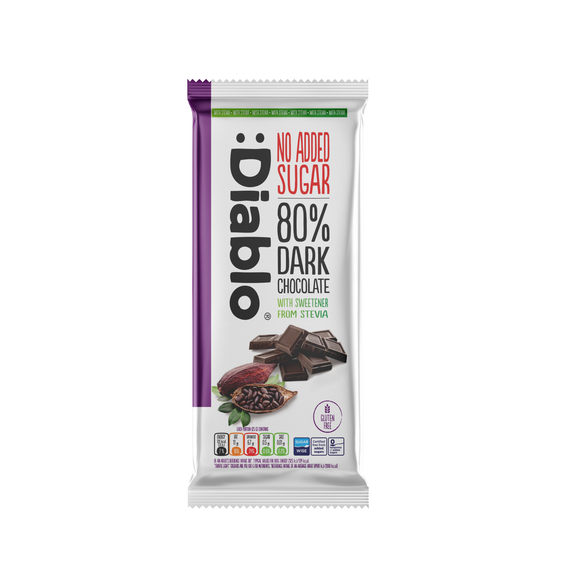
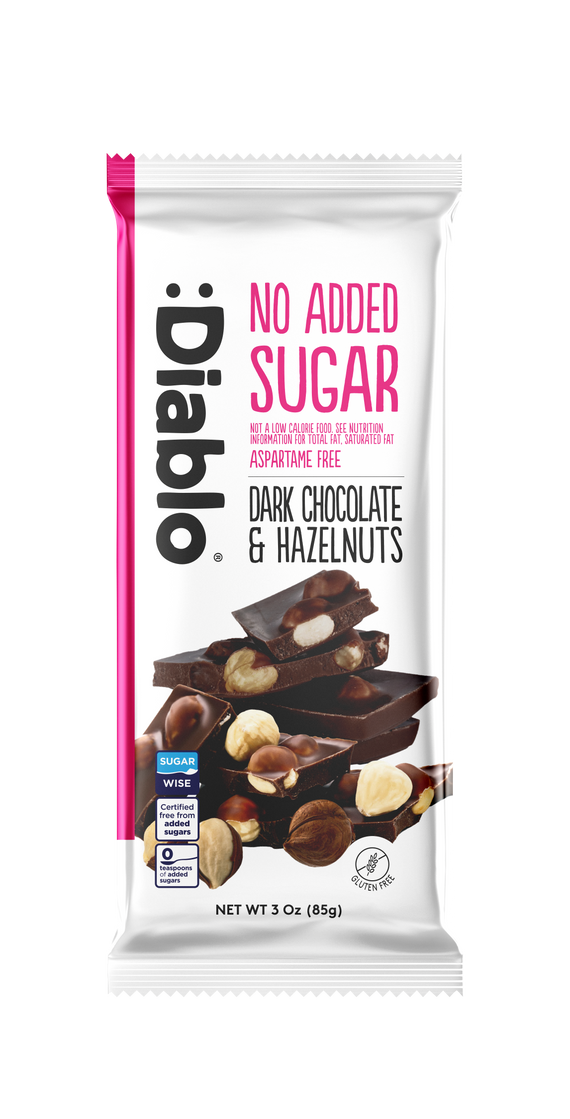
The Diablo Sugar Free range includes chocolates, cookies, wafers, spreads, sauces, gummies, and breakfast bars, all made with sweeteners instead of added sugar. Across most of the range, maltitol is the primary sweetener; some hard sweets also contain isomalt, several lines include a small amount of steviol glycosides from stevia, and inulin is used as a source of fibre. Maltitol is absorbed slowly and produces a lower and slower blood glucose rise than sugar; it still contributes carbohydrate, so count the total carbohydrate per serving rather than assuming a product is glucose-neutral. Always check the individual product label and respect the serving-size guidance.
Shop Diablo Dark Chocolate

Sweeteners Explained: A Plain-English Guide
The word "sugar-free" on a label is regulated in the UK and EU: a product can only carry this claim if it contains no more than 0.5g of sugars per 100g. But the sweetener used to replace that sugar determines how the product actually affects blood glucose. This is where many people get caught out.
Polyols (Sugar Alcohols): The Most Common Category in Sugar-Free Confectionery
Polyols, also known as sugar alcohols, are the most widely used sweeteners in sugar-free confectionery. Common examples include maltitol, isomalt, sorbitol, and xylitol. They occur naturally in some fruits and are commercially produced from other sugars and starches.
Polyols have a lower glycaemic index than sucrose and provide fewer calories (approximately 1.3 to 2.4 calories per gram compared to 4 cal/g for sugar). However, they are not calorie-free and they do still contribute to total carbohydrate intake. Their blood glucose impact varies: isomalt and sorbitol sit at the lower end (GI approximately 9), while maltitol has a more significant effect (GI approximately 35).
Polyols are absorbed slowly, which is the point. Under UK and EU food law (EU Regulation 1169/2011), any product where polyols exceed 10% of total content carries the statement: "Excessive consumption may produce laxative effects." This statement appears on most Diablo Sugar Free products. Enjoy a few pieces at a time and your gut adjusts. Do not rely on "net carb" claims that deduct 100% of polyol carbohydrates. Current dietary guidance recommends counting approximately 50% of polyol carbohydrates toward your glucose estimate.
Stevia: Zero Glycaemic Index, Well Researched
Stevia is derived from the leaves of the Stevia rebaudiana plant and sweetens via compounds called steviol glycosides. It has a glycaemic index of zero and no impact on blood glucose or insulin levels. In Diablo products, steviol glycosides appear as a small secondary sweetener alongside a polyol such as maltitol, rather than as the main sweetener, so a product listing stevia is not the same as a stevia-only product.
Isomalt: Commonly Used in Hard Sweets
Isomalt is a polyol derived from beet sugar and has a glycaemic index of approximately 9, significantly lower than maltitol. It is widely used in hard sweets and confectionery because it handles heat well and produces a clean, slightly sweet flavour. It still contributes carbohydrates, so portions should be accounted for. The polyol laxative warning applies.
Maltitol: The Most Widely Used Sugar Replacer
Maltitol is one of the most widely used polyols in commercial sugar-free confectionery because it closely mimics sugar's taste, texture and behaviour in manufacturing, and it is the primary sweetener across most of the Diablo range. It is absorbed slowly, and consumption of foods containing maltitol instead of sugar induces a lower blood glucose rise after their consumption compared to sugar-containing foods (GB nutrition and health claims register). With a glycaemic index of approximately 35 it still contributes carbohydrate, so check the ingredient list for which sweetener appears first, and count around 50% of the polyol carbohydrates from maltitol-based products.
Erythritol: Very Low Impact
Erythritol is a polyol that passes through the body largely unabsorbed, resulting in a glycaemic index of approximately 0 to 1 and minimal caloric contribution. It is generally well tolerated. A 2023 study from the Cleveland Clinic raised preliminary questions about higher blood erythritol levels and cardiovascular markers, though the research has not established causation and major regulatory authorities continue to classify erythritol as safe. This is an active area of research.
| Sweetener | GI Score | Calories / g | Blood Glucose Impact | Common In | Rating |
|---|---|---|---|---|---|
| Stevia | 0 | 0 | None | Minor secondary sweetener in several Diablo lines; beverages | Best |
| Erythritol | 0 to 1 | 0.2 | Negligible | Keto-range products | Best |
| Isomalt | ~9 | 2.0 | Low | Hard sweets (e.g. Diablo Mint & Cream Sweets) | Good |
| Sorbitol | ~9 | 2.6 | Low | Gummies, chewing gum, some confectionery | Good |
| Xylitol | 7 to 13 | 2.4 | Low | Chewing gum; baking | Moderate |
| Maltitol | ~35 | 2.1 | Lower than sugar; count 50% of carbs | Primary sweetener in most Diablo chocolates, cookies, wafers and gummies | Good |
| Table Sugar (sucrose) | 65 | 4.0 | High | Standard confectionery | Avoid |
Sources: GoodRx; Mayo Clinic; Diet Doctor; Diabetes UK; PMC research. "Common In" reflects Diablo ingredient declarations. GI values are reference figures and may vary by product formulation.
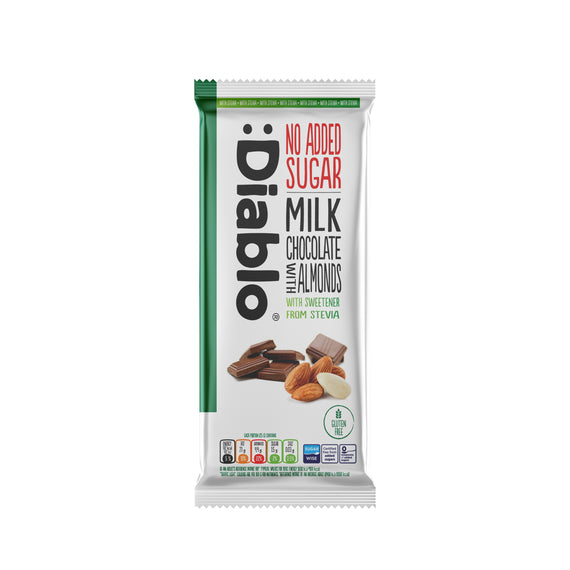
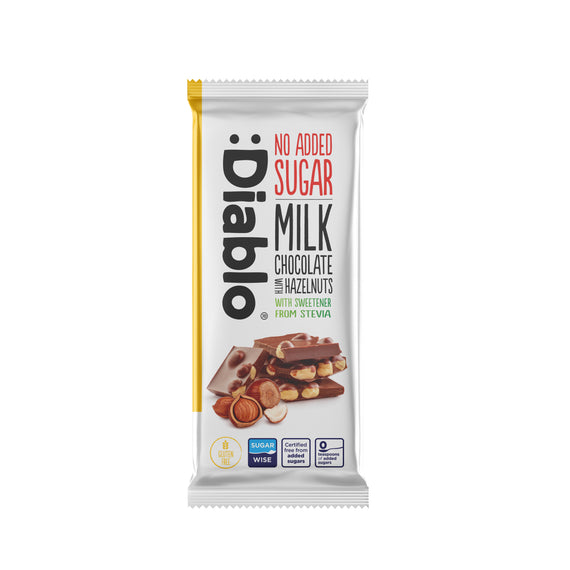
Shop Diablo No Added Sugar Chocolate

Reading the Label: What to Check on Sugar-Free Products
A nutrition label check takes 60 seconds and can completely change the quality of your sweet choice. Here is a step-by-step framework for sugar-free confectionery labels specifically.
- Total carbohydrate per 100g. This is your primary figure, more important than the sugar line. It tells you the full carbohydrate load of the product before any deductions
- Of which sugars. In a genuinely sugar-free product (under UK/EU law), this should be 0.5g per 100g or below. A "no added sugar" product may show a higher figure from naturally occurring sugars (for example from milk or fruit)
- Of which polyols. This figure tells you how much of the carbohydrate load comes from polyols. To estimate blood glucose impact, deduct approximately 50% of this figure from total carbs, not 100%
- Fibre content. Higher fibre generally means a slower glucose response. Look for this as a positive signal, especially in biscuits and bars
- Serving size. Always calculate nutrition figures based on how much you will actually eat, not just the per-100g figures. Many packs list nutrition both per 100g and per portion
- The polyol warning. If present, it confirms the product contains meaningful quantities of sugar alcohols. This is not a reason to avoid the product; it is a reason to respect the portion guidance
The Net Carb Calculation Explained
Some sugar-free products advertise a "net carb" figure, calculated by deducting all fibre and all polyol carbohydrates from the total. This approach overstates the benefit of polyols. Because polyols are partially absorbed by the body, the scientific consensus is that only approximately 50% of polyol carbohydrates should be deducted when estimating glucose impact.
| Calculation | Example: Product Per Serving |
|---|---|
| Total carbohydrate per serving | 18g |
| Of which polyols (maltitol) | 12g |
| Of which fibre | 2g |
| Pack "net carb" claim (100% of polyols deducted) | 4g (potentially misleading) |
| More accurate estimate (50% of polyols deducted) | 10g (use this figure) |
The 50% polyol deduction rule is recommended by the Diabetes Action Research and Education Foundation and widely cited by registered dietitians specialising in diabetes nutrition.
Real Product Data: Diablo Sugar Free Nutritional Reference
To illustrate what real sugar-free and no-added-sugar confectionery looks like on a label, here is verified nutritional data from selected Diablo Sugar Free products. These figures are taken directly from COA (Certificate of Analysis) documents and represent accurate nutritional values per the product specification.
| Product | Serving | Carbs / Serving | Sugars / Serving | Polyols / Serving | Fibre / Serving | kcal / Serving |
|---|---|---|---|---|---|---|
|
Diablo SF Dark Chocolate 85g (CHK-085-DKM-P15) |
14g | 6.6g | 0.1g | 5.9g | 1.1g | 67 kcal |
|
Diablo SF Dark Chocolate & Hazelnuts 85g (CHK-085-HZM-P15) |
14g | 6g | 0.1g | 5.3g | 1.1g | 70 kcal |
|
Diablo NAS Milk Chocolate 85g (CHK-085-MKM-P15) |
14g | 6.4g | 1.2g | 5.3g | 0.4g | 71 kcal |
|
Diablo NAS Milk Chocolate with Hazelnuts 75g (CHK-075-HZS-P15) |
25g | 13g | 1.7g | 11g | n/a | 124 kcal |
|
Diablo NAS Apricot Muesli Bar 30g (BRB-030-APC-P28) |
30g | 21g | 2.3g | 6.3g | 1.5g | 98 kcal |
|
Diablo NAS Hazelnut Muesli Bar 30g (BRB-030-HZL-P28) |
30g | 20.4g | 1.2g | 6.6g | 1.2g | 106 kcal |
Data derived from verified product specification (COA) records. All products above are made with sweeteners instead of added sugar. "SF" = Sugar Free (max 0.5g sugars per 100g). "NAS" = No Added Sugar. Polyols present in all products above; laxative warning applies. Per-serving figures shown where COA data is available. Always refer to the individual product label as the primary reference.
SF (Sugar Free) means the product contains no more than 0.5g of sugars per 100g, meeting the UK and EU regulatory threshold. NAS (No Added Sugar) means no mono- or disaccharides have been added during manufacturing, but naturally occurring sugars (from milk, fruit, or other ingredients) may still be present. The Diablo SF Dark Chocolate (CHK-085-DKM-P15) carries the SF designation, with no more than 0.5g of sugars per 100g. NAS products, such as the milk chocolate and muesli bars, contain small amounts of naturally occurring sugars and have higher carbohydrate totals per serving. Factor accordingly into your carbohydrate budget.
Shop the Products in this Table


Practical Strategies for Managing Sweet Choices
Strategy 1: Timing Your Treats
When you eat a sweet food matters almost as much as what you eat. Eating a small sweet portion immediately after a balanced meal, one that contains protein, fat, fibre, and vegetables, significantly blunts the blood glucose response compared to eating the same food on an empty stomach. The existing food in your digestive system slows gastric emptying and moderates how quickly glucose enters the blood.
- After a balanced dinner: a natural moment for a small square of chocolate or a couple of no-added-sugar biscuits. Pair with unsweetened tea or black coffee
- Never on an empty stomach: even low-GI sweet foods will produce a faster and higher glucose rise when there is nothing else in the digestive system to slow absorption
- After light physical activity: muscles become more receptive to glucose after exercise, reducing the blood glucose impact of a small treat
- Avoid late night: insulin sensitivity decreases in the evening hours. A portion that is manageable after dinner may produce a larger glucose rise at 10pm
Shop Diablo Single-Serve Treats


Strategy 2: Portion Control Without Deprivation
Portion size is the most powerful lever you have for enjoying sweet foods without compromising blood sugar control. The goal is not to deprive yourself. It is to be deliberate.
Minimum Satisfying Portion
One small square of 85% dark chocolate or one piece of sugar-free confectionery. Approximately 2 to 3g net carbohydrate. A sensible starting point when prioritising blood sugar management.
Standard Daily Treat
Two squares of dark chocolate or one to two no-added-sugar biscuits. The portion most dietitians cite as a realistic daily sweet allowance alongside a balanced diet.
Upper Daily Limit
Three small squares or one serving of confectionery as stated on the pack. Beyond this, carbohydrate and calorie accumulation outweighs additional enjoyment for most people.
Strategy 3: The Fat-Fibre-Protein Pairing Rule
Eating any sweet food alongside a source of protein, fat, or fibre further buffers the glucose response. This is a well-established principle in diabetes nutrition education. Practical pairings that work well include a square of dark chocolate with a small handful of almonds, a biscuit alongside plain Greek yoghurt, or a piece of fruit with a few nuts.
Strategy 4: Monitor Your Personal Response
No general guideline can tell you exactly how a specific food will affect your blood glucose, because individual responses vary considerably based on the type of diabetes, current medication, activity levels, stress, and gut microbiome composition. Using a continuous glucose monitor (CGM) or performing a finger-prick test at 90 to 120 minutes after eating a new sweet food gives you actionable, personal data.
Keep a simple log for two to three weeks when you first introduce any new sweet product to your routine. This removes the guesswork and lets you build a personal reference of which choices work well for your body.
Sweet Options at a Glance: Practical Comparison
| Sweet Choice | GI Range | Typical Carbs per Serving | Notes | Best Strategy |
|---|---|---|---|---|
| Berries (150g) | 25 to 40 | 8 to 12g | Low GI; fibre slows absorption | Daily snack, any time |
| Apple, small (120g) | ~36 | ~15g | Low to medium GI; pair with protein | With nuts or protein |
| Dark Chocolate 70%+ (28g) | ~23 | ~13g | Low GI as a food category | Post-dinner treat |
|
Diablo SF Dark Chocolate 85g (14g serving) CHK-085-DKM-P15 |
n/a | 6.6g total; 0.1g sugar | Sugar free; made with maltitol, count total carbs | After a meal; one serving |
|
Diablo NAS Milk Chocolate 85g (14g serving) CHK-085-MKM-P15 |
n/a | 6.4g total; 1.2g sugar | No added sugar; made with maltitol, count total carbs | With a meal; one serving |
| Regular Milk Chocolate (45g bar) | ~45 | ~26g sugar | High sugar | Strictly limited; small portion only |
| Regular Gummy Sweets | 75 or above | 30 to 40g per small pack | Very high GI | Best avoided |
Diablo product figures from verified COA nutritional data. GI scores for non-Diablo foods are reference values from published dietary databases. Diablo products are made with sweeteners instead of added sugar; count the total carbohydrate per serving. Individual responses vary.
Shop Diablo Sugar Free Variety


A Note on Regulated Language and Marketing Claims
If you research sugar-free products online, you may notice that responsible UK and EU brands do not use certain phrases that were common a decade ago. There is a legal reason for this.
Under EU Regulation 609/2013, retained in UK law via the European Union (Withdrawal) Act 2018, labels and marketing materials for any food product are prohibited from presenting a food as specially made for, or suitable for, people with diabetes, however the claim is worded. These claims were outlawed in 2016 after the European Commission and Diabetes UK concluded there was no scientific basis for them, and that they had frequently misled consumers, including newly diagnosed patients, into believing certain products were clinically superior or medically necessary.
What you can trust instead are regulated nutrition claims: "sugar free" (legally requires 0.5g or fewer sugars per 100g), "no added sugar" (legally requires that no mono- or disaccharides have been added), and "made with sweeteners instead of sugar." These claims have specific legal thresholds behind them. This is why this guide describes Diablo products only in those terms, and never as being suitable for, or beneficial to, any medical condition.
Regulated phrases you can trust: "sugar free", "no added sugar", "with sweetener(s)", "made with sweeteners instead of sugar." Phrases to treat with scepticism if not backed by specific approved claims: "healthy", "guilt-free", "kind to your body", "great for blood glucose." These are not legally regulated nutrition or health claims in the UK or EU and cannot accurately describe a food's medical benefit.
Frequently Asked Questions
References and Sources
- American Diabetes Association. Sweet treats and desserts. diabetesfoodhub.org
- Diabetes UK. What can I eat with diabetes? Updated 2025. diabetes.org.uk
- Davison K. et al. (2022). Sugar-free dark chocolate and blood glucose in adults with diabetes. PMC. PMC8832613
- Seyfi A.M. et al. (2020). Effects of stevia on glycaemic and lipid profiles in adults with type 2 diabetes: a randomised controlled trial. Avicenna Journal of Phytomedicine, 10(2), 118-127. PMC7103435
- NHS. Food and diabetes. Updated 2025. nhs.uk
- Diabetes Action Research and Education Foundation. Can I eat sweet foods if I have diabetes? diabetesaction.org
- GoodRx Health. Best and worst sweeteners by glycaemic index. Updated 2025. goodrx.com
- European Commission. Regulation (EU) No 609/2013 on food intended for specific groups. 2013.
- Statista. Diabetes in the United Kingdom: statistics and facts. Updated 2026.
- The Lancet Diabetes and Endocrinology. Alarming rise in young-onset type 2 diabetes. June 2024.
Ready to Enjoy Sweet Without Compromise?
Diablo Sugar Free crafts chocolates, cookies, wafers, spreads, and sweets using sweeteners instead of added sugar. No added sugar. Transparent nutrition labelling. Genuine taste for everyone who refuses to give up life's sweet moments.
Shop Diablo Sugar FreeNo added sugar. Made with sweeteners. Excessive consumption of polyols may produce laxative effects.