 Chocolate Bars
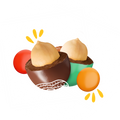 Dragees
 Cakes & Muffins
 Sweets & Gummies
 Cookies
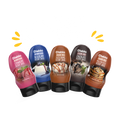 Dessert Sauces
 Wafers
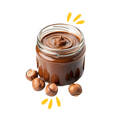 Spreads
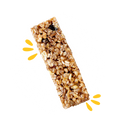 Muesli Bars
 Guilt-free Gifting
 Sales & Promotions

What Are Kosher Sugar-Free Sweets?
Kosher sugar-free sweets are confectionery products that carry valid kosher certification AND contain no added sugar. The two standards are entirely independent and must each be verified separately. Here is what you need to know:
- +Kosher certification confirms a product meets Jewish dietary law (kashrut), covering ingredients, equipment, supervision, and ingredient sourcing
- +Sugar Free (SF) means no more than 0.5g sugars per 100g; sweetness comes from polyols or intense sweeteners such as stevia or sucralose
- +No Added Sugar (NAS) means no sugar was added during production, but naturally occurring sugars from ingredients such as fruit or malt may still be present
- +The main sweetener family is polyols (sugar alcohols): maltitol, isomalt, sorbitol, and xylitol are the most common
- +The global sugar-free confectionery market was valued at USD 2.45 billion in 2024 and is forecast to reach USD 3.16 billion by 2030 (Grand View Research)
- +Diablo Sugar Free offers 56 kosher-certified products across its range, all formulated with polyol sweeteners and free from added sucrose; check the hechsher on each pack
You observe kashrut. You also want to cut back on sugar, manage a diabetes diagnosis, or simply eat more thoughtfully without giving up the pleasure of sweet food. The question is: can you do both at once?
The answer is yes, and the range available today is broader, more sophisticated, and more flavour-forward than most people realise. This guide covers every angle of kosher sugar-free confectionery: what the certifications mean, how different sweeteners behave in the body, which Diablo Sugar Free products fit the brief, and a practical buying guide for both consumers and B2B buyers.
This guide references guidance from the Orthodox Union (OU), OK Kosher Certification, Star-K, the U.S. FDA, Grand View Research, and peer-reviewed nutritional science. It is intended for educational purposes only. Always consult your physician or registered dietitian for personalised dietary advice.
- What does kosher sugar-free actually mean?
- Kosher certification: what to look for on packaging
- The science of sugar-free sweeteners
- Sugar Free vs No Added Sugar: the key difference
- Passover and kosher sugar-free sweets
- Who kosher sugar-free sweets are for
- The full Diablo Sugar Free range
- The kosher certified range
- 5-step buyer's checklist
- Frequently asked questions
What Does Kosher Sugar-Free Actually Mean?
The phrase combines two entirely independent regulatory frameworks. A product can be kosher without being sugar-free, and sugar-free without being kosher. For it to be both, it must independently satisfy each set of requirements.
The Kosher Framework: Kashrut at a Glance
Kashrut is the body of Jewish dietary law that determines which foods are permitted and how they must be produced. For a confectionery product to carry kosher certification, a recognised rabbinic authority must inspect and supervise:
- Every ingredient in the formulation, including flavours, emulsifiers, and processing aids
- The manufacturing equipment, including whether it is used for non-kosher products between runs
- The cleaning and separation protocols between dairy, meat, and pareve (neutral) production runs
- The ingredient supply chain, including the kosher status of derivative ingredients such as glycerol, lecithin, and sugar alcohols
This level of oversight is why kosher certification is considered a meaningful quality and trust signal even by non-Jewish consumers who follow halal, vegetarian, or allergen-aware diets.
The Sugar-Free Framework: What the Label Really Says
Under EU food labelling regulation, a product may only be labelled "Sugar Free" if it contains no more than 0.5g of sugars per 100g. "No Added Sugar" means no sugar or sweetening substance has been added during manufacturing, though naturally occurring sugars may still be present from other ingredients.
Both designations are legitimate, but they serve different needs. A consumer with diabetes managing carbohydrate intake will read the nutrition panel rather than rely on the front-of-pack claim. The line to check is "of which sugars" under Total Carbohydrates.
Kosher Certification: What to Look For on Packaging
The certifying body is identified by a symbol printed on the packaging, known as a hechsher. The most widely recognised internationally are:
In addition to the certifying body, the hechsher will often indicate the kosher category of the product:
| Category | Meaning | Relevance for Confectionery |
|---|---|---|
| Pareve | Contains neither meat nor dairy ingredients | Most hard candies, gummies, and dark chocolate |
| Dairy (Chalav) | Contains dairy ingredients or was produced on dairy equipment | Milk chocolate, some white chocolate, some wafers |
| Kosher for Passover (KLP) | Meets additional Passover restrictions | A separate symbol; not all kosher products carry this |
The absence of a recognisable hechsher means a product is not certified kosher, regardless of its ingredient list. Self-declared kosher claims without a certifying body symbol carry no rabbinic authority.
The Science of Sugar-Free Sweeteners in Kosher Confectionery
The sweetener used determines both the blood sugar impact and the kosher status of a sugar-free product. These are not the same question, and both matter.
Polyols (Sugar Alcohols): The Primary Sweetener Family
Polyols are carbohydrate-derived compounds that provide sweetness while being metabolised more slowly than sucrose. The U.S. FDA classifies them as sugar substitutes and notes they provide approximately 2.6 calories per gram, compared to 4 calories per gram for regular sugar. They cause a lower and slower rise in blood glucose than sugar, which is why they are widely used in this category.
The kosher status of each polyol is not automatic. It depends on the source material and, critically, whether the manufacturing equipment has been used for dairy ingredients such as lactitol. The OU has published guidance noting that sorbitol, once considered kosher-problem-free, now requires reliable certification because lactitol (produced from dairy lactose) is frequently made on the same equipment.
| Sweetener | Sweetness vs Sugar | Glycaemic Index | Kosher Status | Common Use in SF Confectionery |
|---|---|---|---|---|
| Maltitol | 75 to 90% | ~35 | Requires certification; dairy risk on shared equipment | Chocolate, cookies, muffins, cakes |
| Isomalt | 45 to 65% | ~9 | Generally kosher; verify source | Hard candy, lollipops, toffees |
| Sorbitol | ~60% | ~9 | Requires certification; cross-contamination risk | Hard candy, soft candy, gums |
| Xylitol | ~100% | 7 to 13 | Generally kosher; verify source | Gums, mints, some candy |
| Erythritol | ~70% | ~0 | Generally kosher; verify source | Gummies, chocolate (auxiliary) |
| Stevia (steviol glycosides) | 200 to 300x | 0 | Requires certification; carriers and additives must be checked | Beverages, some candy and chocolate |
| Sucralose | ~600x | 0 | Requires certification | Gums, drinks, some confectionery |
Sources: OU Kosher, OK Kosher, FDA, Wikipedia (Maltitol), Healthline, Knowde Polyol Comparison. GI values are reference figures and may vary by product.
Why Maltitol Dominates Kosher Sugar-Free Chocolate
Maltitol is the industry standard sweetener for chocolate manufacture because it dissolves similarly to sucrose, provides clean sweetness without a bitter or cooling aftertaste, and creates a texture nearly indistinguishable from sugar-sweetened chocolate. It is a disaccharide produced by the hydrogenation of maltose derived from starch.
Diablo Sugar Free products use polyols across the chocolate and confectionery ranges to achieve this balance. The key thing for people managing diabetes to understand is that maltitol is not zero-carbohydrate. It has a glycaemic index of approximately 35 and does contribute to the carbohydrate count on the nutrition label. Total carbohydrates, not just the sugar line, should be considered when managing blood glucose.
When calculating the impact of a sugar-free product on your blood glucose, do not only read the "of which sugars" line. Check total carbohydrates per serving, and note how much of that total is listed as polyols. Polyols produce a lower and slower blood glucose rise than sugar, but responses vary by the specific polyol and the individual.
Sugar Free vs No Added Sugar: The Key Difference
These two label claims appear on Diablo Sugar Free products and mean different things. Understanding the distinction avoids confusion at the point of purchase.
| Label | EU Regulatory Meaning | Sugar per 100g | Example Diablo Products | Best For |
|---|---|---|---|---|
| Sugar Free (SF) | No more than 0.5g sugars per 100g | Max 0.5g | SF Chocolate Muffin 45g, SF Gummy Bears 75g, SF Chocolate Dessert Sauce 360g | The strictest sugar limits |
| No Added Sugar (NAS) | No sugar added during production; naturally occurring sugars may be present | Varies (check panel) | NAS Apricot Muesli Bar 30g, NAS Milk Chocolate 85g, NAS Hazelnut and Chocolate Spread 350g | Reduced sugar diet; health-conscious consumers; those tolerant of small natural sugar amounts |
Both are legitimate, certified claims. For a consumer with Type 1 or Type 2 diabetes tracking carbohydrate intake carefully, the SF products carry the lowest "of which sugars" figures, and the panel lists total carbohydrates for precise counting. NAS products remain considerably lower in sugar than conventional confectionery and suit shoppers who are simply reducing sugar.
Passover and Kosher Sugar-Free Sweets: What You Need to Know
Standard kosher certification does not automatically make a product suitable for Passover (Pesach). The Passover dietary rules add further restrictions that affect sugar-free confectionery specifically.
What Changes During Passover
During Passover, chametz (leavened grain products including wheat, barley, oats, rye, and spelt) is entirely prohibited. For Ashkenazic Jews, kitniyot (legumes, certain seeds, and their derivatives including many starches) are also traditionally avoided. Sephardic Jews generally permit kitniyot.
This creates specific issues for sugar-free confectionery:
- Maltitol is typically derived from corn starch via hydrogenation of corn syrup. Corn is considered kitniyot for Ashkenazic Jews, meaning maltitol-sweetened products may not be permissible during Passover without specific KLP certification.
- Isomalt is derived from beet sugar. Beet sugar is generally accepted as kosher for Passover when properly certified, making isomalt-sweetened hard candies a more accessible option.
- Confectioner's sugar used in some NAS baked products may contain cornstarch, which creates the same kitniyot concern for Ashkenazic observance.
A Passover-suitable product must carry a specific Kosher for Passover (KLP) symbol from the certifying body, which is distinct from the regular kosher hechsher. If a product does not carry KLP designation, it cannot be assumed to meet Passover dietary requirements regardless of its regular kosher status.
What to Look For at Passover
Verify KLP Symbol
Look specifically for the KLP or "Kosher for Passover" designation from the certifying body. The regular hechsher alone is not sufficient.
Check the Sweetener
Isomalt (from beet) and erythritol are generally more Passover-accessible than maltitol (from corn) for Ashkenazic observance.
Confirm Pareve Status
For Passover gifting or festive meals, pareve certification ensures the product can be served alongside both meat and dairy courses.
Contact the Certifier
When in doubt, the certifying body's consumer helpline or website database is the definitive source. OU, Star-K, and KLBD all publish searchable product databases.
Who Kosher Sugar-Free Sweets Are For
People Managing Diabetes and Pre-Diabetes
The largest single audience for kosher sugar-free sweets is people managing diabetes. For this group, the combination of kashrut observance and low-sugar eating is not optional; it is a daily medical and religious requirement. Polyols produce a lower and slower blood glucose rise than sugar, which is exactly why this category exists.
A peer-reviewed PMC clinical study found that sugar-free dark chocolate produced a 65% lower incremental area under the curve (iAUC) compared to regular dark chocolate in participants with diabetes. As with any food, individual responses vary, so read the panel carefully and monitor your own response.
Polyol-sweetened products do not mean carbohydrate-free. Total carbohydrates should still be counted in any diabetes meal plan. Consult a registered dietitian or physician before making significant dietary changes. Individual blood glucose responses vary considerably and are best monitored with a finger-prick test or CGM 90 to 120 minutes after eating.
Keto and Low-Carb Followers Who Observe Kashrut
The ketogenic diet restricts daily carbohydrates to typically 20 to 50g. Keto followers who observe kashrut typically compare the total carbohydrate and polyol figures on the panel against that allowance. Isomalt, erythritol, and stevia carry the lowest published GI values, while maltitol, with a published GI of approximately 35, remains popular for its superior taste profile in chocolate products.
Health-Conscious and Reduced-Sugar Consumers
A growing segment of consumers simply wants to eat less sugar, without necessarily following a specific medical diet. Rising awareness of sugar's contribution to obesity, tooth decay, and metabolic disease has driven demand for sugar-free alternatives. The global sugar-free confectionery market reflects this: valued at approximately USD 2.45 billion in 2024, it is projected to reach USD 3.16 billion by 2030 at a compound annual growth rate of 4.2%, according to Grand View Research. Chocolate confectionery accounts for the largest segment at 44.7% of the market.
Fitness and Weight Management Consumers
For active consumers and those on calorie-controlled diets, sugar-free confectionery provides the sensory satisfaction of sweet food with a reduced calorie impact. Polyols deliver approximately 2.6 kcal per gram versus 4 kcal per gram for sucrose. The Diablo muesli bar range additionally provides fortified levels of folic acid, vitamin D, and iron, adding micronutrient content alongside a lower sugar profile.
B2B Buyers: Retailers, Importers, Health Store Buyers
For wholesale and retail buyers, kosher certification opens access to a highly engaged, loyalty-driven consumer segment with distinct purchasing patterns tied to Jewish calendar events including Shabbat, Rosh Hashanah, Hanukkah, and Purim. Sugar-free and kosher is a particularly strong combination for:
- Health food stores and pharmacy chains serving communities managing diabetes in areas with significant Jewish populations
- Online specialty food retailers catering to Jewish markets in the UK, US, Europe, and Australasia
- Gym nutrition and sports retail stores seeking low-sugar confectionery snacks alongside supplement ranges
- International distributors supplying kosher aisles in major supermarket chains
- Corporate gifting buyers requiring dietary-inclusive confectionery for diverse workforces
The Full Diablo Sugar Free Range
Diablo Sugar Free is a leading European confectionery brand developed specifically for consumers who want to reduce or eliminate added sugar without sacrificing taste or variety. The range spans more than 90 SKUs across the full confectionery spectrum, all formulated with polyols as the primary sweetener; 56 SKUs carry kosher certification per current COA records, so always check the hechsher on the specific pack.
All products marked SF contain no more than 0.5g sugars per 100g. Products marked NAS contain no added sugar but may include naturally occurring sugars from fruit, dairy, or malt ingredients. All data below is sourced from COA-verified nutritional records.
Sugar-Free Hard Sweets
Seven hard candy SKUs are available in the Diablo sweet (SWT) range, covering a full spectrum of flavour profiles. Six carry kosher certification per current records; the Fruit Flavoured Toffees are the exception, so check the hechsher on the pack:
Shop Diablo Hard Sweets


Sugar-Free and No Added Sugar Chocolates
The chocolate range (CHK) is the broadest in the Diablo portfolio with 21 SKUs, spanning milk, dark, and white chocolate in bar, button, peanut, and luxury box formats. The full range includes no-added-sugar variants for consumers who want a gentler sweetener profile. Kosher certification applies to selected chocolate SKUs only; check the hechsher on the pack.
| Product Name | SKU | Claim | Key Feature |
|---|---|---|---|
| Diablo NAS Milk Chocolate 85g | CHK-085-MKM-P15 | NAS | Classic milk chocolate, no added sugar |
| Diablo No Added Sugar Dark Chocolate 85 g | CHK-085-DKM-P15-24M | NAS | No added sugar dark chocolate |
| Diablo No Added Sugar Dark Chocolate and Hazelnuts 85 g | CHK-085-HZM-P15-18M | NAS | Dark chocolate with whole hazelnuts |
| Diablo NAS Dark Chocolate with Orange 75g | CHK-075-DKG-P12 | NAS | Dark chocolate with natural orange |
| Diablo NAS 80% Dark Chocolate 75g | CHK-075-DKS-P15 | NAS | High-cocoa, low sugar content |
| Diablo NAS White Chocolate with Strawberry 75g | CHK-075-STR-P12 | NAS | White chocolate with strawberry |
| Diablo NAS Milk Chocolate with Hazelnuts 75g | CHK-075-HZS-P15 | NAS | Milk chocolate with whole hazelnuts |
| Diablo NAS Luxury Chocolate Box 142g | CHK-142-LCB-P5 | NAS | Premium gifting format |
| Diablo NAS Dubai Chocolate 200g | CHK-200-DXB-P12 | NAS | Large-format premium bar |
| Diablo NAS Milk Chocolate Bubble Bar 30g | CHK-030-BBL-P24 | NAS | Single-serve aerated milk chocolate |
Shop Diablo Chocolates


Sugar-Free and No Added Sugar Cookies
The cookie range (COK) covers 16 SKUs across butter, almond, hazelnut, coconut, chocolate chip, peanut, and premium coated formats. The range includes both EU and US-format packaging, making it suitable for distributors across multiple markets. Most cookie SKUs carry kosher certification; confirm the hechsher on the specific pack.
- Diablo SF Chocolate Chip Cookies 130g (COK-130-CHP-P12) - a classic format with zero added sugar
- Diablo NAS Digestive Cookies 150g (COK-150-DGV-P18) - a health food staple, widely ranged in pharmacy and health store channels
- Diablo NAS Almond Cookies 145g (COK-145-ALM-P12) - premium nut-enriched, no added sugar
- Diablo NAS Butter Cookies 135g (COK-135-BTR-P12) - a traditional format with no added sugar
- Diablo NAS Coconut Cookies with Caramel and Peanuts 100g (COK-100-CCP-P18) - a combination format with wide consumer appeal
- Diablo NAS Cookies and Cream Dark Chocolate 128g (COK-128-BRN-P27) - sandwich-style with dark chocolate coating
- Diablo SF Coconut Cookies 150g (COK-150-CCN-P12) - sugar free with coconut flavour profile
Shop Diablo Cookies


Kosher Sugar-Free Cakes and Muffins
The cake range (CAK) covers 14 products from individually wrapped single-serve muffins to large-format sharing cakes. All SF products contain 0g sugar. Key nutritional facts for popular items, sourced from verified COA data:
| Product | SKU | Claim | kcal / 100g | Sugar / 100g | Polyols / 100g |
|---|---|---|---|---|---|
| Diablo SF Chocolate Muffin 45g | CAK-045-CHK-P24 | SF | 386 kcal | 0g | 19g |
| Diablo SF Chocolate Chip Muffin 45g | CAK-045-CHP-P24 | SF | 377 kcal | 0g | 18.8g |
| Diablo SF Vanilla Muffin 45g | CAK-045-VNL-P24 | SF | 387 kcal | 0g | 19.5g |
| Diablo SF Marble Cake 400g | CAK-400-MRB-P8 | SF | 387 kcal | 0g | 19.5g |
| Diablo NAS Lemon Cake 200g | CAK-200-LMN-P8 | NAS | 387 kcal | 0g | 19.5g |
| Diablo NAS Apple Cake 450g | CAK-450-APL-P8 | NAS | 295 kcal | 0g | 16g |
| Diablo SF 6 Chocolate Muffins 270g | CAK-270-CHK-P12 | SF | 386 kcal | 0g | 19g |
All nutritional data sourced from COA-verified records. Figures are per 100g.
Shop Diablo Cakes and Muffins


No Added Sugar Muesli Bars
All nine Diablo muesli bars (BRB range) carry the NAS designation and are additionally fortified with folic acid, vitamin D and iron. Note that the muesli bars do not currently carry kosher certification:
| Vitamin / Mineral | Amount per 100g | % NRV |
|---|---|---|
| Folic Acid | 100 mcg | 50% |
| Vitamin D | 2.5 mcg | 50% |
| Iron | 7 mg | 50% |
The range covers nine flavour profiles. Per COA data the bars provide 314 to 387 kcal per 100g, roughly 94 to 116 kcal per 30g bar, a practical on-the-go snack for health-conscious and active consumers:
- Diablo NAS Apricot Muesli Bar 30g (BRB-030-APC-P28) - 326 kcal per 100g, 7.5g naturally occurring sugars per 100g
- Diablo NAS Hazelnut Muesli Bar 30g (BRB-030-HZL-P28) - 354 kcal per 100g, 4g naturally occurring sugars per 100g
- Diablo NAS Cranberry and Raspberry Muesli Bar 30g (BRB-030-CRN-P28) - 314 kcal per 100g, 5g naturally occurring sugars per 100g
- Diablo NAS Yoghurt Muesli Bar (Apricot, Cherry, Strawberry, Apple, Forest Fruits) (BRB-030-YAC/YAP/YCH/YFF/YST) - 385 to 387 kcal per 100g
- Diablo NAS Lime Muesli Bar 30g (BRB-030-LIM-P28) - 328 kcal per 100g, 3g naturally occurring sugars per 100g
Shop Diablo Muesli Bars


Sugar-Free Gummies
Three gummy formats are available in the Diablo range (GMY), all carrying the Sugar Free claim and sweetened with polyols. The gummies contain gelatine and do not currently carry kosher certification, so check the pack if kosher status matters to you:
These are particularly popular with parents seeking a sugar-free alternative to conventional gummy sweets for children, and with adult consumers who prefer a low-sugar confectionery format for everyday snacking.
Shop Diablo Gummies


Sugar-Free and No Added Sugar Spreads
The spread range (SPD) covers five nut-based products, including two peanut butter formats with US-style nutrition labelling for international distribution; the two peanut butters carry kosher certification per current records:
| Product Name | SKU | Claim | kcal / 100g | Protein / 100g |
|---|---|---|---|---|
| Diablo NAS Peanut Butter Crunchy 350g | SPD-350-CPB-P12 | NAS | 618 kcal | 28g |
| Diablo NAS Peanut Butter Smooth 350g | SPD-350-SPB-P12 | NAS | 618 kcal | 28g |
| Diablo NAS Hazelnut and Chocolate Spread 350g | SPD-350-HZL-P12 | NAS | 494 kcal | 6.3g |
| Diablo NAS Duo Hazelnut and White Choco Spread 350g | SPD-350-DUO-P6 | NAS | 491 kcal | 4.6g |
| Diablo NAS White Spread 350g | SPD-350-WHT-P6 | NAS | 488 kcal | 2.9g |
Shop Diablo Spreads


Kosher Sugar-Free Dessert Sauces
Five dessert sauce products (SAC range) cover both SF and NAS claims and are suitable for use across sweet dishes, pancakes, ice cream, and yoghurt:
- Diablo SF Chocolate Dessert Sauce 360g (SAC-360-CHK-P10) - zero added sugar chocolate sauce
- Diablo SF Salted Caramel Dessert Sauce 360g (SAC-360-SCM-P10) - a premium flavour, sugar free
- Diablo SF Maple Syrup Dessert Sauce 390g (SAC-390-MPL-P10) - a versatile breakfast and dessert format
- Diablo NAS Strawberry Dessert Sauce 355g (SAC-355-STR-P10) - fruit-based, no added sugar
- Diablo NAS Blueberry Dessert Sauce 350g (SAC-350-BLB-P10) - fruit-based, no added sugar
Shop Diablo Dessert Sauces


Sugar-Free Wafers and Sandwich Cookies
The wafer range (WFR) includes four products offering light, crisp textures with no added sugar. The sandwich cookie range (SND) covers six formats in both individual serve and multi-pack sizes, including the popular vanilla and dark cocoa cream combinations. The sandwich cookies carry kosher certification; for wafers, check the hechsher per SKU.
The Diablo Kosher Certified Range at a Glance
| Brand | Certification | Claim Type | Product Range | Key Audience | Key Markets |
|---|---|---|---|---|---|
| Diablo Sugar Free | Kosher certified (56 SKUs) | SF and NAS | Chocolates, cookies, cakes, gummies, hard sweets, muesli bars, spreads, sauces, wafers (92 SKUs, 56 kosher certified) | People managing diabetes, keto followers, health-conscious, kosher observant, B2B buyers | Europe, Middle East, international |
Certification is held per SKU, not per brand. Always check the hechsher printed on the pack in front of you.
5-Step Buyer's Checklist
Whether you are a consumer shopping for yourself or a trade buyer sourcing a kosher sugar-free confectionery line, this framework covers everything that matters at the point of decision.
- Verify the kosher symbol. Confirm it is from a recognised certifying body: OU, OK, KLBD, Star-K, KMF, MK, or cRc. Be cautious of unlabelled self-certified claims without a named authority.
- Check the kosher category. Confirm whether the product is Pareve, Dairy, or carries Passover (KLP) designation if relevant to your dietary observance or the occasion for which you are purchasing.
- Read the nutrition panel. Check the "of which sugars" figure under Total Carbohydrates. For SF products this should be 0g per 100g. For NAS products, note the total naturally occurring sugar. Also review the polyol content.
- Identify the sweetener. Products using isomalt or erythritol carry the lowest published GI values. Maltitol provides the best taste profile in chocolate products and carries a GI of approximately 35. Note the sweetener listed first in the ingredients panel.
- Match the product to the occasion. For everyday snacking, the full Diablo NAS range offers excellent variety. Where the strictest sugar limits apply, SF-labelled products carry the lowest "of which sugars" figures. For Passover, look specifically for KLP certification. For B2B ranging decisions, confirm kosher certification documentation is available for supplier auditing.
Frequently Asked Questions
References and Sources
- Grand View Research. Sugar-Free Confectionery Market Size, Share and Trends Report. 2024.
- Orthodox Union (OU Kosher). Sugar Alcohols: Recent Changes and Halachic Ramifications. oukosher.org
- OK Kosher Certification. A Closer Look at Sugar. ok.org
- Star-K Kosher Certification. Raising Cane: The Kashrus Issues of Cane Sugar. star-k.org
- U.S. Food and Drug Administration. Aspartame and Other Sweeteners in Food. fda.gov
- Davison K. et al. (2022). Sugar-Free Dark Chocolate and Blood Glucose in Adults With Diabetes. PMC. PMC8832613
- Knowde. Comparing Sugar Alcohols: Maltitol, Erythritol, Sorbitol, and Xylitol. knowde.com
- Healthline. Maltitol: Is It a Safe Sugar Substitute? healthline.com
- Wikipedia. Maltitol. wikipedia.org
- Diablo Sugar Free. COA-verified nutritional data across 91 products (internal reference, April 2026).
Ready to Enjoy Confectionery Without Compromise?
Diablo Sugar Free crafts chocolates, cookies, sweets, and snacks using polyol sweeteners, with no added sugar across the full range and kosher certification on 56 products. Made for everyone who refuses to give up life's sweet moments.
Shop Diablo Sugar FreeNo added sugar. Kosher certified options. Real taste, done right.