 Chocolate Bars
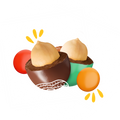 Dragees
 Cakes & Muffins
 Sweets & Gummies
 Cookies
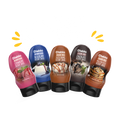 Dessert Sauces
 Wafers
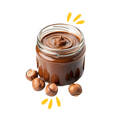 Spreads
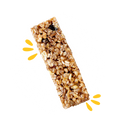 Muesli Bars
 Guilt-free Gifting
 Sales & Promotions

Private Label Confectionery:
Can We Brand It for You?
The complete guide for retailers, distributors, gym brands and health stores looking to launch own-brand sugar-free sweets, chocolates and more
What Is Private Label Confectionery?
Private label confectionery is when a manufacturer produces sweets, chocolates, cookies or other confections that a retailer or brand sells under their own label and branding. The retailer controls brand identity, packaging and pricing. The manufacturer handles formulation, production, food safety certification and logistics.
- ✓Private label lets you sell proven, quality-assured products under your own brand name
- ✓Own-brand margins are typically significantly higher than reselling manufacturer brands
- ✓The global sugar-free confectionery market was valued at approximately USD 2.45 billion in 2024 and is forecast to keep growing
- ✓Diablo Sugar Free offers 91 products across 10 confectionery categories available for private label
- ✓All products are made with sweeteners instead of sugar and carry the appropriate Sugar Free or No Added Sugar claim
- ✓A typical launch timeline from first conversation to first delivery is 10 to 16 weeks
The confectionery aisle is changing. More consumers than ever are actively reducing their sugar intake, whether to manage their health, control their weight, or simply feel better day to day. Health food chains, gym brands, online grocery platforms and specialist retailers are all responding to this shift by expanding their reduced-sugar ranges.
The question for many buyers is not whether to stock sugar-free confectionery. It is whether to stock someone else's brand, or to build your own. This guide explains exactly what private label confectionery involves, why the sugar-free category is one of the most commercially compelling spaces to enter right now, and how the process works from first conversation to finished product on shelf.
This guide is written for B2B buyers: retail category managers, health food chain buyers, gym nutrition brand owners, online grocery platform operators, international distributors, and anyone exploring own-brand confectionery. If you are evaluating private label confectionery as a commercial opportunity, this is the place to start.
Why the Sugar-Free Category Is the Right Place to Build a Brand
Structural trends in food and retail rarely align this clearly. The sugar-free confectionery market is growing for reasons that are not going to reverse: rising health awareness, government sugar reduction policies, and an expanding population of consumers who actively seek reduced-sugar alternatives to everyday treats.
Multiple independent research firms project the global sugar-free confectionery market to grow from USD 3.16 billion to USD 4.13 billion by 2034. Grand View Research projects a compound annual growth rate of 4.2% from 2025 to 2030. The chocolate confectionery segment alone accounted for 44.7% of global sugar-free confectionery revenue in 2024.
For context on what that growth looks like at a retail level: private label sugar-free chocolate candy saw dollar sales increase by over 750% year on year in one tracked US retail period, according to reporting by Snack Food and Wholesale Bakery. That is not a niche trend. It is a mainstream category shift.
What Is Driving Demand
- Health consciousness: Consumers across all age groups are increasingly reading labels and making deliberate choices to reduce sugar intake
- Government sugar reduction policy: Sugar taxes, HFSS advertising restrictions and front-of-pack labelling initiatives in the UK and Europe are creating commercial headwinds for traditional confectionery
- Diabetes prevalence: Over 537 million adults worldwide live with diabetes according to the International Diabetes Federation, with numbers rising each year; many actively seek foods made with sweeteners instead of sugar
- Keto and low-carb lifestyle growth: The ketogenic diet and low-carbohydrate eating patterns remain among the most widely adopted dietary approaches globally
- Post-pandemic health behaviour: Health awareness accelerated sharply from 2020 onward and has not reverted to pre-pandemic baselines
- Improved product quality: The taste and texture of sugar-free confectionery have improved dramatically over the past decade, eliminating the quality objection that historically suppressed demand
The window for early-mover advantage in private label sugar-free confectionery is still open. Major supermarkets and national brands are investing here, but the category remains underdeveloped at the own-label level in many retail formats. Specialist health retailers, gym chains, and online platforms in particular have significant white space to fill.
Private Label vs White Label Confectionery: What Is the Difference?
These two terms are used interchangeably across the industry, but they describe meaningfully different commercial arrangements. Understanding the distinction helps you choose the right model for your business.
| Feature | Private Label | White Label |
|---|---|---|
| Product formulation | Custom or co-developed recipe | Pre-existing standard recipe |
| Brand identity | Fully your brand | Fully your brand |
| Customisation | High: flavours, format, recipe, packaging | Lower: primarily packaging and labelling |
| Time to market | Longer where bespoke recipe development is required | Faster: product already exists and is tested |
| Exclusivity | Higher: unique product associated with your brand | Lower: others may use the same underlying formula |
| Formulation risk | Present if recipe is developed from scratch | None: formula is proven |
| The Diablo Sugar Free model | Select from 91 proven, quality-assured products and brand them entirely as your own. The product already exists. The brand is entirely yours. | |
In practice, working with an established sugar-free portfolio like Diablo Sugar Free removes the formulation risk and development cost associated with traditional private label, while still giving you full brand ownership of the finished product. You bring the brand. We bring the product.
Who Is Private Label Sugar-Free Confectionery For?
The commercial opportunity in own-brand sugar-free confectionery is not limited to large supermarket buyers. A wider range of business types can build meaningful, profitable own-label ranges in this category.
Supermarkets and Grocery Retailers
Own-label products typically deliver significantly higher gross margins than equivalent manufacturer-branded goods, because there is no third-party brand premium embedded in the wholesale price. According to industry analysis by Just Food, while national brand gross margins for grocers typically sit in the 25 to 35% range, private label margins can exceed 40%. Carrying own-brand sugar-free confectionery also signals to health-conscious shoppers that the retailer takes reduced-sugar lifestyles seriously.
Health Food Stores and Pharmacy Chains
Specialist health retailers are a natural home for sugar-free confectionery. Many already stock established Diablo Sugar Free products. Transitioning to an own-brand version of those same well-regarded formulations means improved margin, stronger brand control, and a product that cannot be price-compared on comparison shopping engines or marketplaces.
Gym and Sports Nutrition Brands
Gym chains, personal training studios and sports nutrition brands have loyal, repeat-purchase customer bases with a strong appetite for sugar-conscious snacking. A branded range of sugar-free chocolates, wafers or cookies carrying the gym's own branding adds a recurring revenue stream, strengthens member loyalty and differentiates the brand beyond equipment and classes alone.
Online Retailers and Direct-to-Consumer Brands
The online channel is the fastest-growing route to market for sugar-free confectionery globally. Own-brand products are especially well suited to direct-to-consumer models: without the need to compete on physical shelf position, an online brand can command premium pricing based on story, quality and values. According to Grand View Research, the online and direct-to-consumer segment is expected to grow at the fastest rate of any channel in the sugar-free confectionery market through 2030.
International Distributors
If you distribute across markets in Europe, the Middle East, Asia-Pacific or beyond, carrying your own branded range of sugar-free confectionery is a powerful commercial differentiator. It gives you territorial exclusivity, removes brand-owner dependency, and allows you to price freely without the risk of parallel import competition on the same labelled product.
Corporate Gifting and Premium Gift Retailers
The premium gifting market increasingly values thoughtful, health-conscious options. Custom-branded sugar-free confectionery gift ranges represent a compelling proposition for corporate gifting companies and premium gift retailers whose customers are increasingly seeking to give treats that reflect considered, modern choices.
The Diablo Sugar Free Range: What You Can Brand as Your Own
Diablo Sugar Free has spent years developing a comprehensive portfolio of sugar-free and no-added-sugar products that genuinely deliver on taste and texture. Every product in our range uses polyol sweeteners, primarily maltitol and isomalt, which are well-established, EU- and UK-approved sweetening ingredients. Consumption of foods containing maltitol instead of sugar induces a lower blood glucose rise after their consumption compared to sugar-containing foods (GB nutrition and health claims register).
Our full portfolio spans 91 products across 10 categories. Here is a summary of what is available for private label:
| Category | Example Products | Claim | Private Label Available |
|---|---|---|---|
| Chocolates | Dark, milk and filled chocolate bars and packs in multiple formats and sizes | Sugar Free / No Added Sugar | Yes |
| Cookies | Hazelnut, chocolate chip, peanut butter, coconut cream and more | Sugar Free / No Added Sugar | Yes |
| Cakes | Muffins, Bundt cakes and layer cakes across multiple flavours | Sugar Free / No Added Sugar | Yes |
| Wafers | Hazelnut and chocolate filled wafer fingers | No Added Sugar | Yes |
| Sandwich Cookies | Vanilla-filled sandwich cookies in multiple flavour variants | Sugar Free / No Added Sugar | Yes |
| Spreads | Hazelnut, coconut, peanut butter and chocolate spreads | No Added Sugar | Yes |
| Breakfast Bars | Fruit and nut bars with added vitamins and minerals | No Added Sugar | Yes |
| Gummies | Fruit-flavoured gummy sweets | Sugar Free | Yes |
| Sweets / Hard Candy | Hard-boiled sweets in fruit and mint flavours | Sugar Free / No Added Sugar | Yes |
| Sauces | Chocolate, caramel, maple and fruit-flavoured sauces | Sugar Free / No Added Sugar | Yes |
Full nutritional data, allergen declarations and ingredient lists are available for all 91 products on request.
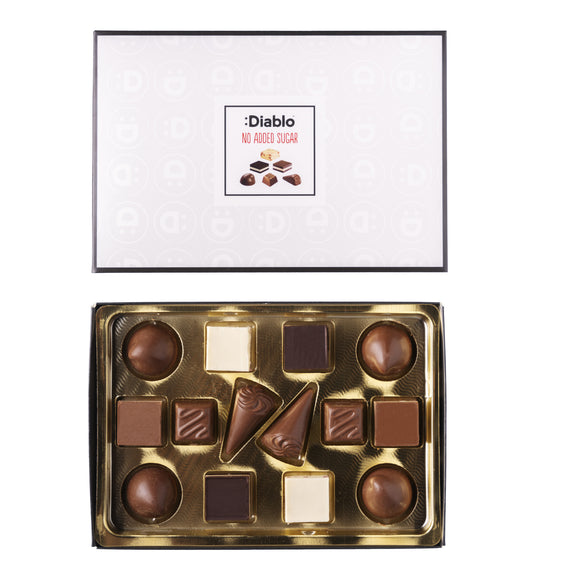
Sample the Brandable Portfolio



The Private Label Process: From Brief to Branded Product on Shelf
One of the most common misconceptions about private label confectionery is that it requires months of development, large upfront investment and specialist food manufacturing knowledge on the buyer's side. Working from an established, proven range significantly reduces all three. Here is how the process works:
Discovery and Brief
Share your commercial brief: which products, which markets, expected volumes and any specific packaging requirements. No commitment required for an initial conversation.
Product Selection
Review and shortlist from the Diablo Sugar Free range. Working from an existing portfolio avoids recipe development cost and time entirely.
Sampling
Receive product samples to evaluate taste, texture and format suitability before any commercial commitment is made.
Artwork and Packaging
Supply brand guidelines. We work within your specifications to produce packaging artwork meeting all UK and EU food labelling requirements.
Approval and Sign-Off
Review and approve artwork. All regulatory content is verified for compliance before production is scheduled.
Production and Delivery
Products are manufactured, quality-checked and delivered ready to sell. Ongoing supply terms are agreed at this stage.
| Stage | Typical Timeframe | Key Action from You |
|---|---|---|
| Discovery and Brief | Week 1 | Share commercial brief and volume expectations |
| Product Selection | Weeks 1 to 2 | Review portfolio and shortlist products |
| Sampling | Weeks 2 to 4 | Evaluate products and provide feedback |
| Artwork Development | Weeks 4 to 8 | Supply brand guidelines and artwork direction |
| Sign-Off | Weeks 8 to 10 | Review and approve final packaging artwork |
| Production | Weeks 10 to 14 | Confirm purchase order and delivery schedule |
| First Delivery | Weeks 14 to 16 | Receive, quality check and list for sale |
Timelines are indicative. Businesses with established brand guidelines and fast internal approval processes typically move faster. Timeline assumes no bespoke recipe development.
The Commercial Case for Private Label Confectionery
The commercial argument for private label confectionery is well established and consistent across the industry. Here is what the data consistently shows:
Stronger Margins
Private label products carry no third-party brand premium in the wholesale price. According to McKinsey, private label products can carry approximately two times the gross margin of national brands for distributors. At the grocery retail level, analysis cited by Just Food places private label gross margins above 40%, compared to 25 to 35% for national brands. The margin difference does not disappear when you carry a private label product. It transfers to you.
Brand Differentiation and Price Protection
Own-brand products cannot be directly price-compared. A customer who buys your branded sugar-free hazelnut chocolate cannot find the same product cheaper elsewhere, because it only exists under your brand. This eliminates the margin erosion that results from price-comparison platforms and marketplace competition on branded goods.
Customer Loyalty and Repeat Purchase
When a customer finds a sugar-free product they enjoy under your brand, they have to come back to you to buy it again. This repeat-purchase dynamic is among the most valuable in retail. It is a dynamic that distributing someone else's brand simply does not create for you.
Category Positioning
Launching a sugar-free confectionery range under your own brand signals to your customers that you take reduced-sugar lifestyles seriously. It positions your business as a category leader rather than a stockist, with long-term brand value that extends well beyond the confectionery fixture.
The Record-Breaking Private Label Moment
Private label retail sales in the United States reached a record USD 282.8 billion in 2025, growing at nearly three times the rate of national brands, according to PLMA and Circana data. Store-brand unit volume increased by over 430 million units to a record 68.7 billion. Private label growth is no longer driven by price alone: retailers are winning on value, quality, health and sustainability. Sugar-free confectionery sits squarely in the health and quality segment where private label is growing fastest.
Regulatory Compliance: What Every Private Label Sugar-Free Brand Must Know
Regulatory compliance in the sugar-free confectionery category is detailed, consequential and non-negotiable. Getting it wrong exposes your business to enforcement action, retailer delistings and consumer complaints. Getting it right builds lasting trust. Here is a practical summary of the requirements your own-brand packaging and marketing must meet in the UK and EU.
Permitted Claims: What You Can Say
| Claim | Permitted? | Condition |
|---|---|---|
| Sugar Free | Permitted | Product must contain no more than 0.5g of sugars per 100g |
| No Added Sugar | Permitted | No mono- or disaccharides or other sweetening foods have been added; if naturally occurring sugars are present, add "Contains naturally occurring sugars" |
| Made with sweeteners instead of sugar | Permitted | Must be factually accurate for the product |
| A treat for those watching their sugar intake | Permitted | No threshold condition; factually safe language |
| Suitable for those reducing their sugar intake | Permitted | No threshold condition; factually safe language |
| Sugar replacers produce a lower blood glucose rise than sugar | Conditionally Permitted | Only when phrased exactly as per the approved EFSA wording for the specific sweetener used |
Banned Claims: What You Must Never Use
The following phrases are either banned outright or constitute unapproved health or nutrition claims under Regulation (EC) No 1924/2006 (retained in UK law) and EU Regulation 609/2013. They must not appear on your packaging, website, social media or any other marketing material.
| Banned Phrase | Reason |
|---|---|
| Suitability claims for people with diabetes (any wording) | Banned since August 2016 under EU Regulation 609/2013, retained in UK law. No equivalent claim is permissible. |
| "Suitable for" wording aimed at any medical condition | Same ban as above. All forms of this phrasing are prohibited. |
| Ideal for people with diabetes | Same ban as above. |
| Won't spike your blood sugar | Unapproved disease-management claim. Not permitted for any food product. |
| Great for blood glucose management | Unapproved health claim. Not on the approved GB NHC or EU Register. |
| Guilt-free treat | Implies a health benefit without an approved claim basis. Potentially misleading under UK Food Information Regulations 2014. |
| The healthy choice / healthy | Implies a health benefit without meeting qualifying criteria or holding an approved claim. |
| Lowers cholesterol / blood pressure | Disease risk reduction claim. Not approved for confectionery products. |
| Helps with weight loss | Rate or amount weight loss claim. Banned under Article 12 of Regulation (EC) No 1924/2006. |
| Low calorie / light | Nutrition claim. Only permitted if the product genuinely meets the threshold: no more than 40 kcal per 100g for "low calorie". |
Mandatory Label Statements
Two statements are legally required on all relevant products and are non-negotiable:
- "Excessive consumption may produce laxative effects" must appear on any product where polyol content exceeds 10% of total product content, as required by EU Regulation 1169/2011 and UK Food Information Regulations
- "With sweetener(s)" must accompany the product name on packaging wherever sweeteners are present, as required under EU Regulation 1333/2008 and its UK equivalent
HFSS Advertising Restrictions in the UK
From 5 January 2026, the UK's Health and Care Act 2022 bans paid online advertising for HFSS (High in Fat, Salt or Sugar) products at any time. Even though Diablo products are made with sweeteners rather than sugar, many products in the range, including chocolates, cakes and cookies, may still score as HFSS under the Nutrient Profiling Model due to fat and calorie content.
For your own-brand marketing, this means: organic blog content and unpaid social media posts are not currently in scope of the ban. Paid promotion of product-identifiable content, including boosted posts, paid social and display advertising, is restricted. Always seek specific legal advice before running paid digital campaigns featuring HFSS-categorised products.
When you work with Diablo Sugar Free on a private label programme, we provide guidance on which claims are permissible for your specific products, which mandatory statements must appear on your packaging, and how to navigate UK and EU food labelling requirements. You do not have to navigate this alone.
What to Look for in a Private Label Sugar-Free Confectionery Partner
Not all private label confectionery manufacturers are equal. These are the criteria that should carry the most weight when evaluating a potential partner.
Food Safety Certification
BRCGS (British Retail Consortium Global Standards) certification is the primary food safety standard expected by major UK and European retailers. IFS (International Featured Standards) and FSSC 22000 are also widely recognised. All manufacturing operations should operate under HACCP principles as a minimum. According to the BRCGS, BRCGS-certified facilities are recognised by the Global Food Safety Initiative (GFSI) and are required by Tesco, Carrefour, Aldi, Lidl and most other major European grocery chains for supplier approval. Ask for current certificates and check expiry dates, not just whether they hold them.
Proven Sugar-Free Formulation Expertise
Sugar-free confectionery manufacturing requires specific technical knowledge. Polyol sweeteners such as maltitol and isomalt behave differently from sucrose in manufacturing: they have different melting points, moisture absorption properties and crystallisation behaviours. A manufacturer with deep experience in sugar-free formulations will produce more consistent, higher-quality products than a general confectionery manufacturer attempting to adapt standard recipes.
Regulatory Compliance Support
A strong private label partner does not just hand you a product and a spec sheet. They help you understand what claims are permissible on your packaging and in your marketing, and support you in producing labelling that is both compelling and compliant. In the sugar-free category, where the regulatory picture is more complex than average, this support is particularly valuable.
Breadth of Range
A diverse portfolio matters because your customers have diverse preferences. A partner who can supply chocolates, cookies, wafers, gummies, spreads, cakes and hard candy under your brand allows you to build a coherent, comprehensive own-brand range rather than managing relationships with multiple suppliers with inconsistent quality standards.
Transparency on Commercial Terms
Clear, upfront information on minimum order quantities, lead times, capacity and reorder processes is a sign of a partner you can plan around with confidence. Ambiguity on any of these points should be treated as a warning sign.
Private Label Confectionery: Full Option Comparison
To make the commercial decision clearly, it helps to compare the private label route against the two main alternatives.
| Dimension | Resell Manufacturer Brand | Private Label via Diablo Sugar Free | Build Your Own Brand from Scratch |
|---|---|---|---|
| Capital required | Low: buy and resell | Low to medium | Very high |
| Gross margin | Standard retail margin only | Significantly higher than branded | High long-term, but slow to achieve |
| Brand equity built | None: every sale builds the supplier's brand | Yours: every sale builds your brand | Yours, but takes years to build |
| Time to market | Immediate | 10 to 16 weeks | 12 to 24 months or more |
| Formulation risk | None | None: proven, existing product | High |
| Competitor price exposure | High: easily price-compared online | None: exclusive to your brand | None once established |
| Regulatory burden | Handled by supplier | Packaging compliance on you, with partner support | Entirely on you from day one |
| Best suited for | Market entry and category testing | Scale, margin optimisation and brand building | Investors with long time horizons and high capital |
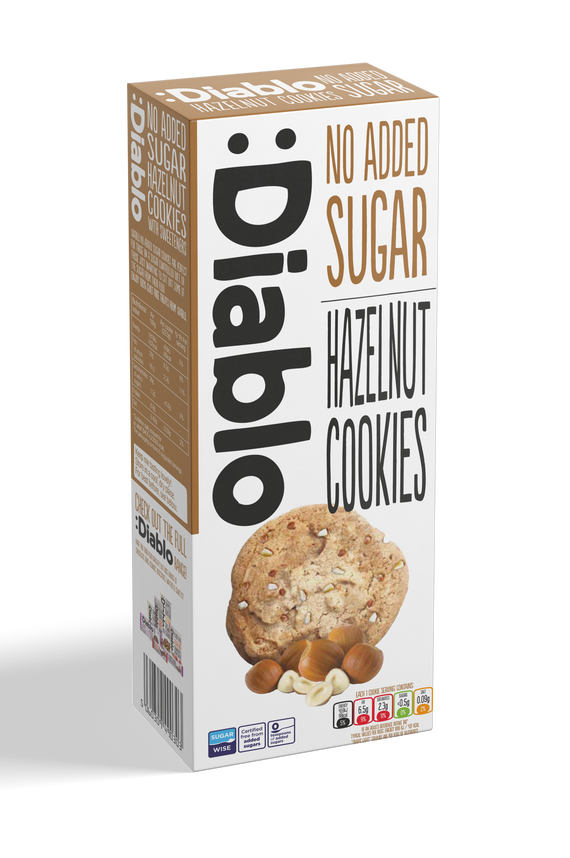
Hero Products Across the Diablo Portfolio



Frequently Asked Questions
References and Sources
- Grand View Research. Sugar-free Confectionery Market Size, Share and Growth Report, 2030. grandviewresearch.com
- PLMA / Circana. Private-label sales hit record $282.8B in 2025. Reported by Supermarket News, January 2026. supermarketnews.com
- McKinsey and Company. The power of private-label brands in distribution. January 2024. mckinsey.com
- Just Food. Private label's growth surge and the US brand battle ahead. August 2025. just-food.com
- Persistence Market Research. Sugar-Free Confectionery Market Size and Forecast, 2025 to 2032. April 2025. persistencemarketresearch.com
- Snack Food and Wholesale Bakery. State of the Industry: Affordable luxury in private label. September 2024. snackandbakery.com
- UK Regulation (EC) No 1924/2006 on Nutrition and Health Claims (retained as assimilated EU law post-Brexit). legislation.gov.uk
- EU Regulation No 609/2013 on Foods for Specific Groups (exclusion of foods for people with diabetes from scope). European Commission.
- UK Food Information Regulations 2014. legislation.gov.uk
- Health and Care Act 2022 and Less Healthy Food Definitions and Exemptions Regulations 2024 (HFSS advertising, in force from 5 January 2026). gov.uk
- BRCGS. Global Standard for Food Safety. brcgs.com
- International Diabetes Federation. IDF Diabetes Atlas, 10th Edition. 2021.
Ready to Build Your Own Sugar-Free Confectionery Brand?
Talk to the Diablo Sugar Free team about private label. We will help you understand which products are right for your market, what the process looks like and what investment is involved. No commitment required for an initial conversation.
Start Your Private Label EnquiryMade with sweeteners instead of sugar. 91 products. 10 categories. Your brand.