 Chocolate Bars
 Dragees
 Cakes & Muffins
 Sweets & Gummies
 Cookies
 Dessert Sauces
 Wafers
 Spreads
 Muesli Bars
 Guilt-free Gifting
 Sales & Promotions

Natural Sweeteners Ranked
by Glycaemic Index
A complete, science-backed guide to understanding which sweeteners raise blood glucose, which do not, and how to read a label with confidence
Natural Sweeteners Glycaemic Index: Key Facts
The glycaemic index (GI) measures how quickly a food raises blood glucose on a scale from 0 to 100. Here is how the most widely used natural sweeteners rank:
- ●GI 0 (Zero impact): Stevia, monk fruit, allulose, erythritol. No measurable effect on blood glucose.
- ●GI 1 to 15 (Very low): Xylitol (GI approx. 7), isomalt (GI approx. 9), sorbitol (GI approx. 9).
- ●GI 16 to 54 (Low to medium): Fructose (GI approx. 19), agave (GI approx. 15 to 30), powdered maltitol (GI approx. 35), coconut sugar (GI approx. 54).
- ●GI 55 and above (Medium to high): Maltitol syrup (GI approx. 52), honey (GI approx. 55 to 58), maple syrup (GI approx. 54), table sugar (GI 65).
- ●Read the ingredients: polyols differ from one another, and powdered maltitol (GI approx. 35) and maltitol syrup (GI approx. 52) are separate ingredients. The pack names which one is used.
- ●The low-GI line: sweeteners with a GI under 55 are classified as low-GI by the Glycaemic Index Foundation.
You have read the label. It says "sugar free." You have chosen this product specifically because you are watching your sugar intake. Sugar free is a claim about sugars, not a statement that a food is glycaemically neutral. The sweetener inside the product matters just as much as the claim on the front of the pack.
Understanding the natural sweeteners' glycaemic index is one of the most practical steps you can take toward making genuinely informed choices about the confectionery and foods you buy. The range is wide: from a GI of zero for stevia and monk fruit, to a GI of 52 for maltitol syrup, one of the sugar alcohols used in products carrying a "sugar free" label.
In this guide, we cover every major sweetener ranked by GI score, explain what those numbers actually mean in practice, walk through the latest safety research, and give you a plain-English label-reading guide so you know exactly what you are buying.
This article references peer-reviewed research, including data from the EFSA Scientific Register, Diabetes Care, PMC-indexed clinical trials, and Cardiovascular Research (Oxford Academic). It is provided for general educational purposes. Always consult your physician, registered dietitian, or pharmacist for personalised dietary guidance.
What Is the Glycaemic Index and Why Does It Matter for Sweeteners?
The glycaemic index was developed in the early 1980s by Dr David Jenkins at the University of Toronto. It ranks foods on a scale from 0 to 100 based on how quickly they raise blood glucose compared to pure glucose, which scores 100. Foods scoring 55 or below are classified as low-GI, 56 to 69 as medium, and 70 or above as high-GI.
For sweeteners, GI is particularly important for two reasons. First, many products marketed as "sugar-free" or "no added sugar" still contain carbohydrate-based sweeteners that can raise blood glucose. Second, the "sugar" entry on a nutrition label legally excludes polyols (sugar alcohols) under EU and UK food law, meaning the total carbohydrate picture can be hidden from a quick label scan.
Knowing the GI of the sweetener inside a product is often more useful than any claim on the front of the packaging.
GI vs Glycaemic Load: What Is the Practical Difference?
Glycaemic index measures the quality of a carbohydrate's effect on blood glucose, based on a standardised 50g portion of available carbohydrate. Glycaemic load (GL) accounts for quantity too: it multiplies GI by the grams of carbohydrate in a realistic serving size. For most sweeteners used in small quantities, GI is the more practical measure. However, for any sweetener used in large amounts rather than a spoonful, glycaemic load gives the fuller picture.
Low GI does not automatically mean low carbohydrate. Fructose has a relatively low GI of approximately 19, but consuming large amounts carries separate metabolic concerns. GI is a valuable guide, not a complete nutritional picture. Always read the full nutrition panel alongside the ingredients list.
Natural Sweeteners Ranked by Glycaemic Index: The Master Table
The table below ranks 16 of the most widely used natural and plant-derived sweeteners by GI score, alongside calorie content, relative sweetness compared to sugar, and key practical notes. Table sugar (sucrose, GI 65) is used as the reference point throughout.
| Sweetener | GI Score | Cal/g | Sweetness vs Sugar | GI Tier | Key Notes |
|---|---|---|---|---|---|
| Stevia (steviol glycosides) | 0 | 0 | 200 to 350x | Zero Impact | EFSA-approved (E960). Zero calories. Slight bitter aftertaste at high doses. |
| Monk fruit (mogrosides) | 0 | 0 | 150 to 300x | Zero Impact | Derived from luo han guo fruit. Zero calories. Heat-stable. Growing EU availability. |
| Allulose | approx. 0 | 0.2 to 0.4 | approx. 70% | Zero Impact | UK novel food approved. EU review ongoing. Behaves like sugar in baking. Very limited EU retail availability. |
| Erythritol | approx. 1 | 0.2 | approx. 70% | Zero Impact | EFSA-approved (E968). Best-tolerated sugar alcohol. See 2023 to 2025 cardiovascular research section. |
| Xylitol | approx. 7 | 2.4 | approx. 100% | Very Low | EFSA-approved (E967). EFSA-approved dental health claim. See 2024 cardiovascular research section. Toxic to dogs. |
| Isomalt | approx. 9 | 2.0 | 45 to 65% | Very Low | EFSA-approved (E953). Heat-stable. Used in hard confectionery. Laxative warning applies where polyol exceeds 10% content. |
| Sorbitol | approx. 9 | 2.6 | approx. 60% | Very Low | EFSA-approved (E420). Found naturally in stone fruit. Like all polyols, packs above 10% carry the laxative statement. |
| Lactitol | approx. 6 | 2.0 | approx. 40% | Very Low | EFSA-approved (E966). Used in some confectionery. Good GI profile. Laxative warning applies. |
| Fructose | approx. 19 | 4.0 | approx. 120% | Low | Naturally in fruit. Low GI but metabolised exclusively in the liver. High intake associated with raised triglycerides. |
| Agave syrup | approx. 15 to 30 | 3.1 | approx. 150% | Low to Medium | Low GI but very high fructose content (up to 90%). Long-term metabolic impact debated in research literature. |
| Powdered maltitol | approx. 35 | 2.1 | approx. 90% | Low to Medium | EFSA-approved (E965). Widely used in sugar-free chocolate. A lower and slower rise than sugar. |
| Coconut sugar | approx. 54 | 4.0 | approx. 75% | Medium | Often marketed as a low-GI alternative. GI only marginally below table sugar. Contains trace minerals but at typical use quantities these are negligible. |
| Maltitol syrup | approx. 52 | 3.0 | approx. 75% | Medium | A different ingredient from powdered maltitol, with a higher GI. Named separately in the ingredient list. |
| Maple syrup | approx. 54 | 2.7 | approx. 60% | Medium | Marginally lower GI than table sugar. Contains some minerals and antioxidant compounds but is still a concentrated glucose source. |
| Honey | approx. 55 to 58 | 3.0 | approx. 100% | Medium | Trace enzymes and antioxidants. GI varies by variety. Still raises blood glucose meaningfully. Not a low-GI alternative to sugar. |
| Table sugar (sucrose) | 65 | 4.0 | 100% (reference) | Reference | Standard reference point for all GI comparisons. Raises blood glucose rapidly. Excluded from "sugar free" products by definition. |
Sources: Atkinson FS et al. (2008). International Tables of Glycemic Index and Glycemic Load Values. Diabetes Care; Livesey G (2003). Nutrition Research Reviews; PMC maltitol review (2020); EFSA approved claims register. GI values are reference figures and may vary between products and studies.
Each Sweetener Explained: What You Actually Need to Know
Stevia: The Zero-GI Plant Extract
Stevia is derived from the leaves of Stevia rebaudiana, a plant native to South America. The sweet compounds, called steviol glycosides, are 200 to 350 times sweeter than table sugar, provide zero calories, and have a glycaemic index of zero. EFSA has approved stevia as a food additive (E960) across the EU and UK.
Multiple clinical studies confirm that stevia produces no measurable rise in blood glucose or insulin levels. A 2024 review in Nutrition Reviews confirmed no significant effect on fasting glucose or HbA1c at typical intake levels. The main practical note is a slightly bitter or liquorice-like aftertaste at higher concentrations. Many commercial products blend stevia with erythritol, which largely masks this aftertaste.
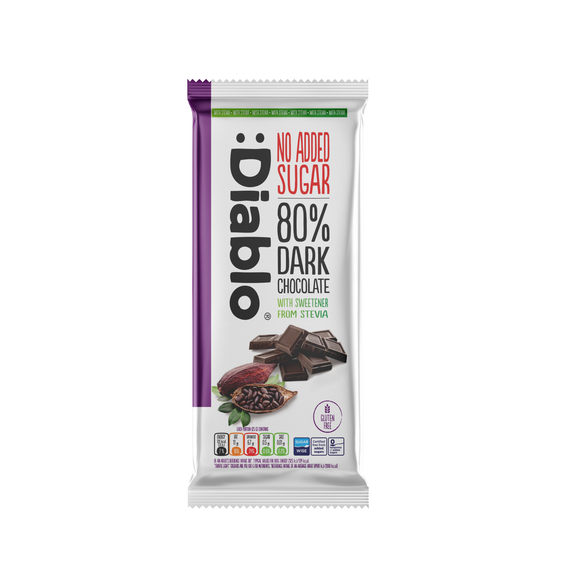
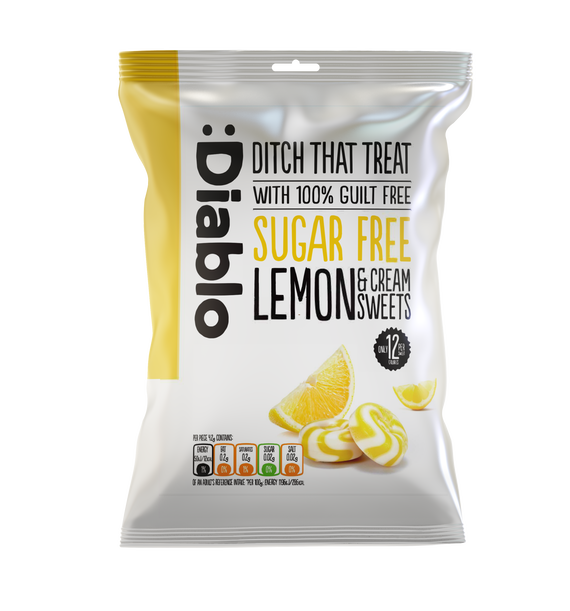
Diablo Sugar Free products are made with sweeteners instead of sugar, including stevia, one of the most rigorously researched sweeteners available. A treat for those watching their sugar intake. As with all foods, portion awareness is important, and we always recommend discussing your dietary choices with a healthcare professional.
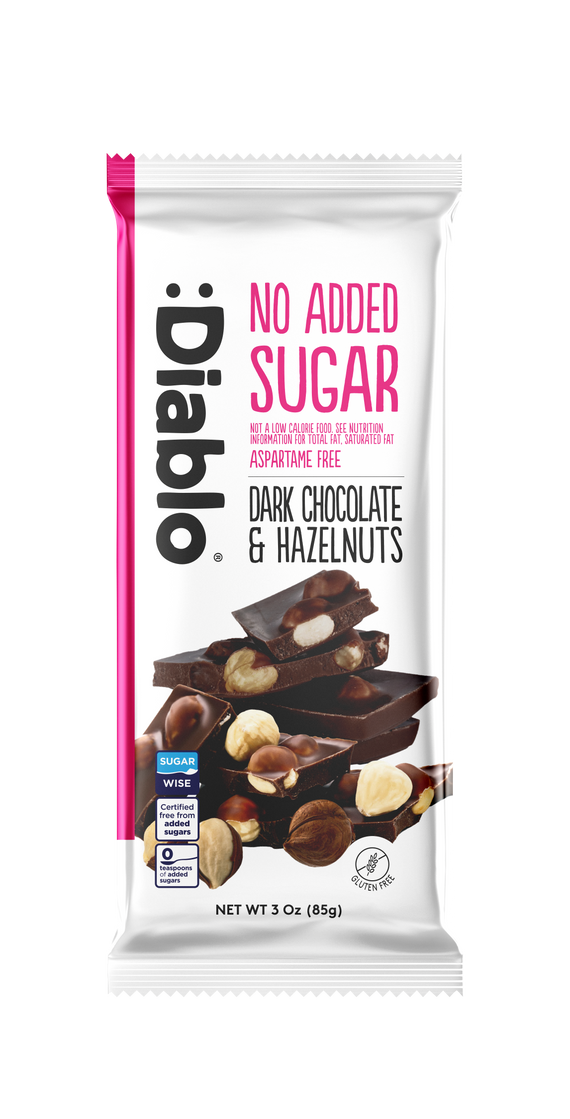
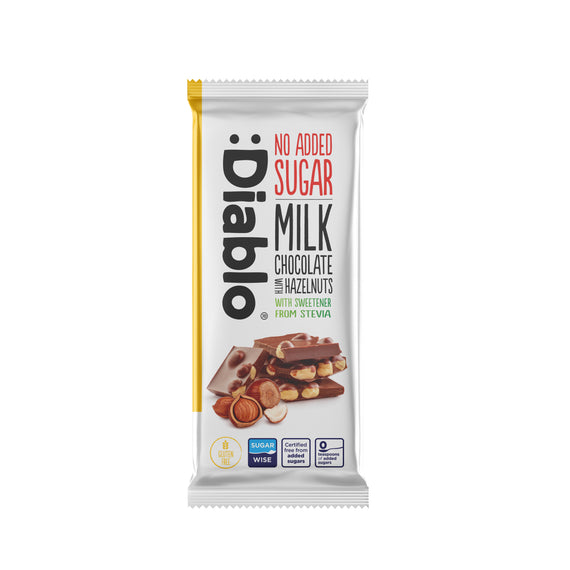
Diablo Chocolate Made with Stevia and Maltitol
Monk Fruit: Ancient Plant, Modern Research
Monk fruit sweetener is extracted from Siraitia grosvenorii, cultivated in southern China for centuries. The sweet compounds are mogrosides, which are 150 to 300 times sweeter than sugar and provide zero calories with a GI of zero. A well-cited 2017 randomised crossover study published in the European Journal of Clinical Nutrition showed that monk fruit beverages produced no significant spike in blood glucose or insulin compared to sucrose-sweetened equivalents.
Monk fruit is heat-stable and works well in cooking and baking. Many commercial products labelled as "monk fruit sweetener" are blends of monk fruit extract and erythritol. EU novel food approval is progressing; availability in European retail is growing but still limited compared to stevia.
Allulose: The Rare Sugar That Behaves Like One
Allulose is a naturally occurring monosaccharide found in trace amounts in figs, raisins, and maple syrup. It tastes and behaves remarkably like sucrose in baking, browning, and dissolving, yet the body absorbs very little of it. It has a GI near zero and provides roughly 0.2 to 0.4 calories per gram.
A 2024 meta-analysis of clinical trials published in Metabolism Open found that allulose significantly reduced post-meal blood glucose rises when consumed alongside carbohydrate-containing meals. Allulose is approved in the UK as a novel food. Full EU approval was still under review as of mid-2025. It is not yet widely available in European confectionery.
Erythritol: Best-Tolerated Sugar Alcohol, With a Research Caveat
Erythritol is a four-carbon sugar alcohol found naturally in small amounts in fermented foods and some fruit. It is approximately 70% as sweet as sugar, provides just 0.2 calories per gram, and has a GI of approximately 1. Unlike other sugar alcohols, erythritol is almost completely absorbed in the small intestine and excreted unchanged in urine, which is why it behaves differently in the gut from the polyols that are fermented further down.
A 2023 study published in Nature Medicine (Cleveland Clinic) found that higher circulating blood levels of erythritol were linked with increased cardiovascular event risk over a three-year follow-up period. A 2025 review in Cardiovascular Research (Oxford Academic) provided important context: the observational findings may reflect the body's own erythritol production rather than dietary intake, and short-term intervention trials in overweight participants did not confirm harm at typical food-level doses. Mendelian randomisation studies have not confirmed causal cardiovascular risk from dietary erythritol. Erythritol remains a legally approved food ingredient. This is an evolving area of research.
Xylitol: Low GI, With an Important Research Note
Xylitol is a five-carbon sugar alcohol found in birch bark, corn cobs, and many fruits and vegetables. It is approximately as sweet as sugar, contains roughly 2.4 calories per gram, and has a GI of approximately 7. EFSA has approved the health claim that xylitol contributes to the maintenance of tooth mineralisation, making it one of the few sweeteners with a verified, legally permitted health claim in the EU and UK.
A 2024 study published in the European Heart Journal (Witkowski et al., Cleveland Clinic) examined more than 2,000 participants. Those with the highest blood xylitol concentrations had approximately 57% higher risk of serious cardiovascular events over three years. Laboratory experiments found that xylitol increased platelet reactivity. A 2025 review in Cardiovascular Research (Oxford Academic) noted that five-week intervention trials showed no significant effect on vascular function, and Mendelian randomisation studies do not confirm causal cardiovascular risk from dietary xylitol. The research is preliminary and ongoing. Xylitol in oral care products involves far smaller quantities than food use and is considered safe at those levels.
Xylitol is also toxic to dogs. If you have a dog at home, store any products containing xylitol carefully out of reach.
Isomalt: The Confectionery Specialist
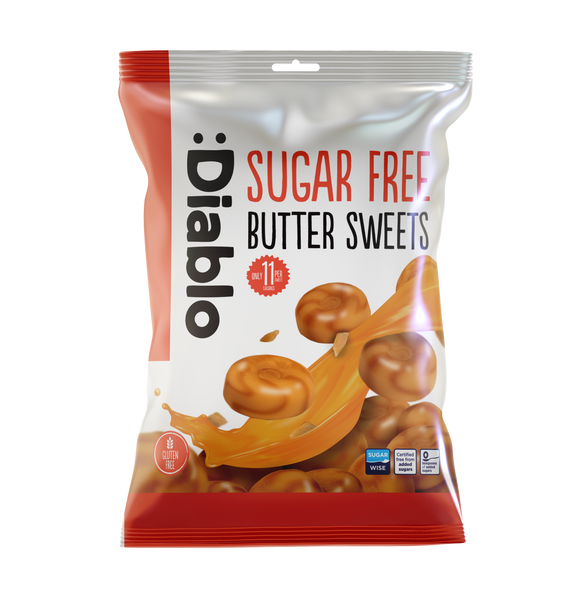
Isomalt is a sugar alcohol produced from sucrose. It is used extensively in hard candy and lollipops because of its excellent heat stability and low moisture absorption. Its GI is approximately 9. Like all polyols, excessive consumption of isomalt can produce a laxative effect. Under EU and UK food law, products in which polyol content exceeds 10% of the total content must carry the mandatory statement: "Excessive consumption may produce laxative effects."
Maltitol: How the Two Forms Differ
Maltitol is the sweetener worth understanding in the most detail, because it is the most widely used sugar alcohol in sugar-free chocolate, biscuits, and confectionery. It comes in two forms, and they are not the same ingredient.
Powdered (crystalline) maltitol: GI approximately 35. This is the form used in Diablo chocolate. The GB nutrition and health claims register permits one wording on the point: "Consumption of foods containing maltitol instead of sugar induces a lower blood glucose rise after their consumption compared to sugar-containing foods." Maltitol syrup: GI approximately 52. A different ingredient, made from hydrogenated glucose syrup, with a higher GI than the powdered form. Both are named in the ingredient list, so the pack always tells you which one you are buying.
Maltitol is produced by hydrogenation of maltose. It is approximately 90% as sweet as sugar and provides approximately 2.1 calories per gram. A 2020 PMC review confirmed that maltitol's glycaemic index is lower than that of sucrose, and that maltitol is a carbohydrate and appears on the panel as one, under "of which polyols".
Diablo Chocolate Made with Powdered Maltitol


Coconut Sugar, Honey, and Maple Syrup: Not Low-GI Alternatives
These sweeteners are frequently marketed with health halos because of their origins. The GI reality is more sobering.
Coconut sugar is often promoted as a low-GI alternative to table sugar. Its GI of approximately 54 is only marginally lower than that of table sugar at GI 65. It contains trace amounts of minerals and inulin, but at the quantities used in recipes, these offer negligible nutritional benefit in context of an overall diet.
Honey has a GI of approximately 55 to 58, depending on variety. It contains antioxidants and trace enzymes, but as a sweetener it still raises blood glucose meaningfully. It is not a low-GI alternative.
Maple syrup has a GI of around 54. Similar story: only marginally lower than table sugar, with some minerals and antioxidant compounds, but still a concentrated glucose source at practical serving sizes.
What "Sugar Free" Means in Law, and Why the Sweetener Still Matters
One of the most useful things to take from a sweetener GI ranking is that "sugar free" is a claim about the sugars in a food, not a statement about its glycaemic index.
EU and UK food law defines "sugars" as mono- and disaccharides. Polyols (sugar alcohols) are carbohydrates, but they are excluded from the legal definition of "sugars." This means a product sweetened entirely with maltitol syrup, which has a GI of approximately 52, can legally and truthfully carry a "sugar-free" label.
For people generally reducing their sugar intake, any reduction in added sugars is broadly positive. For those counting carbohydrate closely, the sweetener inside the product and its GI are worth knowing too, and both are printed on the pack.
When comparing sugar-free products, read the ingredients list alongside the front-of-pack claim. The further up the list a sweetener appears, the more of it is in the product. Isomalt, erythritol and stevia sit at the very low end of the GI ranking, powdered maltitol in the middle, and maltitol syrup higher again, so the ingredient list tells you where a product sits.
Reading Sweetener Labels: A Practical Guide
What to Look For
- Stevia, monk fruit, erythritol, or allulose are listed as the primary sweetener. All of these have GI scores at or near zero.
- Isomalt or xylitol as a primary sweetener in hard confectionery. Both are genuinely low-GI.
- Powdered maltitol used in chocolate. Lower GI than maltitol syrup, though still a carbohydrate that contributes to total intake.
- Total carbohydrates per serving alongside the ingredients list. This gives you the full picture of what you are consuming.
- The "with sweetener(s)" statement accompanying the product name is a mandatory legal requirement for any product containing sweeteners under EU and UK food law.
What to Watch For
- Which polyol is named first in the ingredients. Powdered maltitol, maltitol syrup, isomalt and erythritol all sit at different points on the GI ranking above.
- Very small stated serving sizes that do not reflect how much you would realistically consume. A label showing modest carbohydrates "per 15g serving" on a bar you would naturally eat 40g of requires a mental adjustment.
- Corn syrup, glucose syrup, dextrose, or fructose listed as ingredients in any product. These are rapidly absorbed carbohydrates.
- Cocoa content below 50% in any product marketed as "dark" chocolate.
- The absence of the mandatory laxative warning on products with high polyol content. If a product contains more than 10% polyols and does not include this warning, it may not be accurately labelled.
| Ingredient Name | E Number | GI Score | What It Means |
|---|---|---|---|
| Stevia / Steviol glycosides | E960 | 0 | Zero GI, zero calories. EFSA-approved. Used in very small quantities due to high sweetness intensity. |
| Erythritol | E968 | approx. 1 | Very low GI, very low calorie. Best-tolerated sugar alcohol for digestive symptoms. See cardiovascular research note. |
| Xylitol | E967 | approx. 7 | Very low GI. EFSA-approved dental health claim. Toxic to dogs. See cardiovascular research note. |
| Sorbitol | E420 | approx. 9 | Very low GI. Found naturally in stone fruit. Packs above 10% polyols carry the laxative statement. |
| Isomalt | E953 | approx. 9 | Very low GI. Heat-stable. Excellent for hard confectionery. Laxative warning applies at high consumption. |
| Maltitol (powdered) | E965 | approx. 35 | Used widely in sugar-free chocolate. A lower and slower rise than sugar. Laxative statement applies above 10% polyols. |
| Maltitol syrup / Hydrogenated glucose syrup | E965 (syrup) | approx. 52 | A separate ingredient from powdered maltitol, with a higher GI. Always named in the ingredients list. |
| Monk fruit extract / Luo han guo | No EU E number yet | 0 | Zero GI, zero calories. Often blended with erythritol in commercial products. |
| Coconut sugar | No E number | approx. 54 | Not a low-GI option despite widespread marketing as a natural alternative to table sugar. |
Sources: EFSA approved additives register; EU Regulation 1333/2008; Atkinson FS et al. (2008). Diabetes Care; UK Food Standards Agency.
What the Latest Research Says (2023 to 2025)
The Xylitol and Erythritol Cardiovascular Debate
The most significant recent development in sweetener science has been a series of studies from the Cleveland Clinic, published in Nature Medicine (2023, erythritol) and the European Heart Journal (2024, xylitol), finding associations between raised blood levels of these sugar alcohols and increased cardiovascular event risk.
The 2024 xylitol study examined more than 2,000 people. Those with the highest blood xylitol concentrations had approximately 57% higher risk of serious cardiac events over three years. The 2023 erythritol study found similar associations and showed that a single serving of erythritol in commercially available products marketed for keto diets could raise blood erythritol levels substantially above baseline.
A comprehensive 2025 review published in Cardiovascular Research (Oxford Academic) provided important counterbalance. It noted that short-term intervention trials lasting five weeks showed no significant effect on vascular function in overweight participants. Mendelian randomisation studies, which test genetic associations to infer causality, do not confirm that dietary sugar alcohol consumption causes significant cardiovascular harm. The review also noted that the body itself produces erythritol endogenously, which complicates interpretation of the observational findings.
The current scientific position: these sweeteners remain approved and in widespread use. The observational findings are important signals that warrant further investigation. Individuals with existing cardiovascular risk factors may wish to discuss their sweetener choices with a healthcare professional.
Stevia and Monk Fruit: A Consistent Safety Record
The safety evidence for stevia and monk fruit remains consistent across multiple regulatory reviews and randomised controlled trials. EFSA, the US FDA, and the UK Food Standards Agency have all reviewed these sweeteners and found no significant adverse effects at typical intake levels. Both produce no meaningful blood glucose or insulin response in clinical studies.
The WHO's 2023 guideline on non-sugar sweeteners recommended against using them as a long-term weight management strategy. That recommendation rested on the absence of strong evidence that they help with long-term weight management, not on safety concerns. Both stevia and monk fruit remain safe and appropriate options for those seeking to reduce their sugar intake.
Nutritional science moves quickly. GI values can vary slightly between studies depending on methodology, and safety research on newer sweeteners continues to develop. The information in this article is current as of May 2026. We recommend consulting peer-reviewed sources and a registered dietitian for the most up-to-date guidance relevant to your specific circumstances.
Choosing the Right Sweetener for Your Goals
For Those Watching Their Blood Glucose Response
First Choice
Stevia, monk fruit, allulose, erythritol. These have no measurable impact on blood glucose at typical serving sizes.
Good Secondary Choice
Xylitol, isomalt, sorbitol. Very low GI. Still contributes a small amount of carbohydrate. Monitor individual response.
Use With Awareness
Powdered maltitol. Used in many sugar-free chocolates. Lower GI than syrup form, but still a carbohydrate. Count accordingly.
Read the Ingredients
Maltitol syrup, coconut sugar, honey and maple syrup all sit at the top of this ranking. The ingredient list tells you which one a product uses.
First-Choice Picks for Blood Glucose Awareness
For a Low-Carb or Ketogenic Diet
- Zero net carbs: Stevia and monk fruit have no net carbohydrate contribution.
- Very low net carbs: Erythritol is largely excreted intact and is typically excluded from net carb calculations in many food tracking applications.
- Moderate: Xylitol and isomalt are generally accepted on strict low-carb approaches, though individual glucose responses vary.
- Count the carbohydrate: maltitol in both forms, coconut sugar, honey, maple syrup, and agave all contribute to carbohydrate intake, so take the figure from the pack.
For Baking and Cooking
- Erythritol: Works well in baking. Produces a slight cooling sensation. Good for cookies and cakes.
- Allulose: The closest to sugar in baking behaviour. Browns, caramelises, and adds moisture in a similar way to sucrose. Very limited UK retail availability currently.
- Xylitol: Substitutes 1:1 for sugar in baking. Important: toxic to dogs. Store carefully.
- Stevia: Requires blending with a bulk sweetener because it is too intensely sweet to use alone in baking volumes. Does not caramelise.
- Isomalt: Ideal for hard candy, sugar work, and heat-applied techniques. Not suitable for general baking substitution.
For General Sugar Reduction
For people simply looking to cut back on sugar as part of a more balanced diet, without a specific medical or dietary goal, any of the lower-GI sweeteners represent a reasonable starting point. Stevia, erythritol, isomalt and maltitol are all widely available and long-established in confectionery, and every pack names which one it uses.
A Practical 4-Step Framework for Choosing Sweeteners
- Identify the goal first. Are you reducing sugar for general health, managing carbohydrate intake more carefully, following a low-carb approach, or simply exploring alternatives to sugar? Your goal determines which sweeteners are relevant.
- Check the GI tier. Use the ranking table in this article to place any sweetener in context. GI under 10 is very low. GI 35 to 54 is moderate. GI 52 for maltitol syrup is much closer to table sugar than its "sugar free" label suggests.
- Read the full ingredients list. The sweetener's position in the list indicates its proportion in the product. A primary sweetener appearing first or second makes up the largest share. Front-of-pack claims tell you less than the ingredients list.
- Monitor your personal response where possible. Individual blood glucose responses to specific foods vary between people. Using a glucose monitor before and approximately 90 to 120 minutes after eating a product gives you personalised data that is far more actionable than any general GI figure.
Eating any sweetened food as part of a meal containing fibre, fat, or protein, rather than on its own, slows the rate at which carbohydrate is absorbed. Having a square at the end of a meal rather than on an empty stomach is the practical version of that, whatever the food.
Frequently Asked Questions
Shop Diablo Sugar Free
References and Sources
- Atkinson FS, Foster-Powell K, Brand-Miller JC. (2008). International tables of glycemic index and glycemic load values. Diabetes Care. doi:10.2337/dc08-1239
- Livesey G. (2003). Health potential of polyols as sugar replacers, with emphasis on low glycaemic properties. Nutrition Research Reviews. doi:10.1079/NRR200371
- Witkowski M et al. (2023). The artificial sweetener erythritol and cardiovascular event risk. Nature Medicine. doi:10.1038/s41591-023-02223-9
- Witkowski M et al. (2024). Xylitol is prothrombotic and associated with cardiovascular risk. European Heart Journal. doi:10.1093/eurheartj/ehae244
- Wolnerhanssen BK et al. (2025). Sweeteners: erythritol, xylitol and cardiovascular risk, friend or foe? Cardiovascular Research. doi:10.1093/cvr/cvaf091
- Ayesh H et al. (2024). Impact of allulose on blood glucose in type 2 diabetes: a meta-analysis of clinical trials. Metabolism Open.
- Tey SL et al. (2017). Effects of aspartame-, monk fruit-, stevia- and sucrose-sweetened beverages on postprandial glucose, insulin and energy intake. European Journal of Clinical Nutrition. doi:10.1038/ejcn.2016.225
- EFSA Panel on Dietetic Products, Nutrition and Allergies. (2011). Scientific Opinion on the substantiation of health claims related to intense sweeteners. EFSA Journal. doi:10.2903/j.efsa.2011.2229
- World Health Organization. (2023). Use of non-sugar sweeteners: WHO guideline. Geneva: World Health Organization. ISBN 978-92-4-007361-7
- Maltitol: Analytical Determination Methods, Applications in the Food Industry, Metabolism and Health Impacts. (2020). PMC. PMCID: PMC7400077
- EU Regulation (EC) No 1924/2006 on nutrition and health claims made on foods (retained in UK law).
- EU Regulation 1169/2011 on food information to consumers (UK Food Information Regulations 2014).
Made with Sweeteners Instead of Sugar
Diablo Sugar Free crafts chocolates, cookies, wafers, sweets, and more for those who want to reduce their sugar intake without giving up the enjoyment of a well-made sweet treat. No added sugar, and every sweetener named on the pack.
Shop Diablo Sugar FreeA treat for those watching their sugar intake. Always enjoy as part of a balanced diet.