 Chocolate Bars
 Dragees
 Cakes & Muffins
 Sweets & Gummies
 Cookies
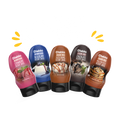 Dessert Sauces
 Wafers
 Spreads
 Muesli Bars
 Guilt-free Gifting
 Sales & Promotions

How to Go Sugar Free in 30 Days
Going sugar free means eliminating added sugars from your diet while keeping natural sugars found in whole fruits, vegetables, and dairy. Here is what the evidence shows:
- +Week 1: Remove obvious added sugars: sweets, sodas, sugary cereals, and flavoured yogurts
- +Week 2: Tackle hidden sugars by reading every ingredient label carefully
- +Week 3: Build protein-first meals and stock smarter sugar-free snack alternatives
- +Week 4: Lock in the habit and plan a sustainable long-term approach
- *The WHO recommends limiting free sugars to no more than 25g per day for adults; most people currently eat 60 to 80g daily
- *Research links early sugar reduction to a 35% lower risk of developing type 2 diabetes
You know sugar is not great for you. You have cut back on obvious sweets, spent extra minutes scanning nutrition labels at the supermarket, and still found yourself reaching for something sweet at 3 pm. If that sounds familiar, you are not failing at willpower. You are dealing with biology.
The average adult consumes around 77 grams of added sugar every day, according to the American Heart Association. That is nearly three times the recommended daily limit for women and more than double the limit for men. The gap between what we eat and what our bodies need is exactly where most of the damage happens: weight gain, energy crashes, raised blood glucose, inflammation, and over time, serious chronic conditions.
The good news is that the damage is largely reversible. This guide gives you a complete, week-by-week 30-day sugar free challenge plan, plus the going sugar free tips that actually work in practice. You will find food lists, craving management strategies, a sweetener comparison, and smart snack alternatives including sugar-free confectionery options for the moments when you genuinely need something sweet without the added sugar.
This guide references guidance from the American Diabetes Association, the WHO, the American Heart Association, Harvard T.H. Chan School of Public Health, and peer-reviewed research. It is for educational purposes. Always consult your physician or registered dietitian for personalised dietary advice, particularly if you manage diabetes or take medication.
Why Go Sugar Free? The Science Behind the Decision
What Added Sugar Does to Your Body
Added sugar is not simply empty calories. When consumed in excess, it triggers a cascade of metabolic responses: rapid insulin spikes, accelerated fat storage, systemic inflammation, and hormonal disruption. Research links high added sugar intake to obesity, type 2 diabetes, heart disease, tooth decay, and cognitive decline.
The distinction worth understanding is between added sugars and natural sugars. Natural sugars in whole fruits, vegetables, and dairy come with fibre, vitamins, and minerals that slow their absorption and benefit your health. Added sugars (table sugar, corn syrup, dextrose, agave, honey added to processed foods) deliver rapid glucose spikes with no nutritional compensation.
What the Guidelines Actually Say
The World Health Organization recommends that free sugars should make up no more than 5% of total daily energy intake, roughly 25 grams (6 teaspoons) per day for a typical adult. The American Heart Association aligns closely: no more than 25g daily for women and 36g for men.
With average consumption sitting at 60 to 80g per day, most people are eating two to three times the recommended amount. That gap is where the 30-day sugar free challenge creates its most powerful effect.
Going sugar free for health purposes means eliminating added sugars, not all sugars. You do not need to avoid the natural sugar in a whole apple or a bowl of plain yogurt. The target is the sugar that food manufacturers add during processing.
Going Sugar Free Tips: 10 Principles Before You Start
These ten principles are the foundation of every successful sugar free challenge. Skim them and you will struggle. Apply them and the 30 days become genuinely manageable.
1. Know the Difference Between Added and Natural Sugar
Your mission is to eliminate added sugars, not natural ones. A banana is fine. A banana-flavoured yogurt with 18 grams of added sugar is not. Whole fruits deliver their sugar alongside fibre that slows its absorption. Processed products with added sugar do the opposite.
2. Read Every Label Without Exception
This is the single most important going sugar free tip most people underestimate. Sugar has over 60 different names on ingredient labels. Some of the most common ones to watch for include:
- Maltose, sucrose, dextrose: all forms of rapidly absorbed sugar
- High-fructose corn syrup and corn syrup: common in packaged goods
- Evaporated cane juice and fruit juice concentrate: marketed as natural, behave like sugar
- Agave nectar and coconut sugar: lower GI but still added sugars
- Barley malt, rice syrup, caramel colour: hidden in savoury products
Practical rule: if any form of sugar appears in the first three ingredients, return the product to the shelf.
3. Clean Out Your Pantry Before Day 1
Willpower is a finite resource. The most effective strategy is to remove temptation entirely rather than relying on self-discipline in the moment. Before your start date, go through your kitchen and remove every product with added sugar in the top five ingredients.
Replace them with: unsalted nuts, nut butters with no added sugar, canned beans, whole grains, olive oil, canned fish, eggs, and a supply of quality sugar-free snacks for craving moments.
4. Eat Protein at Every Meal
Protein is one of the most powerful tools against sugar cravings. It triggers satiety hormones, stabilises blood glucose between meals, and reduces the likelihood of afternoon energy crashes that typically drive people toward sugary snacks. Research consistently shows that high-protein breakfasts significantly reduce sweet cravings later in the day.
Prioritise: eggs, unsweetened Greek yogurt, chicken, fish, lentils, paneer, tofu, or a handful of nuts with every meal.
5. Add Healthy Fat to Your Meals
Fat is more satiating than sugar gram for gram. One gram of fat provides 9 calories compared to 4 from sugar, and fat triggers fullness signals that sugar does not. Increasing healthy fat intake at meals directly reduces cravings for sweet food between them.
Good sources: avocado, olive oil, full-fat Greek yogurt, nuts, seeds, oily fish, and natural nut butters.
6. Stop Drinking Your Sugar
Liquid sugar is the most dangerous form because it bypasses satiety signals entirely. A single can of cola contains approximately 39 grams of added sugar, exceeding your entire daily limit in one drink. Sports drinks, flavoured coffees, fruit juices, and sweetened teas are equally problematic.
Switch to: still or sparkling water, black coffee, unsweetened herbal teas, or matcha with unsweetened milk. Add lemon, cucumber, or mint to water for flavour without sugar.
7. Find Quality Sugar-Free Alternatives
Going sugar free does not mean giving up sweetness entirely. This is where high-quality sugar-free products become genuinely important, especially during the first two weeks when cravings are strongest and the habit is still forming.
Sugar-free chocolates, cookies, and confectionery made with polyols (sugar alcohols) instead of added sugar can satisfy a craving immediately, with a lower and slower blood glucose rise than their sugar-sweetened counterparts. Having a good option available is not cheating; it is a smart strategy that dramatically improves adherence.
Diablo Sugar Free chocolates, cookies, and sweets are sweetened with polyols (sugar alcohols) instead of added sugar, making them a practical option for anyone cutting added sugar who still wants to enjoy something sweet.
8. Plan Your Meals in Advance
Unplanned hunger is the single most common reason people abandon a sugar free challenge. When you are hungry and unprepared, you default to whatever is convenient, and convenient almost always means added sugar.
Spend 30 minutes on Sundays preparing basics: boiled eggs, roasted vegetables, cooked grains, portioned nuts, and washed fruit. Having food ready eliminates the decision fatigue that leads to giving in.
9. Manage Stress: It Directly Drives Cravings
The stress hormone cortisol directly increases cravings for sugar and refined carbohydrates. This is physiological, not a failure of character. High-stress days are the days most people break their sugar free plan.
Build stress management into your daily routine: a 10-minute walk, five minutes of deep breathing, or journaling. Exercise is particularly effective because it lowers cortisol and releases endorphins that reduce the emotional pull of sugary foods.
10. Aim for Progress, Not Perfection
Research consistently shows that the all-or-nothing approach is the biggest predictor of failure in dietary change. If you slip and eat something sugary, it does not mean the challenge is over. It means you are human.
One slip does not undo ten days of progress. Acknowledge it, understand what triggered it, and return to the plan at your very next meal. Aiming for 85% compliance over 30 days produces excellent, measurable results.
Your 30-Day Sugar Free Challenge: Week-by-Week Plan
The structure below is designed around how your body and mind actually adapt to sugar reduction. Each week builds directly on the previous one. Do not skip ahead.
The Detox Phase
This is the hardest week. Withdrawal symptoms (headaches, fatigue, irritability, difficulty concentrating, and intense cravings) typically peak between Days 3 and 5. This is completely normal. Your body has been running on frequent glucose spikes and is now learning to use fat and complex carbohydrates as its primary fuel source.
Days 1 to 2: Eliminate the obvious. Remove sweets, desserts, sodas, sweetened cereals, flavoured yogurts, and fruit juices from your diet immediately.
Days 3 to 4: Tackle condiments. Ketchup, barbecue sauce, sweet chilli sauce, and most commercial salad dressings contain significant added sugar. Switch to olive oil, lemon juice, mustard, and vinegar-based dressings.
Days 5 to 7: Fix breakfast. Replace sweetened cereals and pastries with eggs, plain oats, unsweetened Greek yogurt with berries, or a savoury option. Breakfast sets your blood sugar trajectory for the entire day.
Survival essentials: Drink 10 or more glasses of water daily. Keep quality sugar-free snacks on hand for craving moments. Prioritise 7 to 8 hours of sleep; sleep deprivation dramatically amplifies sugar cravings. Tell someone about your challenge; accountability cuts failure rates significantly.
The Adjustment Phase
The worst is behind you. By Day 8, most people find that cravings begin to ease and energy starts to stabilise. Sleep quality often improves noticeably this week. Bloating reduces as your body releases the excess water that sugar encourages your tissues to retain.
Focus on label mastery: Become fluent at identifying hidden sugars. Check every product in your kitchen. Many items that appear healthy (wholegrain crackers, flavoured nuts, protein bars, low-fat dairy products) contain significant added sugar.
Drink audit: If you have not completely eliminated sweetened drinks yet, this is the week to finish the job. Sweetened beverages are now a firm non-negotiable, not a negotiation.
Cook one new recipe: Add one naturally sugar-free meal to your weekly rotation. Building a repertoire of meals you genuinely enjoy makes the lifestyle sustainable long after 30 days.
The Momentum Phase
You are building genuine momentum and your palate is actively resetting. Whole fruits taste intensely sweet now. Foods that were unremarkable before are starting to taste richer and more complex. This is your taste buds recovering from chronic sugar overload.
Audit your wider environment: Look at workplace snacks, restaurant choices, and social eating. Identify your three highest-risk situations, the moments most likely to lead to sugary choices, and plan a specific strategy for each one.
Introduce a mindful treat: A small portion of high-quality sugar-free chocolate or a couple of sugar-free biscuits can now serve as a planned, satisfying treat rather than a desperate craving response. This is not giving in; it is building a sustainable relationship with sweetness.
Track the wins that matter: Energy level, skin clarity, sleep quality, mood stability, and reduced afternoon crashes are the real results of this challenge. Note them down. They will carry you through any difficult moments in Week 4.
The Lifestyle Phase
You are no longer on a challenge. You are building a lifestyle. This final week is about consolidating what you have built and designing the approach you will take beyond Day 30.
Design your post-challenge strategy: The AHA recommends staying under 25 to 36g of added sugar daily, not zero permanently. Decide your personal sugar budget. Most people find the 80/20 approach works well: sugar-free 80% of the time, flexible within reason the remaining 20%.
Identify your permanent staples: Which products have become essential in your kitchen? Which sugar-free alternatives have genuinely satisfied you? Build a permanent pantry list around them.
Plan for high-risk moments: Celebrations, travel, and high-stress periods are the three most common triggers for sliding back into old habits. Create a specific plan for each scenario before they arrive.
Sugar Withdrawal: What to Expect and How to Cope
Sugar activates the same dopamine reward pathways in the brain as certain addictive substances, which is why withdrawal is real and physiological, not simply a matter of willpower.
| Timeline | What You May Experience | Most Effective Strategy |
|---|---|---|
| Days 1-3 | Headaches, fatigue, irritability, strong cravings. Your body adjusts from glucose-dependent energy production. | Increase water intake. Eat regular meals with protein. Extra sleep if possible. |
| Days 4-6 | Energy dip continues. Mood may be lower than usual. Cravings peak then begin to subside. | Light exercise such as a 20-minute walk. Keep sugar-free snacks available. Avoid skipping meals. |
| Days 7-10 | Cravings ease noticeably. Sleep quality begins to improve. Energy becomes more stable. | Stay consistent. Plan a non-food reward for reaching Day 10. |
| Days 11-14 | Visible reduction in bloating. Mental clarity improves. Most people experience what feels like a turning point. | Introduce a new recipe. Note the improvements in your energy and mood in writing. |
| Days 15-30 | Energy stabilises. Mood lifts consistently. Palate resets: whole foods taste sweeter and more satisfying. | Focus on building permanent habits rather than counting down days. |
When a craving hits, wait 15 minutes before acting on it. Drink a large glass of water first. If the craving persists after 15 minutes, it is likely genuine hunger: respond with a high-protein or high-fat snack, or a portion of quality sugar-free chocolate to satisfy the sweet craving specifically.
What to Eat on a Sugar Free Diet
Foods You Can Eat Freely
| Category | Foods to Build Your Diet Around |
|---|---|
| Vegetables | All non-starchy vegetables: broccoli, spinach, kale, zucchini, cauliflower, peppers, cucumber, asparagus, tomatoes, leafy greens |
| Whole Fruits | Berries, apples, oranges, grapefruit, kiwi, peaches, pears. Limit to 2 servings per day; pair with protein or fat. |
| Proteins | Eggs, chicken, turkey, fish, prawns, lentils, chickpeas, kidney beans, tofu, paneer (unseasoned), plain Greek yogurt |
| Healthy Fats | Avocado, olive oil, coconut oil, almonds, walnuts, cashews, chia seeds, flaxseeds, natural nut butters (no added sugar) |
| Whole Grains | Plain rolled oats, quinoa, brown rice, whole wheat roti (no added sugar), buckwheat, barley |
| Dairy | Unsweetened Greek yogurt, full-fat milk, paneer, hard cheeses, plain kefir. Always read labels. |
| Drinks | Water (still and sparkling), black coffee, unsweetened herbal and green teas, plain matcha, black or white tea |
Foods to Avoid
| Category | What to Remove From Your Diet |
|---|---|
| Beverages | Soda, fruit juice, sports drinks, sweetened iced teas, flavoured coffees and lattes, alcopops |
| Sweets and Desserts | Candy, milk chocolate, cakes, biscuits, ice cream, mithai, rasgulla, gulab jamun, barfi, pastries |
| Processed Packaged Foods | Most breakfast cereals, flavoured yogurts, granola, protein bars, flavoured nuts, most crackers |
| Condiments and Sauces | Ketchup, barbecue sauce, sweet chilli sauce, teriyaki sauce, most commercial salad dressings |
| Refined Carbohydrates | White bread, white pasta, white rice (in large amounts), most commercial wraps, pastries |
Smart Sugar-Free Snack Swaps
| Instead of This | Try This Instead | Why It Works |
|---|---|---|
| Regular milk chocolate | Diablo Sugar Free chocolate bar | Sweetened with polyols instead of added sugar: a lower and slower blood glucose rise than sugar |
| Standard biscuits and cookies | Diablo Sugar Free cookies | Same satisfying texture and sweetness, sweetened with polyols rather than added sugar |
| Sweets and candy | Diablo Sugar Free sweets and gummies | Satisfies the sweet craving without the sugar load |
| Flavoured yogurt | Plain Greek yogurt with fresh berries | Protein and fibre slow sugar absorption; natural sweetness from fruit |
| Fruit juice | Whole fruit with a glass of water | Fibre intact; much slower glucose absorption than juice |
| Granola bar | Handful of mixed nuts and a square of dark chocolate | High fat and protein; satisfies hunger without added sugar |
| Sweetened chai or coffee drink | Black coffee or tea with unsweetened milk | Removes 8 to 25g of added sugar per cup immediately |


Going Sugar Free with Diabetes or Prediabetes
For people managing diabetes or prediabetes, going sugar free is not just a wellness decision. It is a direct intervention in blood sugar control. The approach works, but it requires additional care.
- Consult your healthcare provider first, especially if you take medication for blood glucose, blood pressure, or cholesterol. Significant dietary change can affect how your medication works.
- Natural sugars in whole fruits are generally safe in moderation. Pair fruit with protein or fat to slow glucose absorption further.
- Focus on glycemic index as well as sugar content. White rice, white bread, and processed crackers spike blood sugar almost as rapidly as added sugar, even when they contain no sweeteners.
- Sugar-free and no-added-sugar confectionery sweetened with polyols is a practical tool for managing sweet cravings, with a lower and slower blood glucose rise than sugar-containing products. Always check the ingredient list and nutrition label of any product so you know exactly which sweetener you are eating.
- Monitor blood glucose more closely during Week 1. Readings may fluctuate as your body adjusts to the change in fuel source.
- Track your personal response. A continuous glucose monitor or finger-prick test 90 to 120 minutes after eating gives you personalised data that is more actionable than any general guideline.
"Sugar free" on the front of a pack means no more than 0.5g of sugars per 100g. The ingredient list tells you what provides the sweetness instead. Polyols such as maltitol are absorbed slowly, which is the point: consumption of foods containing maltitol instead of sugar induces a lower blood glucose rise after their consumption compared to sugar-containing foods (GB nutrition and health claims register). Always read the full ingredient list and nutrition label so you know exactly what you are buying.
The Sweetener Guide: Choosing the Right Sugar-Free Option
| Sweetener | GI Score | Blood Sugar Impact | Natural? | Key Notes |
|---|---|---|---|---|
| Stevia | 0 | None | Yes | Derived from the Stevia rebaudiana plant. Used across the Diablo Sugar Free range. |
| Monk Fruit | 0 | None | Yes | Clean, natural taste. Premium price point. Zero known adverse effects. |
| Allulose | 1 | Negligible | Yes | Emerging research is positive. Growing availability in products. |
| Erythritol | 0 to 1 | Negligible | Semi-natural | Around 70% as sweet as sugar. Major health agencies classify it as safe. |
| Xylitol | 7 to 13 | Very low | Semi-natural | Keep away from dogs (toxic to them). Primarily used in gum and dental products. |
| Inulin / Chicory Root | ~1 | Negligible | Yes | Functions as a prebiotic fibre. May cause bloating in sensitive individuals at higher doses. |
| Maltitol | 35 | Lower and slower rise than sugar | Semi-natural | The most widely used polyol in quality sugar-free confectionery because it behaves like sugar in manufacturing, so taste and texture stay close to the real thing. Packs over 10 percent polyols carry the standard advisory that excessive consumption may produce laxative effects; enjoy a few pieces at a time. |
| Sucrose (Regular Sugar) | 65 | High | Yes | Standard table sugar. Not suitable for blood sugar management. |
Sources: Mayo Clinic, Diet Doctor, GoodRx, PMC-indexed research. GI values are reference figures and may vary by product formulation.
Portion Guidance: How Much Is Actually Safe Per Day
Minimum Satisfying Portion
One small square of high-cocoa dark chocolate or a sugar-free equivalent. Approximately 2 to 3g net carbs.
Standard Daily Portion
Two to three squares of dark or sugar-free chocolate sweetened with polyols. A sensible everyday range. Around 5 to 10g net carbs.
WHO Daily Sugar Limit for Women
The maximum added sugar intake recommended. Going sugar free means staying well below this, not just meeting it.
Long-Term Sustainability Rule
Sugar-free 80% of the time, flexible within reason 20% of the time. This prevents the all-or-nothing mindset that leads to abandonment.
Timing Makes a Meaningful Difference
- After a balanced meal: Eating something sweet as a post-meal treat, after protein, fibre, and vegetables, significantly blunts any blood glucose rise compared to eating it in isolation
- Avoid eating sweet foods on an empty stomach: With no food to slow absorption, even low-GI options will raise blood sugar faster than usual
- After light exercise: Following physical activity, muscles are primed to absorb glucose efficiently, reducing the blood sugar impact of a small treat
- Pair with protein or fat: Eating any sweet food alongside a small handful of almonds or walnuts slows glucose absorption further
- Avoid late-night consumption: Insulin sensitivity decreases in the evening; the same portion has a larger blood glucose effect at 10pm than it does after dinner
The 4-Step Framework: Applying Going Sugar Free Tips in Practice
- Choose right. Select foods and snacks with no added sugar. For confectionery, check which sweetener is used and check the full nutritional label for net carbohydrate content per serving. Front-of-pack claims alone are not sufficient. Diablo Sugar Free products clearly list their nutritional information so you can make an informed choice.
- Control your portion. Measure your first few servings rather than guessing. Log net carbs in a food tracking app for the first two weeks to build genuine awareness. Break off your portion before eating and put the rest away.
- Time it strategically. Eat sweet foods as a post-meal treat rather than a standalone snack. After dinner with unsweetened tea or black coffee is the ideal window for most people.
- Monitor your personal response. If you manage diabetes, check your blood glucose 90 to 120 minutes after eating any new food. Keep a simple log for two to three weeks. Your personal data is far more valuable than any generalised guideline.
Registered dietitian Mary Ellen Phipps of Milk and Honey Nutrition recommends pairing any sweet treat with a source of fat, fibre, or protein to further buffer the blood sugar response. A sugar-free biscuit alongside Greek yogurt, or a square of sugar-free chocolate with a small handful of walnuts, is a smarter combination than either food eaten alone.
Frequently Asked Questions
References and Sources
- American Heart Association. Added Sugars: How Much is Too Much? Updated 2024. heart.org
- World Health Organization. Guideline: Sugars Intake for Adults and Children. WHO Press, 2015. who.int
- Healthline. 30-Day No Sugar Challenge: Benefits, What to Expect, and More. September 2024. healthline.com
- Liv Hospital. No Sugar Diet: Amazing Changes in Days. February 2026. livhospital.com
- National Institutes of Health (NIH). Impact of Sugar-Free Dietary Patterns on Caloric Intake. Referenced in Care Insurance, May 2025.
- BodySpec. No Sugar for 30 Days: Weight Loss Results and What to Expect. April 2026. bodyspec.com
- Sutter Health / Registered Dietitian Karen Astrachan M.S., R.D., CDE. 7-Day Sugar Detox Diet. April 2026. sutterhealth.org
- Mayo Clinic. Artificial Sweeteners and Other Sugar Substitutes. Updated January 2026. mayoclinic.org
- Phipps M.E. MPH, RDN. The Fat-Fibre-Protein Rule for Blood Sugar Management. Milk and Honey Nutrition.
- American Diabetes Association. Standards of Medical Care in Diabetes. Diabetes Care, 2025. diabetes.org
Ready to Enjoy Sweetness Without the Sugar?
Diablo Sugar Free crafts chocolates, cookies, and sweets using polyols instead of added sugar, delivering genuine sweetness without the added sugar. Made for everyone who refuses to give up life's sweet moments.
Shop Diablo Sugar FreeNo added sugar. Sweetened with polyols. Real sweetness, done right.