 Chocolate Bars
 Dragees
 Cakes & Muffins
 Sweets & Gummies
 Cookies
 Dessert Sauces
 Wafers
 Spreads
 Muesli Bars
 Guilt-free Gifting
 Sales & Promotions

Sugar Free Dessert Sauces:
The Complete Guide
A complete guide to choosing, using, and understanding no sugar dessert sauces: from the science of polyols to the full Diablo range
What Is a Sugar-Free Dessert Sauce?
A sugar-free dessert sauce is a flavour topping made without refined sugar, sweetened instead with polyols (sugar alcohols) or other sugar replacers. It delivers the same rich taste of caramel, chocolate, maple, or fruit, without the sugar load of a conventional sauce. Here is what you need to know at a glance:
- ✓Sugar-free caramel sauce from Diablo contains less than 0.5g of sugars per 100g, compared to 25 to 30g in a standard caramel sauce
- ✓Sugar-free chocolate sauce and maple syrup sauce carry the same Sugar Free claim, with polyols providing sweetness and texture
- ✓Polyols (sugar alcohols) are only partially absorbed by the body, producing a lower and slower blood glucose rise than regular sugar
- ✓No sugar dessert sauces work on ice cream, pancakes, cheesecake, yoghurt, waffles, coffee drinks, and more
- ✓Maltitol, the polyol in Diablo sauces, induces a lower blood glucose rise after consumption than sugar (GB nutrition and health claims register); the ingredient list on every bottle names it plainly
-
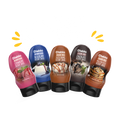
The Diablo range includes five sauce flavours: Salted Caramel, Chocolate, Maple Syrup, Strawberry, and Blueberry, all in 290ml bottles
There is a specific kind of frustration that comes with managing a low-sugar diet at mealtimes. You have planned carefully, chosen well, and then the dessert arrives: a drizzle of warm caramel over ice cream, a ribbon of chocolate sauce across a warm waffle. Then you have to decide whether to skip it entirely or just live with the consequences.
That trade-off is no longer necessary. Sugar-free dessert sauces have come a long way. Today's best options pour beautifully, taste authentic, and are built on sweeteners that your body handles very differently to refined sugar. What was once a compromise is now a genuine option for anyone watching their sugar intake.
This guide covers the full picture: the science behind polyol sweeteners, what "sugar-free" and "no added sugar" actually mean on a label, a complete nutritional breakdown of the Diablo Sugar Free sauce range, and practical ideas for finishing every meal properly, without a single gram of added sugar.
All nutritional figures in this article are sourced from verified Certificate of Analysis (COA) data for the Diablo Sugar Free product range. This guide is intended for educational purposes. Always consult your physician or registered dietitian for personalised dietary advice, particularly if you have diabetes or follow a medically supervised diet.
Why Dessert Sauce Is the Most Overlooked Part of a Low-Sugar Diet
A well-placed drizzle of sauce transforms an ordinary dessert into something memorable. It adds gloss, aroma, and flavour depth that no other finishing touch can replicate. Restaurants understand this. Home cooks understand it too. The problem, for anyone managing sugar intake, has always been that traditional dessert sauces are built almost entirely on refined sugar.
A standard caramel sauce recipe typically contains around 200g of white sugar per batch. A serving of traditional chocolate dessert sauce from a shop can carry 20g or more of added sugar per two tablespoons. For people with diabetes, those following a keto or low-carb diet, or anyone on a weight management programme, those numbers make sauce a non-starter.
The solution is not to skip the sauce. The solution is to understand what makes a sugar-free version genuinely work, and to choose one that has been formulated correctly.
What Makes a Good Sugar-Free Dessert Sauce
Three things separate a quality no sugar dessert sauce from a poor one: the sweetener it uses, the texture it achieves, and the taste it delivers. The sweetener determines blood glucose impact. The texture is what makes it pour and drizzle like the real thing. The taste is what makes you reach for it again.
Polyols, the family of sugar alcohols used in Diablo's sauce range, deliver on all three counts. They provide genuine sweetness, they contribute to the thick, viscous consistency that a dessert sauce needs, and when combined with the right flavour profiles, they are essentially indistinguishable from their sugar-sweetened counterparts in finished recipes.
The polyols in a well-formulated sugar-free caramel sauce are absorbed slowly, which is the point. Consumption of foods containing maltitol instead of sugar induces a lower blood glucose rise after their consumption compared to sugar-containing foods (GB nutrition and health claims register).
The Science of Polyols: How Sugar-Free Sweetness Actually Works
Polyols, also called sugar alcohols, are the foundation of every Diablo Sugar Free dessert sauce. Understanding them is key to understanding how these sauces deliver sweetness with a fraction of the sugar of their traditional equivalents.
What Are Polyols?
Polyols are a class of carbohydrates found naturally in small quantities in some fruits and vegetables, and produced commercially as sweeteners. Common examples include sorbitol, xylitol, and maltitol, the polyol used across the Diablo sauce range. Despite the name "sugar alcohol", they contain no ethanol and do not behave like alcohol in the body.
The critical difference between polyols and regular sugar is in how the body processes them. Sucrose (table sugar) is rapidly absorbed in the small intestine and enters the bloodstream quickly, causing a sharp rise in blood glucose. Polyols are only partially absorbed: a significant proportion passes into the large intestine relatively unchanged, where it is fermented by gut bacteria rather than converted to glucose.
This partial absorption is why products sweetened with polyols can carry "Sugar Free" or "No Added Sugar" labelling, and why they produce a lower and slower blood glucose rise than sugar.
How Polyols Appear on a Nutrition Label
On a EU-format nutrition label, polyols appear as a sub-category of carbohydrates, listed as "of which polyols". They are included in the total carbohydrate figure, but because of their partial absorption, many people following low-carb or ketogenic diets subtract polyol content when calculating their effective or net carbohydrate intake, just as they do with dietary fibre, though current dietary guidance suggests deducting only around half of the polyol content.
Maltitol, one of the most widely used polyols in sugar-free confectionery, is the sweetener across the Diablo sauce range. It is absorbed slowly, and consumption of foods containing maltitol instead of sugar induces a lower blood glucose rise after their consumption compared to sugar-containing foods (GB nutrition and health claims register). Maltitol still contributes carbohydrate, so use the "of which polyols" line on the label when counting, and check the ingredient list of any sugar-free product to see which sweetener it uses.
Sugar Free vs No Added Sugar: The Label Distinction That Matters
Sugar Free vs No Added Sugar: What Each Means
- ✓Sugar Free means the product contains no more than 0.5g of sugars per 100g. The Diablo SF Salted Caramel, Chocolate, and Maple Syrup sauces all carry this claim.
- ⚠No Added Sugar means no sugar was added during manufacturing, but the product may contain naturally occurring sugars from its ingredients. The Diablo NAS Strawberry and Blueberry sauces fall into this category, with small amounts of naturally occurring fruit sugar present (1.4g and 1.2g per 100g respectively).
- 📋Both claims describe sugar content only. Anyone managing diabetes should lean on their care team for personal advice; for any strict eating plan, the per-100g figures on the label are the numbers to check.
This distinction is not just regulatory language. It has practical implications for how you incorporate these sauces into your diet. The Sugar Free variants are the right choice for anyone prioritising absolute minimum sugar intake. The No Added Sugar fruit sauces are appropriate for those who are managing sugar more broadly rather than eliminating it entirely, and who want a lighter, fruit-forward flavour profile.
The Full Diablo Sugar Free Dessert Sauce Range
Diablo Sugar Free produces five dessert sauce variants. All five come in 290ml bottles, use polyols as their primary sweetener, and carry either a Sugar Free (SF) or No Added Sugar (NAS) claim verified by COA data. Below is a complete nutritional breakdown of each, followed by a side-by-side comparison.
Diablo SF Salted Caramel Dessert Sauce 360g
| Nutrient | Per 100g |
|---|---|
| Energy (kJ) | 818 |
| Energy (kcal) | 195 |
| Fat (g) | 5.6 |
| of which saturates (g) | 5.3 |
| Carbohydrates (g) | 56 |
| of which sugar (g) | <0.5 |
| of which polyols (g) | 54 |
| Protein (g) | <0.5 |
| Salt (g) | 1.2 |
Diablo SF Chocolate Dessert Sauce 360g
| Nutrient | Per 100g |
|---|---|
| Energy (kJ) | 692 |
| Energy (kcal) | 167 |
| Fat (g) | 2.1 |
| of which saturates (g) | 1.3 |
| Carbohydrates (g) | 54 |
| of which sugar (g) | <0.5 |
| of which polyols (g) | 53 |
| Protein (g) | 2.0 |
| Salt (g) | 0.16 |
Diablo SF Maple Syrup Dessert Sauce 390g
| Nutrient | Per 100g |
|---|---|
| Energy (kJ) | 752 |
| Energy (kcal) | 180 |
| Fat (g) | <0.5 |
| of which saturates (g) | <0.1 |
| Carbohydrates (g) | 75 |
| of which sugar (g) | <0.5 |
| of which polyols (g) | 74 |
| Protein (g) | <0.5 |
| Salt (g) | 0.01 |
Diablo NAS Strawberry Dessert Sauce 355g
| Nutrient | Per 100g |
|---|---|
| Energy (kJ) | 603 |
| Energy (kcal) | 144 |
| Fat (g) | <0.5 |
| of which saturates (g) | <0.1 |
| Carbohydrates (g) | 56 |
| of which sugar (g) | 1.4 |
| of which polyols (g) | 53 |
| Protein (g) | <0.5 |
| Salt (g) | 0.03 |
Diablo NAS Blueberry Dessert Sauce 350g
| Nutrient | Per 100g |
|---|---|
| Energy (kJ) | 572 |
| Energy (kcal) | 137 |
| Fat (g) | <0.5 |
| of which saturates (g) | 0 |
| Carbohydrates (g) | 53 |
| of which sugar (g) | 1.2 |
| of which polyols (g) | 49 |
| Protein (g) | <0.5 |
| Salt (g) | 0.06 |
Source: Verified COA nutritional data, Diablo Sugar Free product range. All figures per 100g. No per-portion data available in COA source.
All Five Sauces Side by Side
The table below gives you a direct comparison across all five sauces, useful for choosing the right one for your specific dietary goals or flavour preference.
| Sauce | Claim | kcal / 100g | Fat (g) | Sugar (g) | Polyols (g) | Salt (g) | Best For |
|---|---|---|---|---|---|---|---|
| Salted Caramel | Sugar Free | 195 | 5.6 | <0.5 | 54 | 1.2 | Ice cream, cheesecake, warm waffles |
| Chocolate | Sugar Free | 167 | 2.1 | <0.5 | 53 | 0.16 | Muffins, mousse, coffee drinks |
| Maple Syrup | Sugar Free | 180 | <0.5 | <0.5 | 74 | 0.01 | Pancakes, porridge, yoghurt |
| Strawberry | No Added Sugar | 144 | <0.5 | 1.4 | 53 | 0.03 | Cheesecake, yoghurt, fresh fruit |
| Blueberry | No Added Sugar | 137 | <0.5 | 1.2 | 49 | 0.06 | Pancakes, vanilla ice cream, scones |
Source: Verified COA nutritional data, Diablo Sugar Free. Figures per 100g. SF = Sugar Free (<0.5g sugar per 100g). NAS = No Added Sugar; the sugars in the NAS fruit sauces occur naturally.
For the lowest sugar content, reach for the Salted Caramel, Chocolate, or Maple Syrup sauces: all carry the full Sugar Free claim with less than 0.5g sugar per 100g. For lowest calorie, the Blueberry sauce is the lightest at 137 kcal per 100g. For lowest fat, the Maple Syrup sauce is effectively fat-free at less than 0.5g per 100g. For breakfast or brunch, Maple Syrup is the natural fit. For fruit freshness, Strawberry or Blueberry rounds out a cheesecake or yoghurt bowl beautifully.
Shop Diablo Sugar Free Dessert Sauces


Who Benefits from Sugar-Free Dessert Sauces
Sugar-free dessert sauces are not a niche product for a narrow audience. They serve a wide and growing group of people who share one goal: enjoying food's sweet, pleasurable moments without the added sugar.
| Audience | Primary Benefit | Recommended Sauce |
|---|---|---|
| People watching their sugar intake | Sugar Free options with no more than 0.5g sugars per 100g | Salted Caramel or Chocolate (both <0.5g sugar per 100g) |
| Keto and low-carb dieters | Very low sugar content; full carbohydrate and polyol figures on every label | Check the per-100g figures against your own plan |
| Weight management | Lower calorie options versus traditional high-sugar sauces | Blueberry (137 kcal / 100g) or Strawberry (144 kcal / 100g) |
| Health-conscious clean eaters | No added sugar, real flavour, a clearly printed ingredient list | Any flavour based on preference and use case |
| Parents and families | A genuinely lower-sugar option for children's desserts and breakfasts | Strawberry or Blueberry for fruit-based familiarity |
| Fitness enthusiasts | Dessert flavour with full macro figures on the label | Chocolate or Maple Syrup |
| Foodservice and B2B buyers | Premium sugar-free range for health-conscious menus, gym cafes, or specialty retail | Full range, available in packs of 10 per flavour |
Shop Diablo Fruit Dessert Sauces


20 Ways to Use Sugar-Free Dessert Sauce
One of the strongest arguments for keeping a bottle of no sugar dessert sauce in your kitchen is pure versatility. Below are twenty specific ideas, across breakfast, desserts, baked goods, and drinks, that show just how much range a single bottle gives you.
With Breakfast
- Maple syrup sauce over sugar-free pancakes or waffles: the closest you will get to a traditional Sunday brunch without any added sugar
- Swirl caramel sauce into overnight oats the evening before; it distributes through the oats as they chill for a butterscotch-style morning bowl
- Blueberry sauce over Greek yoghurt with a handful of toasted seeds: a balanced, low-sugar breakfast that still feels like a treat
- Stir chocolate sauce into your morning coffee for a mocha without the syrup calories
- Strawberry sauce on warm porridge with a sprinkle of nuts: fresh flavour, no added sugar, genuinely satisfying
With Desserts
- Salted caramel sauce over sugar-free vanilla ice cream: warm the sauce slightly so it runs cleanly over the cold scoop
- Chocolate sauce layered across a low-carb cheesecake as a finishing glaze before serving
- Caramel sauce as a dip for apple slices or pecan halves: the salt in the sauce plays beautifully against the natural sweetness of both
- Blueberry sauce between layers of a sugar-free sponge in place of jam; it is lighter and far lower in sugar
- Warm chocolate sauce alongside a dark chocolate mousse: a double chocolate combination that still keeps sugar minimal
With Baked Goods from the Diablo Range
- Chocolate sauce over a Diablo SF Chocolate Muffin (CAK-045-CHK-P24): the sauce amplifies the existing cocoa flavour and adds a glossy finish
- Caramel sauce drizzled over a Diablo SF Marble Cake (CAK-400-MRB-P8) after slicing, served with unsweetened whipped cream
- Maple syrup sauce alongside a Diablo SF Vanilla Muffin (CAK-045-VNL-P24) to create a warm, bakery-style serving at home
- Strawberry sauce spooned over Greek yoghurt alongside Diablo NAS Yoghurt-Coated Muesli Bars: a quick assembled dessert plate
In Drinks
- Caramel sauce in cold brew coffee for a salted caramel iced coffee with no added sugar
- Chocolate sauce blended into a protein shake for a dessert-flavour boost after training
- Maple sauce stirred into warm oat milk for a cosy, lightly sweet drink that replaces flavoured syrups entirely
- Strawberry sauce as a smoothie base blended with frozen berries and plain Greek yoghurt
For Occasions and Entertaining
- A no sugar dessert sauce tasting platter: all five Diablo flavours in small ramekins alongside fruit, biscuits, and ice cream for guests to drizzle freely
- Caramel and chocolate sauce dual-drizzle on a celebration cheesecake: the visual impact is exactly the same as a sugar-loaded version, without a gram of added sugar
Shop Diablo Dessert Sauces: New Flavours


How to Read a Dessert Sauce Label for Sugar Content
Not every sugar-free sauce on the market is as straightforward as it appears. Here is a practical guide to reading labels so you know exactly what you are buying.
What to Look For
- A Sugar Free or No Added Sugar claim clearly displayed on the front of pack, not just implied by the product name
- Sugar content below 0.5g per 100g on the nutrition panel for a genuine Sugar Free product
- Polyols listed under carbohydrates: this is the indicator that the sweetness comes from sugar alcohols rather than refined sugar
- A clear ingredient list with the sweetener named plainly near the top, so you know exactly what provides the sweetness
- The mandatory statements: "with sweetener(s)" beside the product name, and the polyol note where polyols exceed 10% of the product
What to Avoid
- Vague wording with no claim behind it: phrases like "diet" or "light" that carry no defined sugar threshold
- Glucose syrup, corn syrup, dextrose, or fructose anywhere in the ingredient list: these are all forms of rapidly absorbed sugar
- Misleadingly small serving size declarations on the front of pack that make the sugar figure appear smaller than it is in practice
- Products labelled "no sugar added" that still contain fruit juice concentrate: concentrated fruit juice is effectively sugar under a different name
- Sauces with a very high sugar figure despite a "sugar free" branding claim: a brand name can suggest "no sugar" without carrying the regulated claim, so always check the actual nutrition panel
Every Diablo Sugar Free dessert sauce is sweetened with maltitol in place of sugar, named plainly at the top of the ingredient list. The three Sugar Free variants, Salted Caramel, Chocolate, and Maple Syrup, all contain no more than 0.5g of sugars per 100g as confirmed by verified COA nutritional data. No artificial colours. Just clean formulation and genuine flavour.
A Practical Guide to Using Sugar-Free Sauces at Home
Temperature Matters
The Salted Caramel sauce pours best when gently warmed. Stand the bottle in warm water for 60 seconds. Maple Syrup and Chocolate sauces pour well at room temperature. The fruit sauces are best served chilled or at room temperature.
Pair With Protein or Fat
Eating any sauce alongside a source of protein, fat, or fibre buffers the blood glucose response further. A drizzle of caramel sauce over ice cream is better than the same sauce eaten alone. Chocolate sauce over a muffin is better than on an empty stomach.
Use After a Meal
Incorporating a drizzle of sauce as part of a post-meal dessert, after protein and vegetables, results in a much more controlled blood glucose response than eating it as a standalone fasted snack.
Store Correctly
Keep bottles in a cool, dry place away from direct sunlight. Once opened, refrigerate and use within the period shown on pack. If the Salted Caramel sauce thickens in the fridge, a brief warm will restore its pour.
A Note on Polyols and Digestive Sensitivity
Polyols are absorbed slowly, which is the point. It is also why packs where polyols exceed 10% of the product carry the standard statement that excessive consumption may produce laxative effects. This applies to all polyol-sweetened products, not just dessert sauces.
For most people, a typical serving of dessert sauce (a tablespoon or two drizzled over a dessert) is exactly the right portion: enjoy a sensible drizzle at a time and your gut adjusts. A few groups benefit from a little extra awareness:
- People who are sensitive to FODMAPs: polyols are a FODMAP category, and individuals with IBS or FODMAP sensitivity may need to introduce polyol-containing products gradually and monitor their tolerance
- People with diabetes: polyols produce a lower and slower blood glucose rise than sugar and still contribute carbohydrate. Individual responses vary, so personal monitoring and your care team's advice remain the most reliable guide
- Anyone new to sugar-free products: if you are switching from a diet that previously contained a lot of regular sugar, introducing polyol-containing products gradually gives your digestive system time to adjust
Individual blood glucose responses to specific foods vary considerably between people. If you use a continuous glucose monitor (CGM) or perform finger-prick testing, checking your levels 90 to 120 minutes after using a new sauce for the first time gives you accurate personal data. This is far more actionable than any general guideline.
Frequently Asked Questions
References and Sources
- Diablo Sugar Free. Verified Certificate of Analysis (COA) nutritional data. All figures in this article are sourced directly from COA documents for the product range.
- European Food Safety Authority. Scientific Opinion on the substantiation of health claims related to polyols and maintenance of tooth mineralisation. EFSA Journal, 2011.
- Gostner A. et al. Effect of isomalt consumption on faecal bifidobacteria in healthy volunteers. British Journal of Nutrition, 2006.
- Mooradian A.D., Smith M., Tokuda M. The role of artificial and natural sweeteners in reducing the consumption of table sugar: A narrative review. Clinical Nutrition ESPEN, 2017.
- American Diabetes Association. Sweeteners and Diabetes. diabetes.org
- Diabetes UK. Food and keeping active: Sugar and diabetes. diabetes.org.uk
- Mayo Clinic. Artificial sweeteners and other sugar substitutes. Updated 2025. mayoclinic.org
- NHS. Food labels: How to understand them. nhs.uk
Ready to Bring the Sauce Back?
Diablo Sugar Free dessert sauces bring real flavour back to the table: no added sugar and no compromise on taste. Five flavours, all backed by verified nutritional data, all made for people who refuse to give up life's sweet moments.
Shop Diablo Dessert SaucesNo added sugar. Made with sweeteners. Real flavour, done right.