 Tabletas de chocolate
 Grageas
 Bizcochos y magdalenas
 Caramelos y gominolas
 Galletas
 Salsas para postres
 Barquillos
 Cremas para untar
 Barritas de muesli
 Cestas de regalo
 Ofertas y promociones

Posting Chocolate Gifts: How to Pack and When to Send
Our chocolate gift boxes keep best at 14 to 21°C, and a parcel's job is to keep them out of the heat and away from knocks for a day or two. Seal the box in an airtight bag, pack it in a rigid carton with padding on every side, mark it fragile and post it early in the week so it is less likely to sit in a depot over a weekend.
Two of ours that post well this time of year:
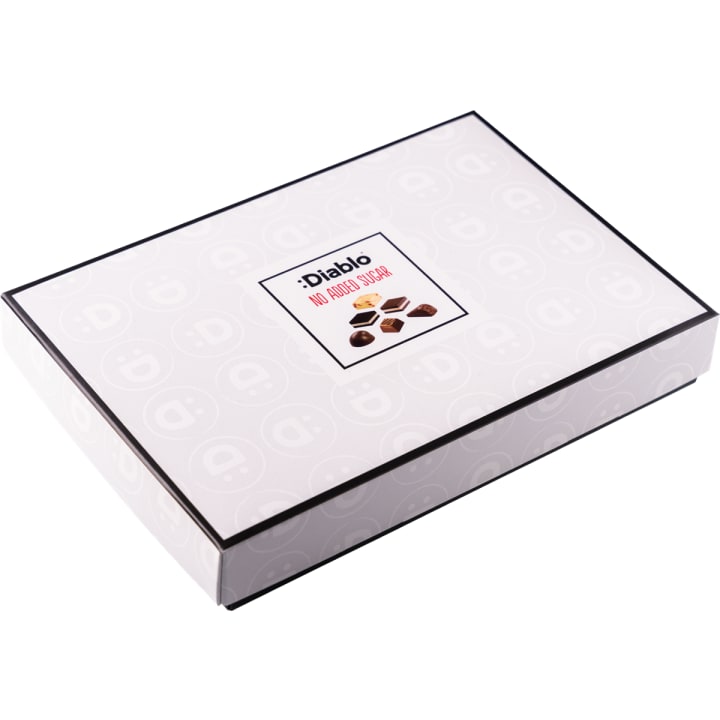

The chocolate box is No Added Sugar: it contains naturally occurring sugars from the milk and fruit, with maltitol doing the sweetening. The lemon sweets belong to our Sugar Free range.
Jump to: can you post it · packing · timing · what travels best · on arrival
Can you post chocolate in the UK?
Yes. Royal Mail's guidance on sending food by post names fish, seafood, cheese and meat as perishable and puts dry goods such as biscuits and dried fruit on the other side of the line. Chocolate is not on either list, but boxed chocolate keeps far more like the biscuits than the cheese: our boxes carry an 18 month shelf life, so the risk in the post is heat and knocks, not spoilage.
Posting abroad has stricter rules. Royal Mail does not allow perishable items to be sent abroad and asks senders who are unsure to check its prohibited and restricted items list. The destination country may also have its own import rules for food.
How do you pack chocolate for posting?
Think in three layers: a seal against air and moisture, padding against knocks and a box stiff enough not to flex.
- Leave the chocolates in their own tray and box, then slip that into a zip bag or wrap it in cling film. A sealed layer stops parcel smells and damp from reaching the cocoa butter.
- Choose a corrugated cardboard carton a few centimetres bigger than the gift on every side.
- Fill the gap with bubble wrap or paper so the gift cannot touch the walls. Royal Mail's packing advice makes the same point about anything fragile.
- Tape every seam, then mark the parcel fragile and this way up.
- Lay the gift card on top of the sealed bag, so it stays dry and is the first thing they see when the lid comes off.
Skip the padded envelope for boxed chocolates. Any gift box can dent at the corners in a bag that bends, and a dented box spoils the moment the lid comes off.
When is the best time to post chocolate?
In winter, melting is rarely the problem. The Met Office put the UK mean temperature for December 2025 at 5.8°C (Met Office December 2025 statistics), well below the 21°C top of our boxes' range. The December risks are a parcel left by a radiator once it arrives and condensation when a cold box is opened in a warm room.
Post on a Monday, Tuesday or Wednesday. Royal Mail aims to deliver 1st Class within 48 hours but says times can vary, and a Thursday parcel that slips a day can sit in a depot until Monday. Ask the recipient which day someone will be in, so the box goes straight indoors.
From May to September, chocolate needs more care. A frozen gel pack in its own bag, laid against the outer padding and never touching the chocolate, buys a few cool hours. Royal Mail accepts gel packs but not frozen water or dry ice.
Which of our treats cope best in the post?
Hard sweets have the widest margin. Our lemon and cream sweets, made in Greece from isomalt, can be stored at up to 25°C, four degrees above the top of our chocolate boxes' range.
| Product | Storage range | Shelf life |
|---|---|---|
| Luxury No Added Sugar Chocolate Box 142 g | Ideal 14 to 21°C, away from odours and sunlight | 18 months |
| Delight No Added Sugar Chocolate Box 115 g | Ideal 14 to 21°C, away from odours and sunlight | 18 months |
| No Added Sugar Coated Milk Chocolate Buttons 40 g | 16 to 20°C, humidity under 70 percent, in the original packaging | 24 months |
| Sugar Free Lemon and Cream Sweets 75 g | Ideally 15°C, 25°C maximum | 24 months |
All three chocolates in the table are No Added Sugar and contain naturally occurring sugars from their milk ingredients and, in the two boxes, fruit. The lemon sweets are Sugar Free.
The buttons ask for the narrowest band, 16 to 20°C, and like to stay in their original packaging. For a summer birthday, the lemon sweets, good to 25°C, are the easiest of the four to post.
What should the recipient do when it arrives?
Unpack it straight away and put the box in a cool cupboard, still sealed in its bag. A box that arrives cold from a winter van will gather condensation if it is opened in a warm kitchen, so give it an hour to warm up first.
If a summer parcel arrives soft, leave the chocolates to firm up in the coolest room in the house. A pale film afterwards is bloom, harmless and mostly cosmetic. Our guide to storing chocolate at home covers bloom and the fridge question in more detail.
Frequently asked questions
Can chocolate melt in the post?
It can in warm weather, especially in a van in the sun or a parcel left by a radiator. In a UK winter the bigger risks are knocks and condensation, which an airtight bag and a padded rigid box deal with.
Do you need an ice pack to post chocolate?
Not in winter. In summer a frozen gel pack in its own bag, kept away from the chocolate by padding, helps. Royal Mail accepts gel packs but not frozen water or dry ice.
Can you post chocolate abroad?
Royal Mail does not allow perishable items to be sent abroad, and it asks you to check its prohibited and restricted items list if you are unsure about anything else. The destination country may also have its own import rules for food.
What is the best day of the week to post chocolate?
Monday to Wednesday. Royal Mail aims to deliver 1st Class within 48 hours, so a parcel posted early in the week should arrive by Friday and is less likely to be held in a depot over the weekend.