Skip to content
Sugar Free®
Sugar Free®
Ultimate Guide to Sugar-Free Chocolate in the US (2026)

Sugar-Free Candy for Diabetics: Complete US Guide

Diablo Sugar Free - Complete Guide

Sugar-Free Candy for Diabetics:
The Complete US Guide

A doctor-referenced, science-backed guide to enjoying candy safely, without spiking your blood sugar

Updated June 2026 12-min read Evidence-based Doctor-referenced
Quick Answer

Is Sugar-Free Candy Safe for Diabetics?

Yes, sugar-free candy can fit safely into a diabetes management plan, provided you choose the right sweetener and watch your portions. Here is what the science shows:

  • Good: Stevia, monk fruit, erythritol, and allulose have little to no effect on blood glucose for most people
  • Caution: Maltitol and sorbitol have a significantly higher glycemic impact and are more likely to cause digestive upset
  • Note: Sugar-free does not mean carb-free. Always check total carbohydrates, not just the front-of-pack net carb number
  • Rule: The FDA allows allulose to be left off the Total and Added Sugars line, but it still counts toward Total Carbohydrate
  • Tip: Safe starting portion: a small handful, tested against your own blood glucose response before it becomes a habit
  • Research: Recent studies have linked elevated blood erythritol and xylitol levels to cardiovascular risk markers. This is preliminary and observational, not proof of cause, and major health bodies have not changed their guidance because of it

You have been told to avoid sugar. You read the nutrition panel before anything goes in the cart, you have said no to the candy bowl at the office more times than you can count, and you still want something sweet that feels like a treat instead of a compromise.

Here is the good news: you do not have to give up candy completely. Forty million Americans live with diabetes, and the sugar-free candy aisle has grown to meet them, but not every product on that shelf is equally diabetic-friendly. What matters most is not whether a candy says "sugar-free," but which sweetener it is built on, how much you eat, and how your own body responds.

In this doctor-referenced guide, we break down everything you need to know about sugar-free candy for diabetics: how different sweeteners affect blood sugar, the safest candy types, ideal portions, and where to find genuinely diabetic-friendly candy across the USA.

Medical Note

This guide references current data and guidance from the Centres for Disease Control and Prevention, the American Diabetes Association, the US Food and Drug Administration, and NIH-funded clinical research. It is intended for educational purposes. Always consult your physician or registered dietitian for personalised dietary advice.

40.1M
Americans living with diagnosed or undiagnosed diabetes (CDC, 2026)
115.2M
American adults with prediabetes, more than 2 in 5 (CDC, 2026)
1 in 4
Adults with diabetes who do not know they have it (CDC, 2026)
0
Glycemic index of stevia, monk fruit, and most erythritol for the average person

How Candy Affects Blood Sugar: The Basics

Regular candy is built almost entirely from sucrose or corn syrup, both of which convert quickly into glucose. That rapid conversion is what causes the blood sugar spike, and later the crash, that people with diabetes are trying to avoid.

Sugar-free candy replaces that sugar with substitutes that the body either does not absorb well, absorbs slowly, or does not metabolise into glucose at all. The result is usually a smaller, slower rise in blood sugar. It is rarely a zero rise.

Total Carbs vs Net Carbs: What the ADA Actually Recommends

Many candy brands promote "net carbs," calculated by subtracting fibre and sugar alcohols from total carbohydrates. It is a popular shortcut on keto-focused packaging.

The American Diabetes Association generally recommends that people with diabetes track total carbohydrates rather than relying on net carb math. The reasoning is simple: sugar alcohols do not all behave the same way in the body. Erythritol has almost no effect on blood glucose for most people, but maltitol can raise it meaningfully, and the net carb formula treats them as if they were identical.

Key Insight

Use net carbs as a rough guide if you want, but confirm your real response with a glucose check the first few times you try a new product, especially if maltitol, sorbitol, or polydextrose appear near the top of the ingredient list.

The Sweeteners Used in Sugar-Free Candy

Almost every sugar-free candy on the market falls into one of three sweetener families. Understanding the difference matters more than memorising any single brand name.

Sugar Alcohols: The Most Common Family

Sugar alcohols, also called polyols, are the most common sweetener family in sugar-free chocolate, caramels, and hard candy. Common examples include erythritol, xylitol, maltitol, sorbitol, and lactitol.

Erythritol has roughly 70 per cent of the sweetness of sugar, close to zero calories, and a glycemic index near zero for most people. It is the most widely used polyol in modern sugar-free chocolate and gummies. Xylitol tastes nearly identical to table sugar and has a low glycemic index, though it is toxic to dogs even in small amounts, so it needs careful storage in households with pets. Maltitol is common in sugar-free chocolate and caramels because it mimics sugar's texture so well, but it has a noticeably higher glycemic impact than erythritol or xylitol and is more likely to cause digestive discomfort in larger portions.

The shared downside across this entire category is digestive tolerance. Sugar alcohols are fermented in the gut, and eating too much in one sitting can cause gas, bloating, or a laxative effect. Starting with a small serving is the simplest way to avoid an unpleasant afternoon.

Artificial (Non-Nutritive) Sweeteners

Sucralose, aspartame, and saccharin are FDA-approved sweeteners that provide intense sweetness in tiny amounts, contain essentially no calories, and do not raise blood glucose or insulin levels. They are common in sugar-free hard candy, mints, and some chocolate. One important exception: people with phenylketonuria, or PKU, must avoid aspartame entirely, since their bodies cannot safely process one of its components.

Novel and Natural Sweeteners: Stevia, Monk Fruit, and Allulose

Stevia and monk fruit are plant-derived, calorie-free, and have a glycemic index of zero. They are frequently blended with erythritol to round out the flavour, since both can have a slightly bitter or cooling aftertaste on their own.

Allulose is a rare sugar that occurs naturally in small amounts in fruits like figs and raisins. It tastes close to real sugar and even browns and bakes like it, which is unusual for a non-nutritive sweetener. Since 2020, the FDA has allowed manufacturers to exclude allulose from the "Total Sugars" and "Added Sugars" lines on Nutrition Facts labels, while still requiring it to be counted under "Total Carbohydrate." Some small clinical studies suggest allulose, eaten alongside a carbohydrate-containing meal, may even modestly reduce the post-meal glucose spike, a unique property among sweeteners, though it remains an emerging area of research rather than a settled guideline.

Diablo Sugar Free

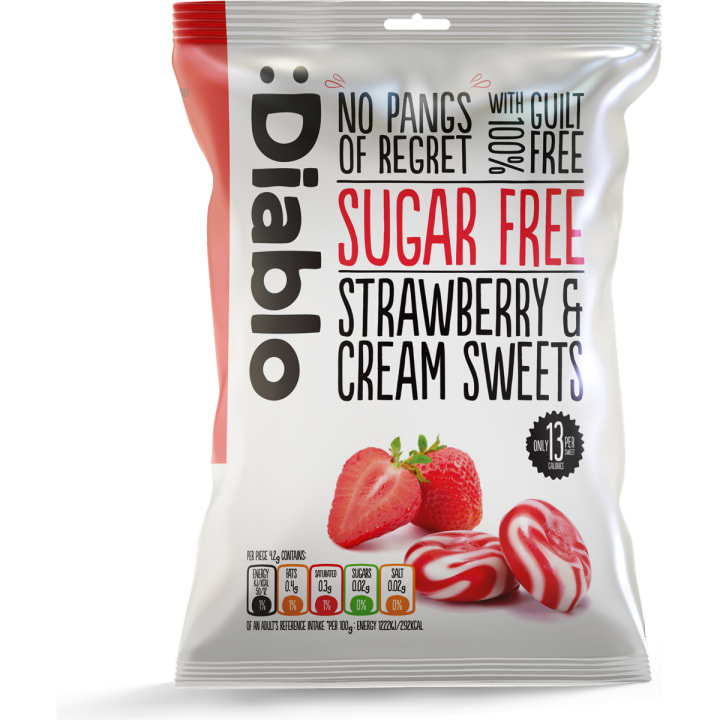
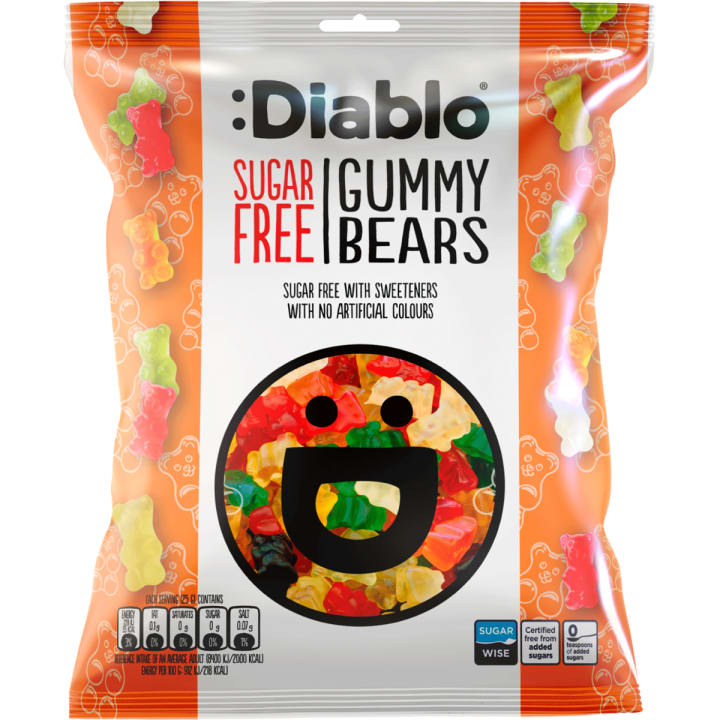
Diablo Sugar Free's chocolate, sweets, gummies, and cookies are formulated around non-nutritive sweeteners like stevia, steering away from heavy maltitol use. Always check the current pack label, since recipes are refined over time.

A Note on Erythritol and Xylitol Safety Research

If you have seen headlines questioning erythritol's safety, here is the accurate context. A 2023 study from Cleveland Clinic researchers, published in Nature Medicine, found that people with higher blood levels of erythritol had a notably higher rate of heart attack and stroke over a three-year follow-up period. A related 2024 study in the European Heart Journal found a similar pattern with xylitol.

Both studies were observational, meaning they identified an association, not proof that erythritol or xylitol directly causes cardiovascular events. A separate 2024 review associated with the American Diabetes Association did not find supportive evidence for a causal relationship between erythritol and cardiometabolic disease.

Important Caveat

Major bodies like the ADA and American Heart Association have not issued new consumption guidance specific to these sweeteners as of this writing, but researchers agree that more long-term studies are needed. If you have a personal or family history of heart disease, stroke, or blood-clotting disorders, mention your sugar alcohol intake to your doctor at your next visit, simply so it is part of the full picture.

Candy Types Compared: Which Is Safest for Diabetics?

Candy Type Common Sweetener GI Score Typical Net Carbs Diabetic Rating
Sugar-Free Hard Candy Sucralose, xylitol < 5 0-2g Best Choice
Sugar-Free Chocolate (Stevia) Stevia, erythritol < 5 2-4g Best Choice
Sugar-Free Gummies (Allulose) Allulose, a soluble fibre 0-1 2-3g Good Choice
Sugar-Free Mints Sucralose, xylitol < 5 0-1g Good Choice
Sugar-Free Caramels (Maltitol) Maltitol, xylitol ~35 10-14g effective Use Caution
Sugar-Free Chocolate (Maltitol) Maltitol ~35 10-16g effective Use Caution
Regular (Sugar-Sweetened) Candy Sucrose, corn syrup 60-80 15-25g+ Limit / Avoid

Sources: American Diabetes Association; FDA labelling guidance; NIH-funded clinical research. GI and net carb values are approximate and vary by brand and serving size.

Complete Sweetener Comparison for Diabetics

Sweetener GI Score Blood Sugar Impact Natural? Rating Key Notes
Stevia 0 None Yes Best Doctor-recommended. May have a mild aftertaste.
Monk Fruit 0 None Yes Best Clean taste, premium price. No known side effects.
Allulose 0 Negligible, may modestly lower BG Yes Excellent Still counts toward total carbs. GI upset at high single doses.
Erythritol 0-1 Negligible Semi-natural Good 2023 research flagged a possible cardiovascular association, still preliminary.
Sucralose / Aspartame 0 None Artificial Good Aspartame is unsafe for people with PKU.
Xylitol 7-13 Very low Semi-natural Moderate Digestive upset in larger amounts. Toxic to dogs.
Sorbitol 9 Low Semi-natural Moderate Common in hard candy and gum. Can cause GI upset.
Maltitol 35-50 Moderate, raises BG Semi-natural Use Caution Raises blood sugar more than other polyols. Often hidden in "sugar-free" labels.
Sucrose (Regular Sugar) 65 High Yes Avoid Standard table sugar. Not suitable as a regular choice for diabetics.

Sources: FDA; NIH Research Matters; American Diabetes Association. GI values are reference figures and may vary by individual.

Buyer's Checklist: How to Choose Diabetic-Friendly Candy

  1. Check total carbohydrates per serving, not just the net carb number on the front of the package.
  2. Identify the sweetener system. If you are sensitive to digestive upset, look for erythritol, stevia, monk fruit, or allulose before maltitol or sorbitol.
  3. Confirm the realistic serving size. Many "low carb" claims are based on a single piece, not the handful you will actually eat.
  4. Look for transparency markers such as halal or kosher certification, allergen labelling, and a clear ingredient list.
  5. Watch the saturated fat line on sugar-free chocolate. Cutting sugar does not automatically make a product heart-healthy.
  6. Start small. Try a half portion the first time with any new sweetener and note how you feel two hours later.
  7. Avoid candy that is "sugar-free" but still built on high-glycemic fillers like white flour, honey, or fruit concentrate.

Where to Buy Sugar-Free Candy in the USA

Diabetic-friendly candy has moved well beyond the pharmacy aisle. In the US, you will find it across several channels: direct-to-consumer brand sites, health food stores and speciality grocers, major online marketplaces, and gym or supplement nutrition stores.

Shop Diablo Sugar Free

Diablo Sugar Free ships its full range of sugar-free sweets and gummies, chocolate, and cookies across the USA, alongside wholesale options for retailers and gyms.

If you are buying for a household that includes both diabetics and non-diabetics, look for brands that clearly separate their "no added sugar" line, which may still contain some natural sugars from fruit or dairy, from their fully "sugar-free" line, formulated to contain virtually no sugar at all. The distinction matters more for blood glucose planning than most shoppers realise.

How Much Candy Can Diabetics Eat Per Day?

1-2

Hard Candy Starter Portion

One or two pieces of sugar-free hard candy. Roughly 0-2g net carbs. Ideal for strict blood sugar management.

2-3

Chocolate Squares, Standard Portion

Two to three squares of stevia or erythritol-sweetened chocolate. The sweet spot most dietitians recommend. 5-8g net carbs.

5-8

Gummy Bears, Daily Guide

A small handful of allulose-based gummies. Check the label, as net carbs vary widely between brands.

Upper Limit

Beyond One Portion

Carbohydrates and digestive load accumulate quickly past this point, with no additional benefit. Reserve larger portions for very active days only.

The Timing Strategy Most People Don't Know

  • After a balanced meal, eating candy as a post-meal treat, following protein, fibre, and vegetables, significantly blunts any blood sugar rise
  • Avoid eating candy on an empty stomach: when there is no food to slow absorption, even low-GI candy will raise blood sugar faster
  • After light exercise: following physical activity, muscles are primed to absorb glucose, reducing the blood sugar impact of a small treat
  • Avoid late-night consumption: insulin sensitivity decreases in the evening, so the same portion will have a larger blood glucose effect at 10 pm than after dinner
  • Pair with protein or fat: eating candy alongside a small handful of almonds or walnuts further slows glucose absorption

Type 1 vs Type 2 vs Gestational Diabetes: Does the Advice Differ?

Type 2 Diabetes

For people with T2D, stevia or erythritol-sweetened candy is generally very manageable in appropriate portions, since it has minimal impact on the insulin resistance that defines the condition.

Type 1 Diabetes

For T1D, the key advantage of low-glycemic sugar-free candy is predictability. A consistent, low carbohydrate content makes insulin dosing more straightforward than guessing at a regular candy's true sugar load.

Gestational Diabetes

Blood sugar targets during pregnancy are stricter than at any other time, and carbohydrate management takes priority above almost all other dietary considerations. Always consult your obstetrician or midwife before adding any candy to your diet during gestational diabetes management.

Pre-Diabetes

If you have been diagnosed with prediabetes, choosing low-glycemic candy now, alongside broader dietary changes, is one of the more comfortable ways to reduce overall sugar load without feeling deprived.

Personal Monitoring Tip

Individual blood glucose responses to specific foods vary considerably between people. Using a continuous glucose monitor, or a finger-prick test, 90 to 120 minutes after eating candy, gives you personalised data that is far more useful than any general guideline.

How to Read a Candy Label as a Diabetic

What to Look For

  • Stevia, monk fruit, erythritol, or allulose are listed as the primary sweetener
  • Total carbohydrates per serving are clearly stated, not just a net carb claim
  • Realistic serving sizes that match how much you would actually eat in one sitting
  • Clear ingredient transparency, including allergen and certification labelling
  • A genuine "no added sugar" or "sugar-free" claim, backed by the ingredient list

What to Avoid

  • Maltitol appears near the top of the sweetener list
  • Misleadingly small serving sizes, where a label showing low carbs per piece hides a much higher total for the portion you will actually eat
  • Honey, fruit concentrate, or white flour are used as a "natural" stand-in for sugar, since these still raise blood glucose quickly
  • Corn syrup, glucose syrup, or dextrose, anywhere on the label, are all rapidly absorbed sugars
  • Vague "may contain trace sugars" disclaimers without a clear total carbohydrate figure

The Diabetic Candy Framework: A 4-Step Practical Guide

  1. CHOOSE RIGHT. Select candy sweetened with stevia, monk fruit, erythritol, or allulose. Actively check for and avoid products where maltitol sits near the top of the ingredient list.
  2. CONTROL YOUR PORTION. Start with a single serving as listed on the label. Log it in your food tracking app, and put the rest away before you start eating.
  3. TIME IT STRATEGICALLY. Eat your candy as a post-meal treat rather than a standalone fasted snack. After a meal, unsweetened tea or black coffee works well.
  4. MONITOR YOUR PERSONAL RESPONSE. Check your blood glucose 90 to 120 minutes after eating. Keep a simple log for two to three weeks when you first introduce a new product. This personal data is far more valuable than any general guideline.
The Fat, Fibre, Protein Rule

Pairing any candy treat with a source of fat, fibre, or protein further buffers blood sugar response, for example, a few sugar-free chocolate squares with a small handful of almonds, or sugar-free gummies alongside Greek yoghurt.

✦ ✦ ✦

Frequently Asked Questions

Can a diabetic eat candy every day?
Yes, in moderation. Small portions of sugar-free candy sweetened with stevia, monk fruit, erythritol, or allulose can be included in a daily diet without significantly destabilising blood sugar, provided your total daily carbohydrate intake is well managed. The American Diabetes Association supports including small amounts of treats as part of a balanced meal plan.
What is the best candy for diabetics?
Candy sweetened with stevia, monk fruit, erythritol, or allulose is generally considered the best choice, since these sweeteners have a glycemic index near zero for most people. Hard candy and chocolate sweetened this way tend to perform better than maltitol-based caramels and chews.
Does sugar-free candy raise blood sugar?
It can, just usually less and more slowly than regular candy. Sugar alcohols like maltitol and sorbitol have a higher glycemic impact than erythritol, stevia, monk fruit, or allulose, so the sweetener matters as much as the "sugar-free" label.
Is sugar-free candy safe for type 2 diabetics?
Yes. Sugar-free candy built on low-glycemic sweeteners is generally considered safe for people with type 2 diabetes when eaten in sensible portions and counted within an overall carbohydrate plan. As with any treat, portion awareness matters more than the sugar-free label alone.
How much candy can a diabetic eat per day?
Most registered dietitians suggest sticking to a single labelled serving of sugar-free candy per day, generally a few grams of net carbs depending on the type. Monitor your own blood glucose response to find your personal optimal amount.
Is Diablo Sugar Free candy safe for diabetics?
Diablo Sugar Free formulates its sweets, gummies, and chocolate around non-nutritive sweeteners such as stevia, with no added sugar. As with any sugar-free product, check the current ingredient label for your specific item, watch your portion size, and discuss any dietary changes with your physician or dietitian.

References & Sources

  1. Centres for Disease Control and Prevention. National Diabetes Statistics Report. 2026. cdc.gov/diabetes
  2. American Diabetes Association. Carbohydrate counting and non-nutritive sweetener guidance. diabetes.org
  3. US Food and Drug Administration. Guidance for Industry: The Declaration of Allulose and Calories from Allulose on Nutrition and Supplement Facts Labels. fda.gov
  4. Witkowski M, Nemet I, et al. (2023). The artificial sweetener erythritol and cardiovascular event risk. Nature Medicine. DOI: 10.1038/s41591-023-02223-9
  5. National Institutes of Health. NIH Research Matters: Erythritol and Cardiovascular Events (2023) and Xylitol May Affect Cardiovascular Health (2024). nih.gov

Ready to Enjoy Candy Without Compromise?

Diablo Sugar Free crafts delicious sweets, gummies, and chocolate using stevia and other non-nutritive sweeteners, with zero added sugar and genuine taste you will actually enjoy. Made for everyone who refuses to give up life's sweet moments.

Shop Diablo Sugar Free >

No added sugar. No artificial colours are avoidable. Just real indulgence, done right.

Back to blog