 Chocolate Bars
 Dragees
 Cakes & Muffins
 Sweets & Gummies
 Cookies
 Dessert Sauces
 Chocolate Gift Boxes
 Wafers
 Spreads
 Muesli Bars
 Hampers
 Sales & Promotions

Keep chocolate somewhere cool and dry, away from strong smells, at 57 to 70°F, or 14 to 21°C, in its wrapper and out of direct sunlight. That is the range on the storage sheet for our 85 g (3 oz) milk and dark bars. Chocolate melts between 86 and 90°F, under body temperature, so a coat pocket wins.
Ours, if you want two bars that keep well in a cabinet:
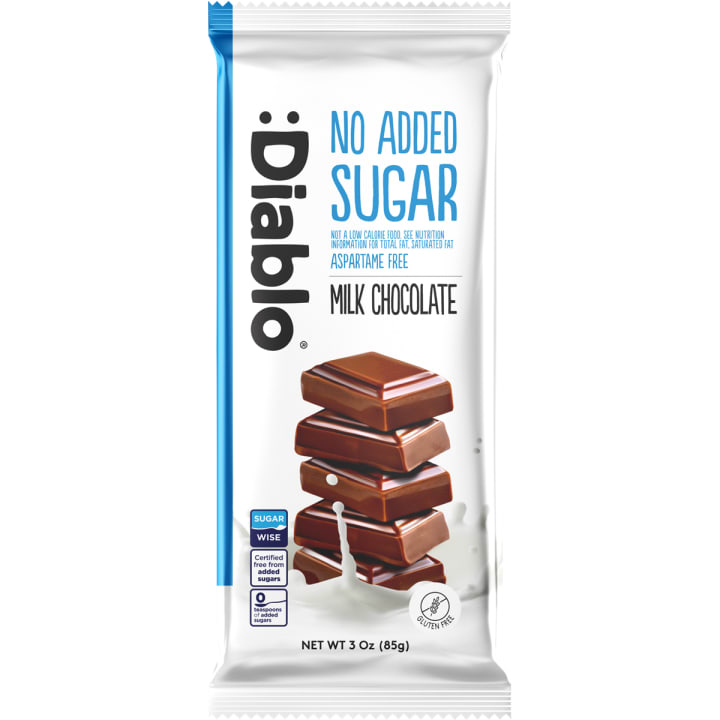

The milk bar's sugars occur naturally in the milk. The dark bar's come from the cocoa. Nothing is added on top of either.
Why does chocolate melt in your pocket?
Because a pocket is warmer than chocolate can take. The melting point of chocolate falls between 86 and 90°F, or 30 to 32°C, while the human body runs at 98.6°F, according to the Library of Congress. A jacket pocket or a car dashboard sits well above that line.
Cocoa butter is doing the work here. Tempered properly, it sets into a crystal form that melts near body temperature, which is what gives a bar its snap in the hand and its melt in the mouth. It is also why a warm room undoes a bar so quickly.
What temperature should chocolate be stored at?
Between 57 and 70°F, which is 14 to 21°C, dry and out of direct sunlight. That is not a rule of thumb. It is the line on our own storage sheet for the two 85 g bars above: keep in a cool, dry place, away from odors and protected from direct sunlight, ideal 14 to 21°C.
Humidity matters as much as heat, which is why several of our lines carry a figure for it. The coated chocolate buttons ask for the original packaging at 61 to 68°F, or 16 to 20°C, with relative humidity under 70 percent. Our chocolate spreads ask for an odor free environment at 63 to 73°F, which is 17 to 23°C, protected from air and light.
Different products, different numbers. Here is what our own storage sheets say, line by line.
| Product | On the storage sheet | Shelf life |
|---|---|---|
| No added sugar milk and dark chocolate bars 85 g | Cool, dry, away from odors, out of direct sunlight. Ideal 14 to 21°C | 24 months |
| No added sugar coated milk chocolate buttons 40 g | Original packaging, 16 to 20°C, humidity under 70 percent | 24 months |
| No added sugar hazelnut and chocolate spread 350 g | Odor free, protected from air and light, 17 to 23°C | 16 months |
| Sugar free lemon and cream candy 75 g | Cool and dry, ideally 15°C, 25°C maximum | 24 months |
| Sugar free gummy bears 75 g | Cool and dry, 20 to 25°C, humidity 55 to 65 percent | 24 months |
| No added sugar apricot muesli bar 30 g | Dry, up to 25°C | 15 months |
| No added sugar strawberry jam with chia seeds 230 g | Dry, out of direct sunlight, refrigerate once opened | 24 months |
Every no added sugar product above contains naturally occurring sugars from its own ingredients: milk, fruit or cocoa. None of them has sugar added on top. Our no added sugar products are not low calorie foods. See nutrition information for sugar and calorie content. The sugar free candy above is not a reduced calorie food and is not for weight control.
Should chocolate go in the refrigerator?
Only when the room is losing. A refrigerator sits far below the 57 to 70°F our 85 g chocolate bars ask for, and it holds the smell of everything else on the shelf. Take a cold bar into a warm kitchen and moisture settles on the surface, which dulls the finish.
In a heat wave the refrigerator still beats an 86°F countertop. Seal the bar in an airtight box first. Then let it come back to room temperature inside the box before you open it.
The box is the part people skip.
Why does chocolate turn pale, and can you still eat it?
That chalky gray film has a name. It is fat bloom, and the Institute of Food Technologists sets out where it comes from.
Fat bloom happens when fat migrates to the surface of chocolate as a result of storing it at high temperatures or exposing it to extreme fluctuations in temperature.
Institute of Food Technologists, IFT Food Facts: fat bloom
The same source notes that chocolate has a long shelf life and is safe to eat, though a badly stored bar may not taste the same or keep the same creamy texture. So the fix is a steady spot rather than a cold one. A cabinet that holds 61°F all week treats chocolate better than a refrigerator it travels in and out of.
How long does chocolate keep?
Our 85 g (3 oz) milk and dark bars carry a 24 month shelf life. The chocolate hazelnut spreads run to 16 months and the muesli bars to 15. Held in the range on the storage sheet, a bar will still eat as it should at the end of that window. Left on a sunny shelf, it will not.
The date on a chocolate wrapper is a quality date rather than a safety date, and the difference is worth knowing.
A "Best if Used By/Before" date indicates when a product will be of best flavor or quality. It is not a purchase or safety date.
USDA Food Safety and Inspection Service, Food Product Dating
Outside of infant formula, in other words, federal law does not require a date label at all, and the one on the pack is telling you about quality.
Maltitol is what sweetens these bars. It is a polyol, a sweetener used in place of sugar, and there is a full explainer on maltitol if you want the detail.
Frequently asked questions
Can you freeze chocolate?
You can, but it is rarely worth it. Freezing takes a bar far below the 57 to 70°F our 85 g bars ask for, and the journey back up brings condensation onto the surface. If you do freeze it, wrap it airtight, then let it reach room temperature still sealed.
Is chocolate with a white film still good?
The pale film is fat bloom, which the Institute of Food Technologists attributes to storage at high temperatures or to extreme swings in temperature. The same source says chocolate is safe to eat and long lasting, though a badly stored bar may lose some of its taste and texture.
How should chocolate be stored in summer?
Move it to the coolest, darkest cabinet you have, away from any window that catches afternoon sun. Our 85 g bars ask for 57 to 70°F. If the kitchen holds above 77°F for days, an airtight box in the refrigerator is the better option, opened only once the box has come back to room temperature.
If you buy chocolate in September to give away in December, the cabinet you choose now decides how it arrives.