 Chocolate Bars
 Dragees
 Cakes & Muffins
 Sweets & Gummies
 Cookies
 Dessert Sauces
 Wafers
 Spreads
 Muesli Bars
 Guilt-free Gifting
 Sales & Promotions

What Is Maltitol? The Sweetener in No Added Sugar Chocolate
Maltitol is a plant based sweetener made from starch and the reason most no added sugar chocolate exists. It gives almost the same sweetness as sugar with nearly half the calories per gram. It also behaves like sugar in the kitchen, which is why chocolatiers reach for it first when the sugar comes out.
You will find it on the label of every bar in our No Added Sugar range, listed simply as maltitol.
What is maltitol made from?
Maltitol starts as starch, usually from corn or wheat. The starch is broken down into maltose, the malt sugar that gives it its name. Adding hydrogen then turns that maltose into maltitol. The result looks and pours like granulated sugar.
Technically it belongs to a family called sugar alcohols, also written as polyols, though there is no alcohol in the drinking sense anywhere near it. Erythritol, xylitol and sorbitol are cousins from the same family, all covered in our guide to sugar alcohols. On the Nutrition Facts label sugar alcohols get their own line under total carbohydrate.
Why do chocolate makers use maltitol?
Sugar does three jobs in a chocolate bar: it sweetens, it provides bulk so the bar has body and it sets the texture behind a clean snap and a slow melt. Take sugar out and most sweeteners fail at the second and third jobs. Stevia, for example, is hundreds of times sweeter than sugar, so the sweetening for a whole bar would barely cover a teaspoon tip and something else must fill the space.
The International Food Information Council puts maltitol at about 90 percent as sweet as sugar, so it swaps in almost gram for gram. The bar keeps its body and its snap, with no aftertaste to mask. Our 85 g No Added Sugar milk and dark bars are both built this way:
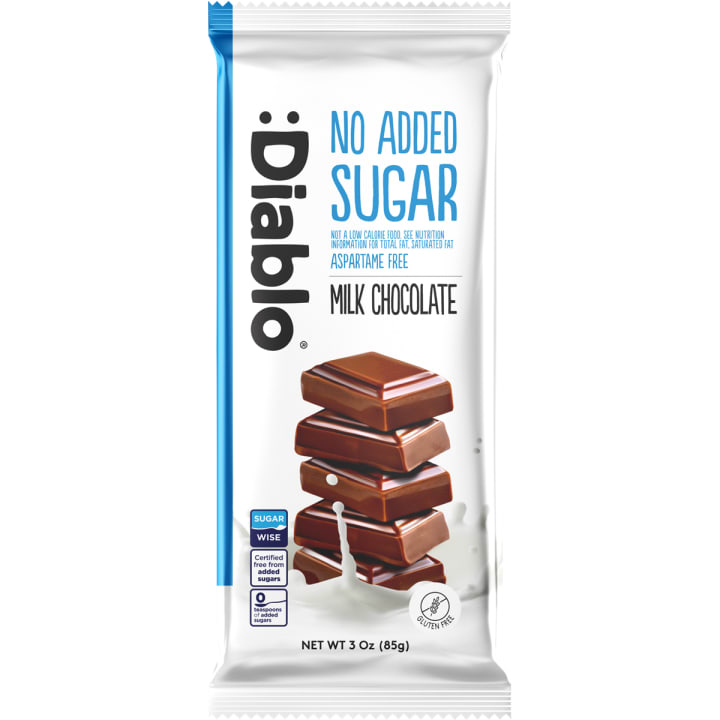
6.7 g sugars per 100 g, all naturally occurring, almost entirely from the milk

Does maltitol raise blood sugar?
Maltitol is digested slowly and absorbed only in part, which changes how the body handles it compared with sugar. The International Food Information Council describes it as slowly and incompletely metabolized in the small intestine. That is why it produces a lower, more gradual rise in blood glucose than the same amount of sugar:
Slowly and incompletely metabolized in the small intestine into equal amounts of glucose and sorbitol.
How the International Food Information Council describes maltitol digestion
Lower does not mean zero. Anyone tracking their intake should count it from the label like any other carbohydrate. The part that is not absorbed travels on and is fermented by gut microbes, the same way fiber is. A first encounter with a lot of sugar alcohols is something to ease into for that reason, exactly as you would with a high fiber food. Your gut adjusts.
How many calories does maltitol have?
US nutrition rules count maltitol at 2.1 calories per gram, against 4 for sugar. Chocolate remains chocolate: cocoa butter and milk bring their own energy, so a maltitol bar is not a low calorie food and we will never pretend otherwise. The nutrition label carries the full sugar and calorie numbers. The FDA's Daily Value for added sugars is 50 g a day. A bar sweetened with maltitol instead of sugar draws nothing from that budget. Regular milk chocolate is typically more than half sugar by weight. Our No Added Sugar milk bar lists 6.7 g of sugars per 100 g, all naturally occurring.
Is maltitol safe to eat?
Yes, it is, and our dark chocolate bar prints one line about quantity, Excessive consumption may produce laxative effects. That wording comes from UK food information law, which asks for it wherever added polyols exceed 10 percent of a food. Sugar alcohols make up 42 g of every 100 g of that bar. US rules use similar words for two other sugar alcohols: “Excess consumption may have a laxative effect” is required where a food could supply 50 g of sorbitol a day (21 CFR 184.1835) or 20 g of mannitol (21 CFR 180.25).
The part of maltitol the small intestine does not absorb draws water into the bowel and is fermented further down by gut bacteria. The same slow digestion is why the glucose rise is lower than with sugar. In very large daily amounts it can also loosen the bowel.
In a 2003 trial in the European Journal of Clinical Nutrition, 12 healthy adults took rising doses of maltitol through the day until diarrhea or a severe digestive symptom appeared. The average threshold was 92 g of maltitol a day, against 106 g for sugar taken the same way. The authors judged those doses much greater than foods normally supply. A larger University of Reading study gave 40 adults chocolate sweetened with maltitol or maltitol blends for six weeks, doubling the dose every two weeks. Bowel habit showed no significant change even at 45.6 g of sweetener a day.
Which Diablo products are sweetened with maltitol?
Maltitol sweetens most of what we make: the No Added Sugar chocolate bars, the Hazelnut Chocolate Spread with its 8.6 g of naturally occurring sugars per 100 g, the wafers, the cakes, the dessert sauces and most of the Sugar Free range too. In most of the cakes, maltitol shares the work with a trace of acesulfame potassium (Ace-K), a high intensity sweetener that tops up the sweetness. A few recipes go their own way. Our hard candies lean on isomalt, a sugar alcohol cousin. The gummies pair steviol glycosides, the sweet compounds from the stevia leaf, with sugar alcohols. And the peanut butters need no sweetener at all, because the ingredient list is 100% Peanuts and nothing else.
Neither range name on our packs refers to the sweetener. A Sugar Free product holds under 0.5 g of sugars per serving, the US legal threshold. No Added Sugar means we added none. Any sugars on the label occur naturally in ingredients like milk, cocoa and fruit.
Frequently asked questions
Is maltitol bad for you?
No. Maltitol is a sugar alcohol with 2.1 calories per gram against 4 for sugar, and the International Food Information Council describes a lower, more gradual blood glucose rise than the same amount of sugar. In a 2003 trial, diarrhea or severe symptoms set in at an average of 92 g of maltitol a day.
Why does maltitol chocolate say it may have laxative effects?
UK labeling law asks for that sentence wherever added polyols exceed 10 percent of the food, and our dark chocolate bar carries it. Part of the maltitol reaches the large intestine unabsorbed, where it holds water and is fermented. In the 2003 trial the average threshold was 92 g in a day.
Is maltitol bad for gut bacteria?
No. In a 2010 University of Reading trial, 40 adults ate chocolate sweetened with maltitol or maltitol blends daily for six weeks, and the bifidobacteria counted in their stool samples went up. A 2019 review in Advances in Nutrition lists maltitol among the polyols that reach the large bowel and increase bifidobacteria numbers in humans.
Is maltitol a sugar?
No. Maltitol is a sugar alcohol, a separate category of carbohydrate. On a US Nutrition Facts label it appears under total carbohydrate on its own sugar alcohol line, not on the sugars line. That is why a bar sweetened with maltitol can carry so little sugar.
Is maltitol vegan?
Maltitol itself is, since it is made from plant starch. Whether a finished product is vegan depends on the rest of the recipe: milk chocolate is not, while several maltitol sweetened products are. Check the label on each product.
What is the difference between maltitol and stevia?
Maltitol is a bulk sweetener made from starch that replaces sugar almost gram for gram, which suits chocolate. Stevia comes from the leaves of the stevia plant and is hundreds of times sweeter than sugar, so it is used in tiny amounts. Both appear across the Diablo range and each product page lists its sweetener. We weigh the two up in stevia vs maltitol.