 Chocolate Bars
 Dragees
 Cakes & Muffins
 Sweets & Gummies
 Cookies
 Dessert Sauces
 Chocolate Gift Boxes
 Wafers
 Spreads
 Muesli Bars
 Hampers
 Sales & Promotions

The percentage on a chocolate bar is its cocoa content, and the number on the front usually counts cocoa mass, cocoa butter and cocoa powder together. US standards of identity measure something narrower: chocolate liquor, at a minimum of 35 percent for bittersweet and 10 percent for milk chocolate.
Ours, if you want the number on the front and the sugars line to match up:
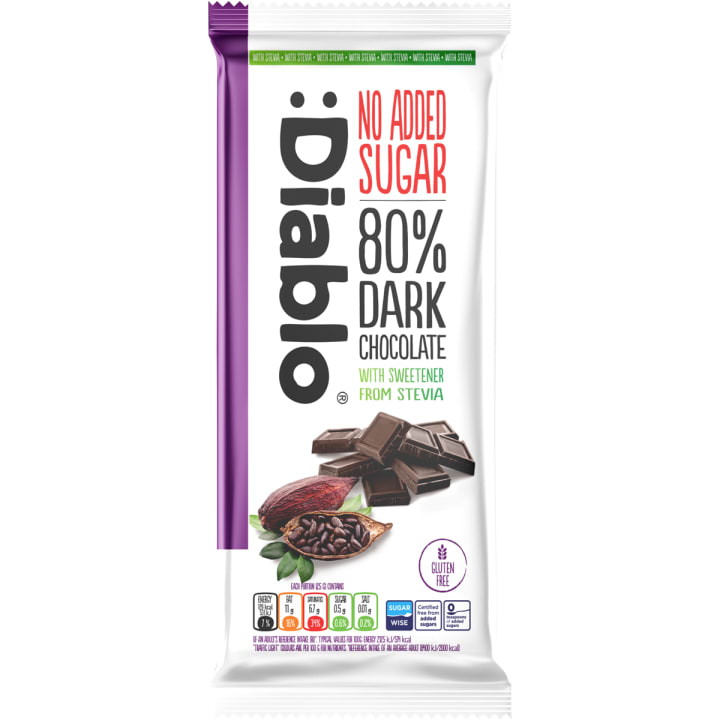
1.1 g sugars per 100 g, from the cocoa itself. Sweetened with maltitol and steviol glycosides.

0.5 g sugars per 100 g, from the cocoa itself, and 8.1 g fiber. Sweetened with maltitol.
What does the percentage on a chocolate bar actually mean?
It is a weight figure. Take everything in the bar that came from the cocoa bean, add it up and divide by the weight of the bar. A 70 percent bar is 70 percent cocoa by weight.
Three things can count towards it. Cocoa mass (also called cocoa paste; US regulations call it chocolate liquor) is the whole roasted bean ground to a paste. Cocoa butter is the fat pressed out of that paste, and it is what gives chocolate its snap and its melt. Fat reduced cocoa powder is what is left after the butter comes out. All three come from the bean.
So the percentage is a poor guide to bitterness on its own. A maker can hit 70 percent with a lot of cocoa butter and comparatively little cocoa mass, and that bar tastes rounder and softer than a 70 percent built the other way round. Nothing on the front of the pack separates the two.
What are the US minimums for chocolate liquor?
US standards of identity live in 21 CFR part 163, and they measure chocolate liquor, not total cocoa solids. Below the minimum, a product cannot be sold under that name.
Under 21 CFR 163.123, sweet chocolate needs at least 15 percent chocolate liquor by weight, while semisweet and bittersweet chocolate both need at least 35 percent. Milk chocolate needs 10 percent chocolate liquor and 12 percent total milk solids.
White chocolate sits outside all of this. It contains no cocoa mass, so there are no cocoa solids to count and no liquor minimum to meet. It is defined by cocoa butter and milk solids instead, which is why a white bar rarely carries a cocoa percentage, and where one does appear it is counting cocoa butter.
Does a higher cocoa percentage mean less sugar?
Only by accident. The percentage fixes the cocoa share and says nothing about what fills the rest. On an ordinary bar most of that remainder is sugar, so the two numbers do move together: a 70 percent bar has less room for sugar than a 40 percent one. But the label is telling you about the cocoa, and you are inferring the sugar.
Our 80 percent dark bar splits the two numbers apart. The cocoa takes 80 percent. The panel then shows 20 g of polyols per 100 g and 1.1 g of sugars per 100 g, and that 1.1 g occurs naturally in the cocoa itself. A polyol is a sweetener the body absorbs slowly. Maltitol does nearly all of that work in this bar, with steviol glycosides at 0.02 percent alongside it, in place of the sugar an ordinary bar would carry. FDA asks for an "excess consumption may have a laxative effect" line on foods that could deliver 50 g of sorbitol or 20 g of mannitol in a day, under 21 CFR 184.1835 and 180.25, and sets no such rule for maltitol. Our packs print the line regardless.
Eighty is the only percentage we put on the front of a bar, and it is about as far as we want to take it. Past that the bitterness starts crowding out everything else the bean is doing.
Put an ordinary 80 percent bar beside ours and the front of the pack says the same thing, because it is measuring the same cocoa. The two bars part company on the nutrition panel.
Why do US and UK chocolate labels use different numbers?
US rules measure chocolate liquor, the cocoa mass on its own, with any extra cocoa butter counted separately. UK and European rules measure total dry cocoa solids, cocoa butter included. The same headline number can therefore sit on two quite different bars.
Schedule 1 of the UK's Cocoa and Chocolate Products (England) Regulations 2003 asks for 35 percent total dry cocoa solids for anything sold as chocolate and 25 percent for milk chocolate, or 20 percent for the family milk chocolate that may also be sold under the milk chocolate name, against the US figures of 35 and 10 percent of chocolate liquor. The headline number for bittersweet looks identical and is not, because the American measure excludes the added cocoa butter. Worth remembering before you line an imported bar up against a domestic one.
Frequently asked questions
Is 100 percent chocolate real chocolate?
Yes. A 100 percent bar is pure cocoa mass and cocoa butter with no sweetener at all. US rules name it chocolate: 21 CFR 163.111 lists unsweetened chocolate among the names for chocolate liquor. It tastes fiercely bitter because nothing balances the cocoa.
Why does white chocolate never show a percentage?
Because it contains no cocoa mass, so there are no cocoa solids and no chocolate liquor to count. It is defined by its cocoa butter and milk solids instead. A cocoa percentage on the front would have nothing to measure.
Does a higher percentage always taste more bitter?
Not always. The front-of-pack figure usually counts cocoa butter alongside cocoa mass, and cocoa butter is mild. A bar built with more butter and less mass reaches the same percentage while tasting softer. Bean origin and roast move the flavor too.
The front of the pack counts cocoa, never sugar. Our breakdown of sugar in milk, dark and white bars covers the line most people are actually hunting for, and the guide to maltitol explains the sweetener doing the work in ours.