 Chocolate Bars
 Dragees
 Cakes & Muffins
 Sweets & Gummies
 Cookies
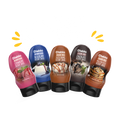 Dessert Sauces
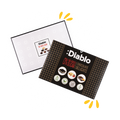 Chocolate Gift Boxes
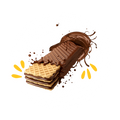 Wafers
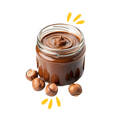 Spreads
 Muesli Bars
 Hampers
 Sales & Promotions

Gelatine is made from animal collagen, so any sweet that lists it is out. It is not the only blocker. Beeswax, shellac, carmine and milk all turn up in confectionery, so five ingredient names are worth scanning for. The sweets that do set without gelatine use pectin, agar, carrageenan or starch.
Ours, if you would rather skip the label reading:


What is gelatine, and why is it not vegan?
Gelatine is a protein taken from animals. UK law defines it as protein obtained by the partial hydrolysis of collagen produced from bones, hides and skins, tendons and sinews of animals, which is about as unambiguous as food law gets. That rules it out of a vegan diet, and out of a vegetarian one too.
Sweet makers keep using it because nothing else behaves the same way. Gelatine sets soft, holds a chew, then melts at close to body temperature, which is the reason a gummy releases its flavour the way it does. Our own gummy bears, cola bottles and gummy drops are set with gelatine for exactly that reason. It is what gives them their bite.
Gelatine also has no category name to shelter under. If it is in a sweet, the word itself appears in the ingredient list.
Which sweets usually contain gelatine?
Anything with a bounce. Gummies, jelly sweets, wine gums, marshmallows, foam sweets and a good number of chews and toffees. Our Sugar Free Fruit Flavoured Toffees have it eighth on the list, printed gelatin without the e, exactly as the pack has it, so they sit in the same group.
Boiled sweets are the usual exception, because a hard sweet needs no setting agent at all. Ours are boiled sweets and still dairy: the cream sweets are built around real cream, and the cappuccino one brings butter in as well, which makes them lovely.
Where a sweet does set without gelatine, the work is done by pectin from fruit, by agar or carrageenan from seaweed or by plain starch.
Does gelatine free mean vegan?
No, gelatine is the name everybody looks for, and four more are worth memorising.
Beeswax (E901) is the shine on a lot of small sweets, and it comes from bees. Shellac (E904) does the same job and is a resin secreted by the lac insect. Carmine (E120) is a deep red colour made from insects. And then there is the ordinary dairy list: milk, cream, butter, whey powder, plus honey wherever a sweet wants a rounder taste.
Our own gummies show why the check has to go past gelatine. Gelatine sets them, and beeswax and carnauba wax give them their shine, with carnauba coming from a palm. So read the glazing agents line as closely as the setting agent.
What does a vegan label actually promise?
Less than most people assume. There is no legal definition of vegan food in UK law, so the claim rests on a general duty: the wording has to be accurate and it must not mislead.
If a food label says that a product is vegan or safe for vegans, it means that no ingredients of animal origin were intentionally used in the making of the product.
Understanding food labelling, GOV.UK
The word doing the work there is intentionally. A vegan claim is not a free from claim. It does not come with the separated lines and validated cleaning that sit behind a milk free or egg free declaration, so anyone shopping for an allergy rather than an ethic should read the may contain line underneath as well.
Which Diablo products are vegan?
Five of our dessert toppings are labelled vegan: Chocolate, Salted Caramel and Maple Syrup from the Sugar Free range, plus Strawberry and Blueberry from the No Added Sugar range. All five are dairy free as well as gelatine free, which is unusual for something you pour over ice cream.
Four muesli bars are made to a vegan recipe without carrying the wording on the pack: apricot, cranberry and raspberry, hazelnut, lime. The two chia seed jams sit in the same position. If you want the claim printed on the front, the toppings are the ones that have it.
That 0.5 g line is the whole reason three of the toppings are titled Sugar Free and two are titled No Added Sugar. Strawberry puree makes up 20 percent of the strawberry topping and blueberry 10 percent of the blueberry one, which is where their sugars come from. In all five, maltitol is the first ingredient on the list, and maltitol is a sugar alcohol rather than a sugar. If chocolate is what you are after, our guide to vegan chocolate covers where the dairy hides in a cocoa recipe.
Common questions
Are Diablo gummy bears vegan?
No. They are set with gelatine and glazed with beeswax, so they suit neither a vegan nor a vegetarian diet. The dessert toppings carry the vegan wording on the pack, and the muesli bars and the chia seed jams are made to a vegan recipe without printing it.
Is there such a thing as plant based gelatine?
No. Agar, pectin and carrageenan set sweets in a similar way from seaweed or fruit, but they are different ingredients with different names. Anything printed as gelatine on a label came from an animal.
Does a vegan label mean the sweets contain no milk?
Not as a safety promise. GOV.UK guidance says a vegan label means no animal ingredients were intentionally used, and it does not carry the controls behind a free from claim. If you are avoiding milk for an allergy, read the may contain line as well.