Skip to content
Sugar Free®
Sugar Free®
Sugar-Free Biscuits & Cookies UK: Definitive Buyer's Guide

Sugar-Free Biscuits & Cookies UK: Definitive Buyer's Guide

Diablo Sugar Free – Definitive Buyer's Guide

Sugar-Free Biscuits & Cookies UK:
The Definitive Buyer's Guide

Everything you need to choose the right sugar-free biscuit in 2026 – from sweetener science to supermarket availability, brand comparisons and label-reading tips

Updated April 2026 18-min read Evidence-based Dietitian-referenced
Quick Answer

Best Sugar-Free Biscuits UK: At a Glance

The best sugar-free biscuits in the UK in 2026 are widely available, genuinely tasty, and suitable for diabetics, keto dieters, and anyone cutting back on sugar. Here is the short version:

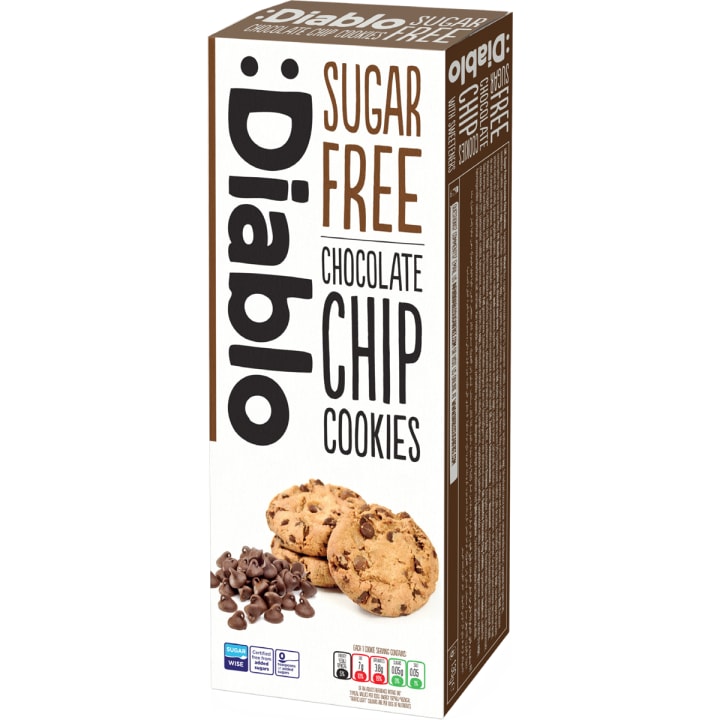
  • +Diablo SF Chocolate Chip Cookies 130g – best all-rounder, widely available, 39g carbs per 100g
  • +Gullon Sugar Free Digestive Biscuits 245g – best for tea-dunking, vegan, stocked in Tesco and Morrisons
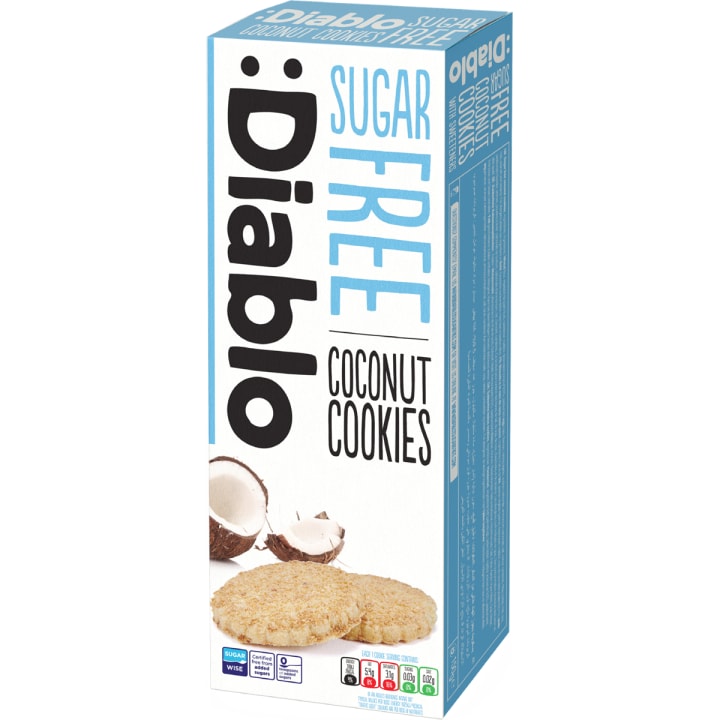
  • +Diablo SF Coconut Cookies 150g – best flavour variety, 35g carbs per 100g
  • +Farmhouse Sugar Free Multipack – best variety box, four flavours ideal for gifting or sampling
  • +Diablo NAS Cream Filled Milk Chocolate Wafers 150g – best wafer-style option, no added sugar
  • !Key buying rule: check whether a product is labelled sugar free or no added sugar – they mean different things under UK food law. The full explanation is below.

You are in the biscuit aisle. The golden digestives, the chocolate hobnobs, the shortbread – all of it looking very appealing. But you are watching your sugar. You have diabetes, you are on a low-carb plan, or you simply want to snack more carefully without giving up something you genuinely enjoy.

The good news is that in 2026, the choice is genuinely good. The UK market for sugar free biscuits has expanded significantly, with dedicated brands producing products that hold up against their sugary equivalents in both taste and texture. Gone are the days of chalky, oddly-flavoured alternatives that felt like a punishment.

This guide covers the full picture: what the labelling terms actually mean under UK law, which sweeteners to look for and which to avoid, a product-by-product brand comparison using verified nutritional data, where to buy across supermarkets and online, and specific guidance for diabetics, keto dieters, and weight-conscious shoppers.

Dietitian and Medical Note

This guide draws on UK food labelling regulations (FSA), the SACN 2025 review on low and no-calorie sweeteners, published glycaemic index research, and market data from IBIS World and Grand View Research. Diablo Sugar Free product nutritional data is sourced from verified Certificate of Analysis (COA) documents. Always consult your GP, diabetes nurse, or registered dietitian for personalised dietary guidance.

57%
of UK consumers are concerned about sugar in their food (FSA Food and You 2: Wave 9, 2024)
£3.3bn
UK biscuit production market size in 2025, with health-conscious segments growing fastest (IBIS World)
35
Glycaemic index of maltitol, the most common sugar-free biscuit sweetener – vs. 65+ for sucrose
1.5–2x
Typical price premium for sugar-free biscuits over standard equivalents (Accio Market Research, 2026)

What Does "Sugar Free" Actually Mean in the UK?

This is one of the most important questions any buyer can ask, and it is the one almost every other guide ignores. The terms printed on packaging are legal claims governed by specific rules under UK food law (Regulation (EU) No 1169/2011, retained in domestic law post-Brexit). They are not interchangeable.

Labelling Term Legal Definition Max Sugar Content What It Means in Practice
Sugar Free (SF) No sugars of any kind present in the product Max 0.5g per 100g The strictest claim. Sweeteners replace sugar entirely. Examples: Diablo SF Chocolate Chip Cookies 130g (<0.5g sugar/100g per COA).
No Added Sugar (NAS) No sugars were added during manufacturing; naturally occurring sugars from ingredients may still be present No upper limit on natural sugars Wheat, oats and dairy contain trace natural sugars; the label does not exclude these. Examples: Diablo NAS wafers and digestive cookies.
Reduced Sugar At least 30% less sugar than the standard comparable product Varies Not the same as sugar free; still contains substantial sugar.
Low Sugar A genuinely low amount of sugar in absolute terms Max 5g per 100g (solid foods) Useful for some products; not equivalent to sugar free.

Source: UK Food Information Regulations; Regulation (EU) No 1169/2011 as retained in UK law. SF and NAS designations in Diablo products confirmed against COA data.

Why does this distinction matter for diabetics? If you assume "no added sugar" means zero blood glucose impact, you could be caught out by naturally occurring sugars in ingredients. Always read the full nutrition panel, focusing on the "of which sugars" row and, critically, the total carbohydrate content. The sugar row alone does not tell the full story.

Practical Label-Reading Tip

For blood sugar management, total carbohydrates matter more than the sugar row alone. A product can be genuinely sugar free but still contain significant carbohydrates per 100g from wheat flour and oats. Factor in the full carbohydrate count alongside the sweetener type when assessing a product.

The Sweetener Guide: What Is Inside Your Sugar-Free Biscuit?

The taste, texture, and health impact of a sugar-free biscuit depends almost entirely on which sweetener was used. This is where most buying guides fall short. Here is a complete breakdown of every sweetener you are likely to encounter in UK products.

Sweetener Type Glycaemic Index Calories vs Sugar Digestive Tolerance Rating for Diabetics
Stevia Natural, plant-derived 0 0 kcal/g (vs 4 kcal/g for sugar) Excellent; no known digestive side effects Best Choice
Erythritol Sugar alcohol (polyol) 0–1 ~0.2 kcal/g Very good; mostly absorbed before reaching the large intestine Good Choice
Isomalt Sugar alcohol (polyol) ~2 ~2 kcal/g Good; lower laxative risk than maltitol Good Choice
Xylitol Sugar alcohol (polyol) 7–13 ~2.4 kcal/g Moderate; laxative effect possible above 50g per day Moderate
Maltitol Sugar alcohol (polyol) ~35 ~2.4 kcal/g Can cause bloating and laxative effect above ~30g in a sitting Use Caution
Sorbitol Sugar alcohol (polyol) 9 ~2.4 kcal/g Poorest of the polyols; laxative effect above ~20g Use Caution
Sucrose (regular sugar) Disaccharide 65 4 kcal/g N/A Avoid

Sources: Mayo Clinic; Diet Doctor Sweetener Guide; GoodRx Health; PMC research; SACN 2025 review on low and no-calorie sweeteners. GI values are reference figures and may vary by product.

A Critical Note on Maltitol

Maltitol is the primary sweetener in the Diablo Sugar Free cookie and biscuit range, as confirmed by COA data. It is used because it behaves very like sugar in baking, delivering the texture and browning that other sweeteners cannot replicate as easily. However, it has a glycaemic index of approximately 35, which means it does raise blood glucose – significantly less than sucrose, but not negligibly. If you are tightly managing blood glucose, particularly if you are insulin-dependent, keep portion sizes to two to three biscuits per sitting.

What the SACN 2025 Review Found

The Scientific Advisory Committee on Nutrition's 2025 review on low and no-calorie sweeteners concluded that LNCS consumption does not increase blood glucose levels, and a meta-analysis of 29 randomised controlled trials found no increase in blood glucose following LNCS intake. This applies to stevia, erythritol, isomalt, and similar compounds. Maltitol, as a sugar alcohol with a moderate GI of approximately 35, warrants more caution and should not be treated as equivalent to zero-impact sweeteners.

Important Note for IBS Sufferers

All sugar alcohols (the "-ol" sweeteners: maltitol, isomalt, xylitol, sorbitol, erythritol) are classified as FODMAPs. If you have irritable bowel syndrome or known FODMAP sensitivity, even products labelled sugar free can cause digestive discomfort in larger quantities. Erythritol is generally the best-tolerated polyol. Keep portions small and observe your individual response.

Best Sugar-Free Biscuits in the UK: Brand-by-Brand Breakdown

Based on taste, verified nutritional data, UK availability, and value for money, here are the top products for UK shoppers in 2026.

Diablo Sugar Free – The UK Market Leader

Diablo Sugar Free was established in 2010 and has grown into the most recognised dedicated sugar-free confectionery brand in the UK, selling across more than 100 countries with a range of over 100 products. Their cookie and biscuit range is their most popular category, and all nutritional data below is sourced from verified COA documents.

Diablo Sugar Free

The Diablo Sugar Free cookies and biscuits range and wafers range use polyols (sugar alcohols, primarily maltitol) as sweeteners across the cookie, sandwich cookie, digestive, and wafer lines. No added sugar. Available directly from diablosugarfree.com, Holland & Barrett, Amazon UK, and specialist health food retailers throughout the UK. Trade and wholesale pricing is available on the website for B2B buyers.

Official Product Name (COA) SKU Claim Net Weight Carbs / 100g Sugar / 100g Key Features Approx Price
Diablo SF Chocolate Chip Cookies COK-130-CHP-P12 SF 130g 39g <0.5g Bestselling biscuit in the range; crisp texture; real chocolate drops; 462 kcal/100g From £2.00
Diablo SF Coconut Cookies COK-150-CCN-P12 SF 150g 35g <0.5g Desiccated coconut 9.5%; distinct tropical flavour; 463 kcal/100g £2.00
Diablo SF Chocolate Striped Peanut Cookies COK-128-PNT-P12 SF 150g 39g <0.5g Chocolate striped; peanut flavour; 436 kcal/100g From £2.00
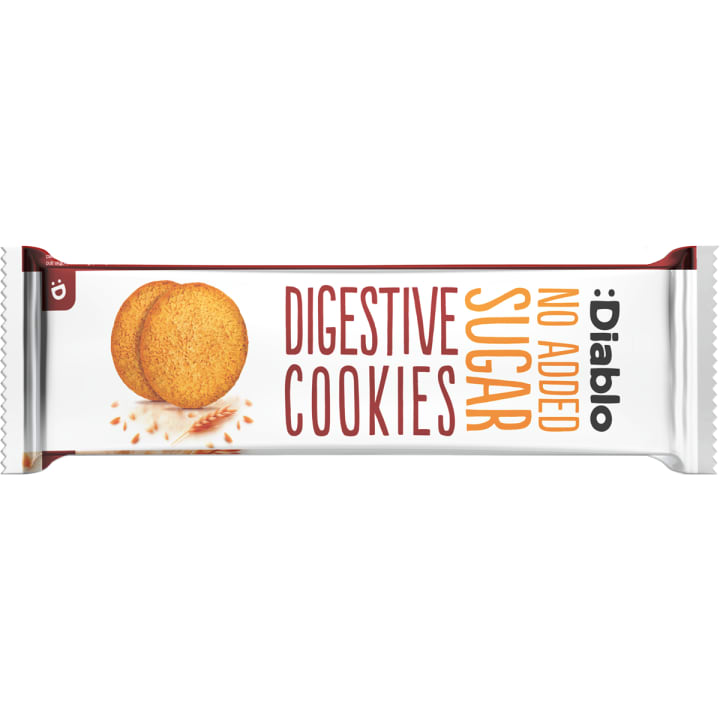
Diablo NAS Digestive Cookies COK-150-DGV-P18 NAS 150g 67g 1g No added sugar; 5g fibre/100g; 17g polyols/100g; classic digestive format; 440 kcal/100g From £2.00
Diablo SF Extra Dark Cocoa Cookie with Vanilla Cream SND-176-DRK-P12 SF 176g 66g <0.5g Extra dark cocoa outer; vanilla cream filling; 459 kcal/100g; 17g per serving ~£2.20
Diablo SF Vanilla Cookie with Cocoa Cream SND-176-VNL-P12 SF 176g 66g <0.5g Vanilla outer; cocoa cream filling; 459 kcal/100g; 17g per serving ~£2.20
Diablo NAS Chocolate Cream Flavour Wafers Thins WFR-150-CHK-P28 NAS 150g 63g 1.5g No added sugar; crispy wafer thins; chocolate cream flavour; 467 kcal/100g ~£2.50
Diablo NAS Cream Filled Milk Chocolate Wafers WFR-150-MCH-P22 NAS 150g 54g 5.2g No added sugar; milk chocolate coated; cream filled; 485 kcal/100g; 18.6g per serving ~£2.50

All product names, SKUs, net weights, carbohydrate and sugar figures sourced from verified Diablo COA documents. SF = Sugar Free (max 0.5g sugar/100g). NAS = No Added Sugar (naturally occurring sugars from ingredients may be present). Prices approximate, April 2026.

SHOP THE DIABLO RANGE ABOVE
SF vs NAS: Why It Matters on Wafers

All Diablo wafer products in the range are No Added Sugar (NAS), not Sugar Free (SF). This is a meaningful distinction: the Diablo NAS Cream Filled Milk Chocolate Wafers contain 5.2g sugar per 100g from naturally occurring sources. This is still significantly lower than standard biscuits, but is not the same as a sugar-free claim. Always check the label if you are managing blood glucose closely.

A practical note on Diablo cookies: because maltitol is the primary sweetener, these products deliver a very convincing taste and texture. The trade-off is that at higher consumption, maltitol has a GI of approximately 35 and can cause digestive discomfort. A serving of two to three biscuits is the right approach.

Gullon – The Supermarket Shelf Specialist

Gullon is a Spanish biscuit manufacturer with decades of heritage and a formidable sugar-free range. Their UK presence is strongest in Tesco, Morrisons, and B&M, making them the most accessible brand for shoppers who prefer buying in-store rather than online. Gullon nutritional data below is sourced from publicly available product information; it is not covered by Diablo COA documents.

Product Net Weight Sweetener(s) Key Features Where to Buy
Gullon SF Digestive Biscuits 245g Isomalt + Maltitol Vegan; high fibre; classic digestive texture; isomalt-based formula means lower GI impact than pure-maltitol alternatives; excellent for dunking Tesco, Morrisons, B&M, Amazon
Gullon SF Chocolate Chip Cookies 125g Maltitol Soft-baked style with real chocolate pieces; best found in Morrisons Morrisons, online retailers
Gullon SF Chocolate Wafers 210g Maltitol Multi-layer crispy wafer with creamy filling; good value per gram BuySnacksUK, Amazon, specialist stores
Gullon SF Maria Tea Biscuits 400g Maltitol Light and subtle; classic Maria biscuit format without sugar; ideal with tea Online retailers, import food stores
Gullon SF Shortbread 150g Maltitol Buttery shortbread texture; a standout in the range BuySnacksUK, online
Gullon SF Fibre Biscuits 250g Maltitol Added prebiotic fibre (oligofructose); digestive health support alongside sugar reduction Online retailers

A specific note on the Gullon digestives: this product consistently appears on UK diabetes community forums as the go-to recommendation. The use of isomalt alongside maltitol gives a more favourable overall glycaemic profile than pure-maltitol products. They are also vegan, which broadens their appeal considerably.

Farmhouse – The Multipack Specialist

Farmhouse produces a well-regarded Sugar Free Biscuits for Diabetics Multipack Selection Box, offering four distinct varieties in one pack: Viennese Shorties, Ginger Cookies, Chocolate Chip Cookies, and Oat Crunch Cookies. Available primarily via Amazon and specialist diabetic food retailers. This multipack is consistently popular as a gift option, appearing frequently in "diabetic gift" search results and on comparison sites.

Siro – The Sainsbury's Find

Siro sugar-free chocolate chip cookies are less well known but have received consistently strong reviews from UK testers, with particular praise for texture and genuine chocolate flavour. Availability is limited primarily to Sainsbury's, which is worth flagging for those who shop there regularly.

Full Product Comparison Table

Brand and Product Claim Sugar / 100g Carbs / 100g Primary Sweetener Vegan Gluten Free Approx Price Best For
Diablo SF Chocolate Chip Cookies 130g SF <0.5g 39g Maltitol No (eggs) No £2.00 Everyday treat
Diablo SF Coconut Cookies 150g SF <0.5g 35g Maltitol No (eggs) No £2.00 Flavour variety
Diablo SF Chocolate Striped Peanut Cookies 150g SF <0.5g 39g Maltitol No No From £2.00 Nutty snacking
Diablo NAS Digestive Cookies 150g NAS 1g 67g Maltitol (polyols) Check label No From £2.00 Tea pairing
Diablo SF Extra Dark Cocoa Cookie with Vanilla Cream 176g SF <0.5g 66g Maltitol No No ~£2.20 Dessert-style snack
Diablo SF Vanilla Cookie with Cocoa Cream 176g SF <0.5g 66g Maltitol No No ~£2.20 Dessert-style snack
Diablo NAS Cream Filled Milk Chocolate Wafers 150g NAS 5.2g 54g Maltitol (polyols) No No ~£2.50 Indulgent wafer treat
Gullon SF Digestive Biscuits 245g SF 0g ~68g Isomalt + Maltitol Yes No ~£2.50 Tea dunking
Farmhouse SF Multipack SF 0g Varies Maltitol Varies No ~£8–10 Gifting and sampling

Diablo product data sourced from verified COA documents. Gullon and Farmhouse figures sourced from publicly available product information. SF = Sugar Free (max 0.5g sugar/100g under UK food law). NAS = No Added Sugar. Despite low sugar figures, these products are not zero-carbohydrate due to wheat flour content. For net carbs on a keto plan, subtract polyol grams from total carbs.

Where to Buy Sugar-Free Biscuits in the UK

One of the most consistent frustrations UK shoppers report is that sugar-free biscuits are not always easy to find in the standard biscuit aisle. Knowing where to look saves a great deal of time.

Supermarkets

Retailer Sugar-Free Biscuits Available Key Brands Notes
Tesco Yes, reliably Gullon SF Digestives, some own-label free-from Most consistent supermarket stock in the UK for this category
Morrisons Yes Gullon SF Chocolate Chip Cookies, Gullon Digestives Strong Gullon presence; check the free-from section
B&M Yes Gullon range Often stocked at lower price points than supermarkets
Sainsbury's Limited Siro SF Cookies, some free-from lines Less consistent stock; worth checking the free-from aisle specifically
Asda Limited Own-label and occasional branded Check the free-from aisle rather than the main biscuit section
Waitrose Limited Premium free-from options Higher price bracket; more likely to stock artisan or niche brands
Holland & Barrett Yes, wide range Full Diablo Sugar Free cookie and wafer range Best dedicated health retailer for this category on the high street
Lidl / Aldi Occasional Own-label sugar-reduced options Not always genuinely sugar free; read labels carefully

Online Retailers

  • diablosugarfree.com – the official Diablo store; widest range, multipack deals, and wholesale trade pricing for B2B buyers
  • Amazon UK – Gullon variety packs, Farmhouse multipacks, Diablo; best for bulk buying and convenient delivery
  • hollandandbarrett.com – the Diablo range plus H&B own products; Click and Collect available from most stores
  • sweetswithout.co.uk – specialist sugar-free confectionery retailer with a good range of niche and imported products
  • buysnacksuk.com – strong Gullon focus with bundle deals available
  • zamprimestore.com – carries both Gullon and Diablo with a good variety selection

Trade and Wholesale Buyers

For supermarkets, health food stores, gym nutrition retail, and online grocery platforms sourcing at wholesale, Diablo Sugar Free (diablosugarfree.com) offers dedicated trade pricing and multipack configurations. Gullon products are distributed through major UK food wholesalers. The Farmhouse range is accessible via Amazon Business accounts. International distributors can contact Diablo directly via the trade section of their website.

Sugar-Free Biscuits for Specific Dietary Needs

For Diabetics – Type 1 and Type 2

Sugar-free biscuits can be part of a diabetic diet when chosen carefully. The SACN 2025 review confirms that low and no-calorie sweeteners do not raise blood glucose levels, which applies to stevia, isomalt, and erythritol. Maltitol, the primary sweetener in the Diablo cookie range (confirmed by COA data), has a GI of approximately 35 and does have a moderate blood glucose effect in quantity.

  • Choose products using isomalt where possible (such as Gullon digestives) for lower GI impact; isomalt has a GI of approximately 2
  • Monitor total carbohydrates, not just the sugar row – carbohydrates from wheat flour contribute to blood glucose regardless of sweetener type
  • Pair with protein (a handful of nuts or a small portion of cheese) to slow glucose absorption
  • Start with two to three biscuits as a serving and check your individual blood glucose response 90 to 120 minutes after eating
  • Avoid eating on an empty stomach; as a post-meal treat following protein and vegetables, the blood glucose impact is significantly lower
  • Always consult your diabetes care team for personalised guidance, particularly if you are insulin-dependent

For Keto and Low-Carb Dieters

Standard sugar-free biscuits are lower in sugar than regular varieties but are still significant in total carbohydrates due to wheat flour. Per COA data: Diablo SF Chocolate Chip Cookies contain 39g carbs per 100g; Diablo SF Coconut Cookies contain 35g carbs per 100g. The sandwich cookie products (SND range) sit at 66g carbs per 100g due to their flour-heavy format. For a strict keto plan targeting under 20g net carbs per day, these are not suitable for regular consumption. For a flexible low-carb approach, two to three Diablo cookies can fit – calculate net carbs as total carbohydrates minus polyols.

For Weight Management

Sugar-free biscuits are typically 15 to 25 percent lower in calories than standard equivalents, due to the lower caloric density of sugar alcohols compared to sucrose. Per COA data, the Diablo SF Chocolate Chip Cookies carry 462 kcal per 100g and the Diablo SF Coconut Cookies 463 kcal per 100g – these are calorically dense products. A serving of two to three biscuits as part of a calorie-conscious diet is a reasonable approach; they are not calorie-free foods.

For Children

Parents looking to reduce their children's sugar intake find sugar-free biscuits a popular consideration. Most Diablo and Gullon products are suitable for children. Children's digestive systems can be more sensitive to polyols, so start with smaller portions. Check allergen labelling carefully: COA data confirms that Diablo cookie products contain wheat (gluten) and most contain eggs; some contain soya.

For Vegans

The Gullon sugar-free range is predominantly vegan, including the widely available digestives, Maria Tea Biscuits, and Fibre Biscuits. Diablo cookies contain eggs per COA data and are not suitable for vegans. Always verify current product labels, as recipes can be updated.

How to Read a Sugar-Free Biscuit Label

Becoming a confident label-reader is the most practical skill you can develop. Here is exactly what to look for, and what to watch out for.

What to Look For

  • SF or NAS declaration: Sugar Free (SF) means max 0.5g sugar per 100g; No Added Sugar (NAS) means no sugar was added but natural sugars from ingredients may be present – these are not the same claim
  • Sweetener(s) listed clearly: usually shown as "sweetener: [name]" in the ingredients list; isomalt and erythritol are the most favourable for diabetics; maltitol is the most common in mainstream products
  • Total carbohydrates per serving: calculate your actual portion rather than relying on the per-100g figure alone – a 130g pack is roughly 6 servings at 21.5g each for the Diablo Chocolate Chip Cookies
  • Fibre content: more fibre slows glucose absorption; the Diablo NAS Digestive Cookies contain 5g fibre per 100g per COA data
  • A clear sugar free or no added sugar claim on the front of pack, understood correctly as described above

What to Watch Out For

  • Maltitol high on the ingredients list: the higher up an ingredient appears, the greater the quantity; all Diablo cookies list maltitol as their sweetener, which is transparent and consistent – but it means the GI is approximately 35, not zero
  • Confusing SF with NAS: all Diablo wafer products are NAS, not SF; their sugar content reflects naturally occurring sugars from ingredients, which matters for tight blood glucose management
  • Misleadingly small serving sizes: always calculate for your actual intended portion rather than the stated serving size, which is often smaller than real-world consumption
  • Multiple sugar aliases: corn syrup, glucose syrup, dextrose, fructose, and fruit concentrate are all forms of rapidly absorbed sugar; any of these appearing in a "sugar free" product is a red flag
  • Absence of an allergen declaration: most sugar-free biscuits contain wheat (gluten) and many contain eggs and soya; always check if you or your household have relevant allergies

The Sugar-Free Biscuit Buyer's Framework: Four Steps

  1. Choose the right sweetener. For the lowest blood glucose impact, look for isomalt or erythritol-sweetened products. For mainstream availability and best taste, maltitol-sweetened products (Diablo, Gullon) are the practical choice – keep portions to two to three biscuits per sitting to stay comfortably below the laxative-effect threshold.
  2. Distinguish SF from NAS before you buy. Sugar Free means max 0.5g sugar per 100g. No Added Sugar means naturally occurring sugars may be present. Diablo cookies and sandwich cookies carry the SF claim; Diablo wafers and digestive cookies carry NAS. Know which you are buying.
  3. Time it strategically. Eating your biscuit as a post-meal treat, after a meal containing protein, fat, and fibre, significantly blunts any blood glucose response. Avoid eating on an empty stomach where possible.
  4. Monitor your personal response. Blood glucose reactions to specific foods vary meaningfully between individuals. A finger-prick test or CGM reading 90 to 120 minutes after eating gives you personal data that is far more actionable than any general guideline.
The Fat and Fibre Rule

Pairing any sugar-free biscuit with a source of fat and fibre further buffers blood sugar response. A practical example: two Diablo SF Chocolate Chip Cookies alongside a small handful of almonds. The fat in the nuts slows gastric emptying, and the combined fibre reduces the glycaemic impact of the whole snack.

The UK Sugar-Free Biscuit Market in 2026

The UK biscuit market is large and growing. The total sector was valued at approximately £3.3 billion in 2025 (IBIS World), with projections reaching £5.86 billion by 2030 (Grand View Research, CAGR 4.9%). Within this, the health-conscious and free-from segment is growing fastest, driven by rising consumer concern about sugar intake and by the expanding population of people managing diabetes and pre-diabetes in the UK.

A 2024 Food Standards Agency survey found that 57 percent of UK consumers expressed concern about sugar levels in their food, placing it as the fourth highest dietary concern nationally. This is translating directly into shelf space: Gullon's sugar-free digestives are a consistent top seller on Amazon UK, and dedicated health food retailers report growing volumes across the Diablo range.

The current price premium for sugar-free biscuits sits at approximately 1.5 to 2 times the cost of standard equivalents (Accio market research, 2026), reflecting the specialist ingredients required. As production scales and more brands enter the category, this premium is expected to narrow through the late 2020s.

HFSS (High Fat, Sugar and Salt) advertising restrictions, which extended to paid digital platforms in October 2025, are creating an additional commercial incentive for manufacturers to develop genuinely lower-sugar formulations. For consumers, this means the quality and variety of sugar-free options is likely to continue improving.

*    *    *

Frequently Asked Questions

Are sugar-free biscuits safe for diabetics in the UK?
Yes, in most cases and with appropriate portions. Sugar-free biscuits do not contain sucrose and will not cause the sharp blood glucose spike associated with regular biscuits. Products sweetened with isomalt or erythritol have very low glycaemic impact. Maltitol, the primary sweetener in the Diablo cookie range per COA data, has a glycaemic index of approximately 35 – significantly lower than sucrose but not negligible in larger quantities. People with diabetes should check total carbohydrate content, keep portions to two to three biscuits per sitting, and monitor their individual blood glucose response. Always consult your diabetes care team.
What is the difference between sugar free and no added sugar on biscuit packaging?
"Sugar free" (SF) is a strict legal claim under UK food law: the product must contain no more than 0.5g of sugars per 100g. "No added sugar" (NAS) means no sugars were added during production, but naturally occurring sugars from ingredients such as wheat, oats, or milk may still be present. As a practical example from verified COA data: Diablo SF Chocolate Chip Cookies 130g contain less than 0.5g sugar per 100g (SF claim); Diablo NAS Cream Filled Milk Chocolate Wafers 150g contain 5.2g sugar per 100g from naturally occurring sources (NAS claim). These are not equivalent for tight blood glucose management.
Which UK supermarkets sell sugar-free digestive biscuits?
Gullon Sugar Free Digestive Biscuits are the most widely available sugar-free digestive in the UK, stocked most reliably in Tesco, with strong availability also in Morrisons and B&M. Diablo also produces a NAS Digestive Cookies product (COK-150-DGV-P18, 150g), available from diablosugarfree.com, Holland & Barrett, and online retailers. For the full Diablo range, Holland & Barrett is the best high-street option. Online, Amazon UK, diablosugarfree.com, and buysnacksuk.com all carry a comprehensive selection.
Do sugar-free biscuits affect blood sugar levels?
It depends on the sweetener. Products using stevia or erythritol have near-zero blood glucose impact. Isomalt-sweetened products have a very low GI of approximately 2. Maltitol-sweetened products, which represent the majority of mainstream UK sugar-free biscuits including the Diablo cookie range, have a moderate GI of approximately 35. The total carbohydrate content from flour also contributes to blood glucose response regardless of sweetener type. For reference from COA data: Diablo SF Chocolate Chip Cookies 130g contain 39g total carbs per 100g; a single serving of 21.5g contains approximately 8.4g carbohydrates.
Can you eat too many sugar-free biscuits?
Yes. While sugar-free biscuits do not contain sucrose, most use polyols (sugar alcohols) such as maltitol or isomalt. Consuming more than approximately 25 to 30 grams of polyols in a single sitting can cause bloating, gas, and a laxative effect. Most packaging carries the regulatory statement: "excessive consumption may have a laxative effect." Beyond digestive considerations, the calorie and carbohydrate content of biscuits means they should be enjoyed in moderation. Two to three biscuits is a sensible serving for most adults.
Are sugar-free biscuits suitable for the keto diet?
Mainstream sugar-free biscuits are lower in sugar but still relatively high in total carbohydrates due to wheat flour. Per verified COA data, Diablo SF Chocolate Chip Cookies 130g contain 39g carbs per 100g; Diablo SF Coconut Cookies 150g contain 35g carbs per 100g. For strict keto (targeting under 20g net carbs daily), these are not ideal for regular consumption. For a flexible low-carb approach, two to three biscuits calculated carefully by their net carb content (total carbs minus polyols) can be accommodated occasionally.
Where can I buy Diablo sugar-free biscuits wholesale in the UK?
Diablo Sugar Free offers trade and wholesale pricing directly at diablosugarfree.com, making it the primary channel for retailers, health food shops, gyms, and international distributors. The full range of over 100 products is available with multipack configurations. Amazon Business also carries case quantities. Businesses can contact Diablo directly via the trade enquiries section of their website for pricing and minimum order information.
What is the best Diablo biscuit for low carb eating?
Based on verified COA data, the Diablo SF Coconut Cookies 150g (COK-150-CCN-P12) have the lowest carbohydrate content in the Diablo cookie range at 35g per 100g, followed by the Diablo SF Chocolate Chip Cookies 130g and the Diablo SF Chocolate Striped Peanut Cookies 150g at 39g per 100g. All three carry the Sugar Free (SF) claim with less than 0.5g sugar per 100g. The sandwich cookie range (SND-176) sits at 66g carbs per 100g due to higher flour content and is less suitable for low-carb approaches.

References and Sources

  1. Diablo Sugar Free COA (Certificate of Analysis) data – verified nutritional data for all Diablo products cited in this article. Source: Diabolo Sugar Free Master Nutritional Data Reference (91 products).
  2. Food Standards Agency. Food and You 2: Wave 9 Survey. April to July 2024. food.gov.uk
  3. Scientific Advisory Committee on Nutrition (SACN). Statement on Low and No Calorie Sweeteners. October 2025. gov.uk
  4. UK Food Information Regulations. Regulation (EU) No 1169/2011 as retained in UK law. legislation.gov.uk
  5. Grand View Research. UK Biscuits Market Size and Outlook 2024 to 2030. January 2026.
  6. IBIS World. Biscuit Production in the UK Industry Analysis. 2025.
  7. Accio Market Research. UK Best Selling Biscuits: Health-Conscious Segment Analysis. February 2026.
  8. Diabetes UK. Low and No Calorie Sweeteners: Evidence Review. diabetes.org.uk
  9. Mayo Clinic. Artificial Sweeteners and Other Sugar Substitutes. Updated 2025. mayoclinic.org
  10. Diet Doctor. Keto Sweeteners: The Visual Guide. Updated June 2025. dietdoctor.com

Ready to Find Your New Favourite Sugar-Free Biscuit?

Diablo Sugar Free crafts delicious cookies, wafers, and confectionery with no added sugar and no compromise on taste. From the SF Chocolate Chip Cookies 130g to the rich sandwich cookie range, the full verified range is available online with multipack deals and trade pricing for wholesale buyers.

Shop Diablo Sugar Free Biscuits

No added sugar. No artificial colours. No blood sugar spike. Real taste, done properly.

Back to blog