Skip to content
Sugar Free®
Sugar Free®
No Added Sugar Products uk

No Added Sugar Products UK: The Complete 2026 Guide

Diablo Sugar Free - Complete Guide

No Added Sugar Products UK:
The Complete Guide

What the label actually means under UK law, which sweeteners replace the sugar, and how to shop with confidence.

Quick Answer

What Does "No Added Sugar" Mean in the UK?

"No added sugar" means no sugar, syrup, honey or other sweetening ingredient was added during manufacture. It does not mean the product is sugar-free. Here is what the four UK sugar labels actually guarantee:

  • No added sugarNo sugar, syrup, honey or sweetening food was added during manufacture, under retained EU Regulation (EC) No 1924/2006.
  • Not sugar-freeNaturally occurring sugar from milk, fruit or cocoa can still be present in meaningful amounts.
  • Sugar-freeNo more than 0.5g of total sugars per 100g - the strictest of the four UK claims.
  • Low sugarNo more than 5g per 100g for solids, or 2.5g per 100ml for liquids.
  • Reduced sugarAt least 30 per cent less sugar than a standard comparable product.
  • Check the backThe "of which sugars" line on the back of the pack is the only legally regulated figure.

If you have ever picked up a jar, a chocolate bar or a bottle of squash with "no added sugar" printed across the front and wondered whether that label is doing any real work, you are asking the right question. Around 12 million adults in the UK are now living with diabetes or pre-diabetes, and millions more are simply trying to cut sugar without giving up the foods they enjoy. The phrase sits at the centre of that effort, and it is also one of the most misunderstood claims on a British supermarket shelf.

This guide explains exactly what no-added-sugar products UK shoppers are buying, how the label is legally defined, which product categories and brands dominate the market, what sweeteners replace the sugar, and how to shop for diabetes, keto, weight management or simply cleaner eating without being misled by front-of-pack marketing.

Regulatory Note

This guide references UK food labelling law (retained EU Regulation EC No 1924/2006), Food Standards Agency front-of-pack guidance, NHS sugar intake guidelines and Diabetes UK prevalence data. It is intended for educational purposes. Always check individual product packaging and consult your GP, diabetes nurse or registered dietitian for personalised dietary advice.

12M+
People living with diabetes or prediabetes in the UK (Diabetes UK, 2025)
30g
Maximum recommended daily free sugar intake for UK adults (NHS)
0.5g
The maximum total sugar per 100g allowed for a sugar-free claim in the UK
40g
Maltitol amount above which a laxative effect becomes likely in adults

No Added Sugar vs Sugar-Free vs Low Sugar vs Reduced Sugar

These four terms get used interchangeably by shoppers, but each carries a distinct, legally enforced threshold in the UK. Confusing them is the single biggest reason people end up eating more sugar than they intended.

Label Legal Definition (UK) What It Actually Tells You
Sugar-Free No more than 0.5g of total sugars per 100g or 100ml, including naturally occurring sugars The strictest claim. Genuinely very low in sugar from any source
No Added Sugar No sugar, syrup, honey or sweetening food added during manufacture May still contain meaningful naturally occurring sugars
Low Sugar No more than 5g of sugar per 100g for solids, or 2.5g per 100ml for liquids A defined ceiling, though not as strict as sugar-free
Reduced Sugar At least 30 per cent less sugar than a standard comparable product, with equal or lower energy value Relative to the original product, not an absolute limit

Sources: GB Nutrition and Health Claims Register, retained EU Regulation (EC) No 1924/2006, and Food Standards Agency front-of-pack labelling guidance.

Why "No Added Sugar" Doesn't Automatically Mean Healthy

Diabetes UK is direct about this in its own food labelling guidance: a reduced or no added sugar claim does not automatically make a product healthy, and in some cases, a "lite" version of a snack can carry similar calories and fat to a standard version of a different brand entirely.

Key Habit

Ignore the front of the pack until you have checked the "of which sugars" line under Total Carbohydrate on the back. That single regulated figure tells you more than any claim printed in bold letters on the front.

Why Demand for No Added Sugar Products Is Booming in the UK

The UK is not just following a global trend here. According to Mintel research, Britain has claimed the highest proportion of European food and drink launches carrying a no-added-sugar claim in recent years, and the underlying drivers are both medical and regulatory.

  • 12 million plus adults in the UK are living with diabetes or pre-diabetes, according to Diabetes UK's 2025 prevalence data, including 4.6 million with a diagnosis and 6.3 million with pre-diabetes
  • 30g is the maximum daily free sugar intake recommended by the NHS for adults and anyone aged 11 and over, roughly seven sugar cubes
  • 8 to 10 per cent of the UK confectionery market by volume is now sugar-free or no added sugar, up from around 5 per cent in 2020, according to IndexBox market analysis
  • HFSS restrictions on the location, promotion and advertising of high-fat, sugar and salt products in England are pushing manufacturers toward reformulation across chocolate, drinks and snack categories
  • The Soft Drinks Industry Levy, in force since 2018, taxes drinks containing 5g or more of sugar per 100ml, the single biggest reason most major UK soft drink brands have reformulated

Who's Buying No Added Sugar Products in the UK

The audience is broader than most retailers assume. People managing type 1 or type 2 diabetes and pre-diabetes make up a significant core segment, sitting alongside health-conscious professionals reducing sugar as a lifestyle choice, fitness enthusiasts and people on structured weight-management plans, followers of low-carb and ketogenic diets watching net carbs, and parents looking for a relatively better option for children's treats. On the trade side, supermarkets, health food retailers, gym nutrition stores, and international distributors are all expanding their ranges to meet this demand.

Types of No Added Sugar Products Available in the UK

The category now spans almost every aisle in a British supermarket.

Chocolate and Confectionery

This is the most developed category in the UK market, covering milk, dark and white chocolate bars, sweets, gummies, dragees, wafers and chocolate gift boxes. Brands in this space typically use maltitol or stevia as the primary sweetener, since these most closely replicate the taste and mouthfeel of standard sugar-sweetened chocolate.

Biscuits, Cakes and Cookies

No added sugar biscuits, cookies and cakes follow the same sweetener logic, often combined with reformulated flour and fat content to manage overall calories. Coconut, chocolate chip and fruit-filled varieties are the most common, and many ranges also carry gluten-free certification.

Drinks and Squash

This is arguably the most mature no-added-sugar category in the UK, driven directly by the Soft Drinks Industry Levy. Squash, cordial, flavoured water and fizzy drinks reformulated with stevia or artificial sweeteners now dominate supermarket shelf space.

Breakfast Cereals, Jams and Yoghurt

No added sugar cereals and porridge oats rely on oats and nuts rather than sugar coatings, while jams, spreads and yoghurt replace refined sugar with fruit concentrate or stevia. Because fruit and dairy naturally contain sugar, these are the clearest examples of why a no-added sugar product can still show a non-zero sugar figure on the nutrition panel.

The Sweeteners Behind No Added Sugar Products

Understanding what replaces the sugar matters just as much as understanding the label, because the sweetener determines taste, calories and how the product affects blood glucose.

Maltitol

Maltitol is a polyol, or sugar alcohol, derived from starch sources such as corn and wheat, and it is the dominant sweetener in UK no-added-sugar chocolate because it most closely mimics sucrose in taste, texture and mouthfeel. It provides roughly 75 to 90 per cent of the sweetness of regular sugar, contains around 2.1 calories per gram against sugar's 4 calories per gram, and has a glycaemic index of approximately 35 in its powdered form, compared with sugar's GI of around 65. It is recognised as non-cariogenic by the American Dental Association, meaning it does not promote tooth decay. Its main drawback is digestive: consumed in excess, polyols including maltitol can cause bloating, gas and a laxative effect, generally above 40g a day for adults and around 25g for children.

Stevia

Stevia, or steviol glycosides, is a natural sweetener extracted from the Stevia rebaudiana plant, with a glycaemic index of zero and zero calories. It is typically used in small concentrations alongside maltitol to round out sweetness without producing the liquorice-like aftertaste stevia can create at higher doses on its own.

Diablo Sugar Free

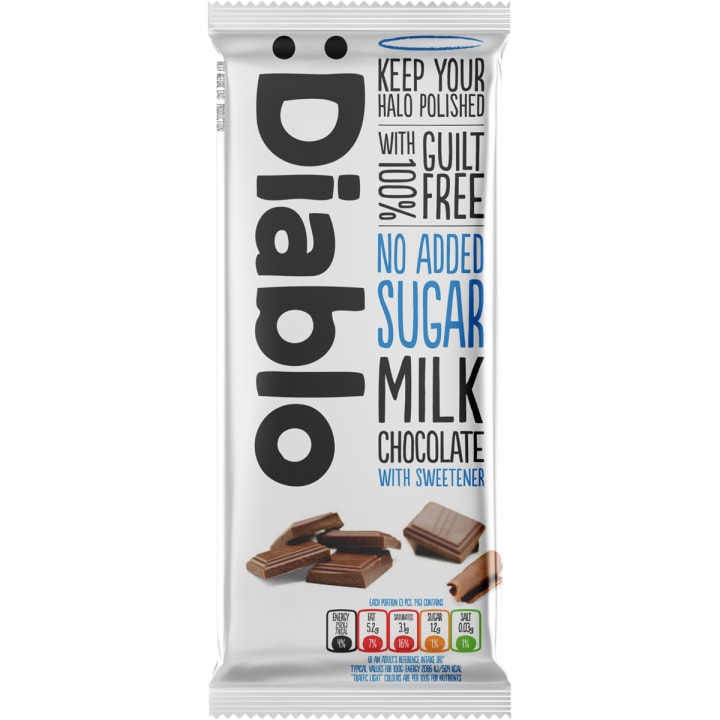
Diablo Sugar Free products are made with sweeteners instead of sugar. Maltitol is the primary sweetener across the chocolate and cookie ranges, the hard sweets are built on isomalt, and steviol glycosides (stevia) are used in parts of the chocolate and gummy lines. The mix is chosen to keep authentic taste with a lower sugar and calorie profile than standard confectionery. Because these products are polyol-based, sensible portions matter, and every Diablo pack lists its full sugar and carbohydrate content clearly on the nutrition panel.

Other Common Sweeteners

Sweetener GI Score Calories/gram Blood Sugar Impact Rating
Regular Sugar (Sucrose) 65 4 kcal High Avoid
Maltitol (powdered) 35 2.1 kcal Moderate Use in moderation
Erythritol 0 0.2 kcal Negligible Good
Stevia 0 0 kcal None Best
Xylitol 7 to 13 2.4 kcal Very low Good
Monk Fruit (mogrosides) 0 0 kcal None Best

Sources: International Polyols Chemistry Manufacturers (polyols.org), peer-reviewed maltitol research (PMC7400077), and Yale New Haven Health sugar alcohol guidance.

Where to Buy No Added Sugar Products in the UK

  • Supermarkets: Tesco, Sainsbury's, Asda, Morrisons and Ocado all run dedicated sugar-free and no added sugar categories online, spanning drinks, chocolate, biscuits and yoghurt
  • Health food retailers: Holland and Barrett stocks a wide range of dedicated no-added-sugar and sugar-free brands across confectionery, snacks and spreads, in-store and online
  • Specialist online retailers: Independent specialists focus specifically on sugar-free and no-added-sugar confectionery, often with broader brand selection than mainstream supermarkets
  • Direct from brands: Many manufacturers, including Diablo Sugar Free, sell directly through their own websites with the widest range of flavours and formats
  • Wholesale and B2B: Gym nutrition stores, independent retailers and international distributors typically buy through dedicated wholesale portals with tiered volume pricing

Are No Added Sugar Products Good for You? Health Considerations

For People With Diabetes or Pre-Diabetes

Many people managing diabetes or pre-diabetes choose no-added-sugar and sugar-free products as a lower-impact alternative to standard confectionery, because sweeteners like maltitol and stevia produce a smaller and slower blood glucose rise than regular sugar. One important regulatory point catches a lot of shoppers out: UK law no longer permits the terms "diabetic chocolate" or "suitable for diabetics" as a marketing claim on food packaging, following a regulatory ruling that this kind of labelling could mislead consumers into thinking a product requires no further care.

What to Check on the Label if You Have Diabetes

Look at the total carbohydrate per serving and the "of which sugars" figure rather than the front-of-pack claim. If you carb-count for insulin dosing, remember that polyols still contribute some carbohydrate and some glycaemic impact, even though it is significantly lower than sugar. Always discuss new additions to your diet with your GP, diabetes nurse or dietitian.

For Weight Management and Keto Diets

No added sugar products generally run 20 to 40 per cent lower in calories than their sugar-sweetened equivalents, since polyols provide roughly half the calories of sugar gram for gram. Most low-carb frameworks subtract polyol content from total carbohydrate to calculate net carbs, since sugar alcohols are not fully absorbed and do not trigger the same insulin response as standard carbohydrates. Maltitol's glycaemic index of around 35 means it is not entirely neutral, so strict keto dieters tracking carbs tightly should check individual nutrition panels.

For Children

No added sugar treats are generally a better choice for children's dental health and blood sugar than standard sugary alternatives, but children are more sensitive to the digestive effects of polyols than adults, with a lower laxative threshold of roughly 25g compared with 40g for adults. Smaller portions and label checks for allergens such as milk, wheat and nuts remain important.

How Much Should You Eat? A Practical Portion Guide

1-2

Pieces to Start With

The ideal starting portion for anyone new to polyol-containing products. Lets you assess your individual digestive tolerance first.

15g

Daily Polyol Comfort Limit

Generally well tolerated by most adults without digestive discomfort, according to the Academy of Nutrition and Dietetics guidance.

40g

Maltitol Laxative Threshold

The approximate quantity above which maltitol becomes likely to cause a laxative effect in adults. Roughly 25g for children.

After meals

Optimal Timing

Eating any treat after a balanced meal blunts the blood glucose response, since protein, fat and fibre slow absorption.

A Note on IBS

People managing IBS through a low-FODMAP diet should be particularly cautious. Polyols, including maltitol, are a recognised FODMAP category and are typically restricted during the elimination phase. Consult your dietitian before consuming maltitol-containing products if this applies to you.

How to Read a No Added Sugar Label in Three Steps

  1. Check the front-of-pack claim, then set it aside for decision-making. Treat it as a starting point, not a verdict.
  2. Find "of which sugars" under Total Carbohydrate on the back panel. This is the only legally regulated, independently verified sugar figure on the pack.
  3. Check for naturally occurring sugar wording and the sweetener listed in the ingredients. If sugar alcohols are listed separately, subtract them from the total carbohydrate to estimate net carbs.

A quick worked example: imagine comparing two "no added sugar" yoghurts side by side. One lists 4.5g of sugars per 100g from milk and fruit; the other lists 0.4g per 100g because it is also certified sugar-free. Both are legally entitled to use a no-added-sugar claim, but only one would meet a strict sugar-free target for someone managing blood glucose closely. The front-of-pack wording alone would never have revealed that difference.

No Added Sugar Brand Comparison (UK Confectionery)

Feature Diablo Sugar Free NOMO Montezuma's Absolute Black Notes
Primary sweetener Maltitol/isomalt polyols; stevia in some lines Cane sugar (not sugar-free) None (100% cocoa) Diablo: SF & NAS options
Sugars per 100g As low as 0.5g (sugar-free range) Standard sugar levels Approx. 8g total carbs NOMO: Check label
Certifications Varies by product - check pack Check product Check product Montezuma's: Low carb
Range width Very wide (10+ categories) Chocolate-focused Chocolate-focused -

Source: Diablo Sugar Free product information and publicly available brand data, current as of June 2026. Note: NOMO is a widely available allergen-friendly UK brand, but uses standard cane sugar and is not formulated for blood glucose management. Always confirm certification and sugar content on the individual product packaging.

Featured Products - Label-Verified

Diablo Sugar Free Range at a Glance

Every figure below is taken directly from the product nutrition panel. All four carry a Sugar Free claim, meaning no more than 0.5g of total sugars per 100g - the strictest of the four UK sugar labels.

Product Claim Sugars / 100g Polyols / 100g Energy / 100g Sweetener
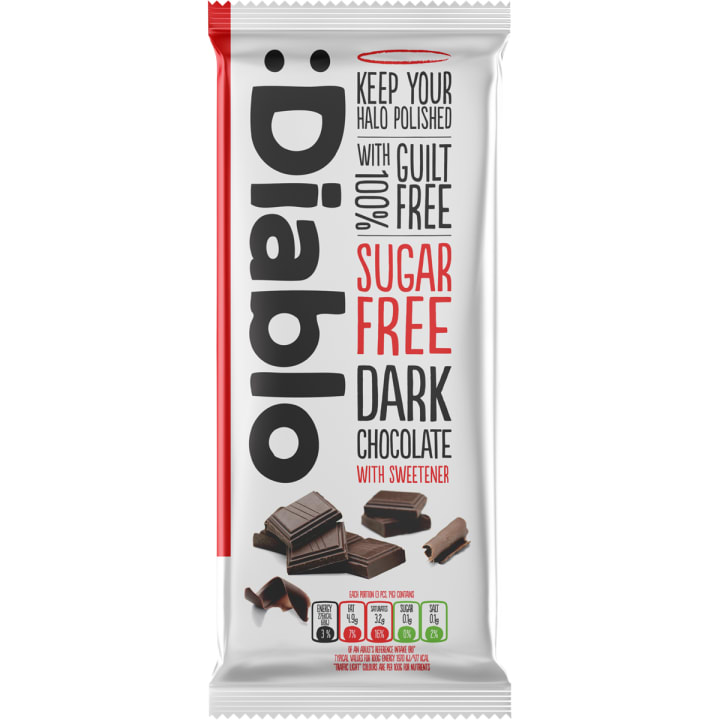
Diablo SF Dark Chocolate 85g Sugar Free 0.5g 42g 477 kcal Maltitol
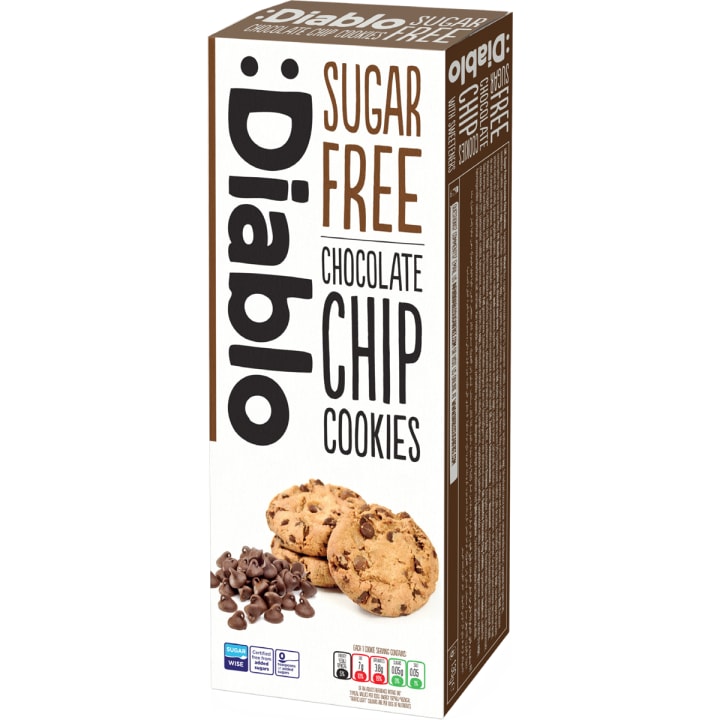
Diablo SF Chocolate Chip Cookies 130g Sugar Free 0.2g Maltitol-sweetened 462 kcal Maltitol
Diablo SF Fruit Flavoured Toffees 75g Sugar Free 0.2g 83.2g 284 kcal Isomalt, maltitol syrup
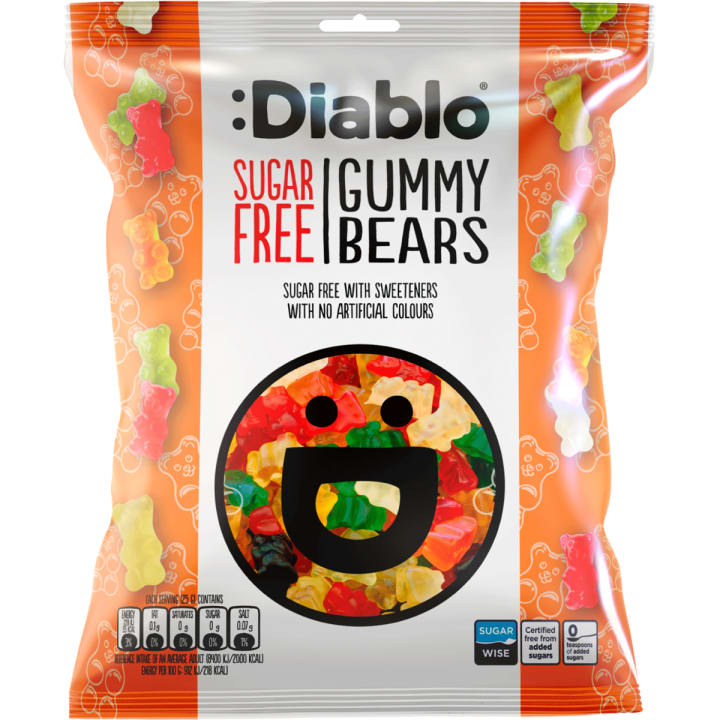
Diablo SF Gummy Bears 75g Sugar Free 0.1g Maltitol / sorbitol 219 kcal Maltitol, sorbitol, stevia
Mandatory Polyol Note

These products are sweetened with polyols (sugar alcohols). As required on the pack: excessive consumption may produce laxative effects. The Gummy Bears contain gelatine, so they are not suitable for vegetarians or vegans. Always check the full nutrition panel and allergen information on the individual pack.

✶ ✶ ✶

Frequently Asked Questions

What does "no added sugar" mean in the UK?
It means no sugar, syrup, honey or other sweetening ingredient was added during manufacture. The product can still contain naturally occurring sugar from ingredients like milk, fruit or cocoa, and the label must state this if applicable.
Is no added sugar the same as sugar-free?
No. Sugar-free means a product contains no more than 0.5g of total sugars per 100g, including any naturally occurring sugars. No added sugar only restricts what was deliberately added, so a no-added-sugar product can still contain several grams of natural sugar per 100g.
Are no-added-sugar products good for diabetics?
Many people with diabetes or pre-diabetes use them as a lower-impact alternative to standard sugary food, since common sweeteners like maltitol and stevia produce a smaller blood glucose response than sugar. They are not medically certified diabetic foods, and UK regulators no longer permit "suitable for diabetics" claims on packaging. Always check the nutrition panel and discuss significant dietary changes with your healthcare team.
What sweetener is used in no-added-sugar chocolate?
Maltitol is the most common choice in UK no-added-sugar chocolate because it closely replicates sugar's taste and texture, often combined with small amounts of stevia. Other polyols, such as isomalt or erythritol, appear in some formulations depending on the product.
Can no-added-sugar products still contain a lot of sugar?
Yes, particularly in dairy, fruit-based or cocoa-containing products. Because no added sugar only refers to what is added during manufacture, naturally occurring sugar from the ingredients themselves can still add up to a meaningful figure on the nutrition panel.

References and Sources

  1. Food Standards Agency. Guide to creating a front-of-pack nutrition label. food.gov.uk
  2. Diabetes UK. Understanding food labels. diabetes.org.uk
  3. NHS. Sugar: the facts. nhs.uk
  4. GB Nutrition and Health Claims Register, retained EU Regulation (EC) No 1924/2006. legislation.gov.uk
  5. Diabetes UK. One in five adults now lives with diabetes or prediabetes in the UK. February 2025.
  6. IndexBox. Sugar-Free Candy Market in the United Kingdom. indexbox.io
  7. Academy of Nutrition and Dietetics. Sugar alcohol tolerance guidelines. eatright.org
  8. American Dental Association. Polyols and dental caries. ada.org
  9. Advertising Standards Authority. Keeping the regulator sweet. asa.org.uk

Ready to Shop No Added Sugar With Confidence?

Diablo Sugar Free crafts chocolate, cookies, wafers, sweets, cakes and dessert sauces formulated specifically for no added sugar and sugar-free diets, with full sugar and carbohydrate content listed clearly on every pack.

Shop Diablo Sugar Free

No hidden sugar claims. Just real, label-verified numbers.

Back to blog