 Chocolate Bars
 Dragees
 Cakes & Muffins
 Sweets & Gummies
 Cookies
 Dessert Sauces
 Wafers
 Spreads
 Muesli Bars
 Guilt-free Gifting
 Sales & Promotions

What Is Vegan Sugar-Free Chocolate?
Vegan sugar-free chocolate is dairy-free, animal-free chocolate sweetened with a plant-based or zero-calorie sweetener instead of cane sugar. Here is what matters most before you buy:
- 01Vegan means no milk, milk powder, honey, or other animal-derived ingredients. Dark chocolate at 70% cocoa or higher is often naturally vegan
- 02Sugar-free under FDA rules means less than 0.5g of sugar per serving; "no added sugar" means no sugar was added in processing. Common sweeteners include stevia, monk fruit, erythritol, allulose, and sugar alcohols such as maltitol
- 03Stevia and monk fruit have the lowest impact on blood sugar, with a glycemic index close to zero
- 04Sugar alcohols such as maltitol sit at a glycemic index of about 35, well below table sugar at 65; consumption of foods containing maltitol instead of sugar induces a lower blood glucose rise after their consumption compared to sugar-containing foods (GB nutrition and health claims register)
- 05A typical 25-30g serving of dark chocolate contains roughly 110 to 160 calories, with the carbohydrate largely coming from fiber and sugar alcohols rather than sugar
You have cut back on sugar. You read labels in the supermarket aisle, you have swapped soda for sparkling water, and you have made peace with unsweetened coffee. And yet, the chocolate craving never really goes away, and it should not have to.
Vegan sugar-free chocolate has moved from a niche health-food shelf item to a genuine mainstream category in the US, with dozens of credible options now available in grocery stores, gym nutrition shops, and online. But "vegan" and "sugar-free" are two separate claims, and confusing them can lead to a disappointing bite or an unexpected impact on your blood sugar.
This guide breaks down exactly what vegan sugar-free chocolate is, which sweeteners are used, what to look for on the label, how the nutrition compares, and which dairy-free options are worth buying in 2026.
This guide references data from the Centers for Disease Control and Prevention, the FDA, the American Diabetes Association, and current market research on the sugar-free confectionery category. It is intended for educational purposes. Always consult your physician or registered dietitian for personalized dietary advice.
What Is Vegan Sugar-Free Chocolate, Exactly?
Vegan sugar-free chocolate sits at the intersection of two separate label claims, and understanding both is the key to shopping smart.
How "Vegan" Is Defined in Chocolate
A chocolate bar qualifies as vegan when it excludes milk, milk powder, milk fat, butter, cream, honey, and any animal-derived emulsifiers. High-cocoa dark chocolate, especially 70% and above, is frequently vegan by default, since traditional dark chocolate recipes rely on cocoa solids and cocoa butter rather than dairy. Milk chocolate and white chocolate are rarely vegan unless a brand deliberately substitutes oat milk, coconut, or another plant-based dairy alternative. Because dark chocolate is often produced on shared lines, many dairy-free bars still carry a precautionary "may contain milk" note, so always read the allergen advice on the pack.
How "Sugar-Free" Is Defined Under US Labeling Rules
The FDA regulates sugar-related claims closely, and the wording genuinely matters:
- "Sugar-free" means less than 0.5 grams of sugar per serving
- "No added sugar" means no sugar was added during processing, though the product may still contain naturally occurring sugar
- "Unsweetened" means no sweetener of any kind was added, including sugar substitutes
These terms are not interchangeable. A product can be labeled "no added sugar" while still containing several grams of naturally occurring sugar. Always check the Nutrition Facts panel, not just the front-of-pack claim.
Why Americans Are Switching to Vegan, Sugar-Free Chocolate
The Blood Sugar and Metabolic Health Angle
With 40.1 million Americans living with diabetes and over 115 million adults living with prediabetes according to the CDC's most recent National Diabetes Statistics Report, many shoppers are paying closer attention to added sugar and portion size. Chocolate made with sweeteners instead of added sugar gives this large audience a way to keep chocolate in the picture while watching their sugar intake.
The Clean Eating and Label Reading Angle
Health-conscious professionals and young adults increasingly scan ingredient lists the way they would scan a contract, looking for added sugar as a red flag. Vegan sugar-free chocolate lets this audience keep chocolate in their routine with the added sugar line at zero.
The Keto and Low-Carb Angle
Because most sugar-free chocolate uses low- or non-glycemic sweeteners, it is widely bought by people following ketogenic and low-carb eating patterns, where net carbs, meaning total carbs minus fiber and most sugar alcohols, are the number those diets track. Polyols are absorbed slowly, which is the point; a few pieces at a time and the gut adjusts.
The Family and Kids' Snack Angle
Parents looking to reduce sugar in their children's diets increasingly treat sugar-free, plant-based chocolate as a middle ground between "no treats at all" and traditional candy loaded with added sugar.
High-cocoa dark chocolate is built on cocoa solids and cocoa butter, so fat and fiber, rather than sugar, do most of the work. Vegan, sugar-free formulations go further by leaving added sugar out altogether, which is why this category resonates with such a wide range of sugar-conscious shoppers.
What Sweeteners Are Used Instead of Sugar?
This is the single most important thing to understand before buying vegan sugar-free chocolate, and it is where most shoppers get tripped up.
Stevia
Stevia is derived from the leaves of the Stevia rebaudiana plant and provides intense sweetness through steviol glycosides. It has a glycemic index of zero and essentially no impact on blood glucose or insulin levels. In chocolate, it is often combined with a bulking sweetener because so little of it is needed.
Monk Fruit
Monk fruit, also called luo han guo, contains natural compounds called mogrosides that provide sweetness without affecting blood glucose. Its glycemic index is zero. It is more expensive to produce than other sweeteners, which is why it appears less frequently in mass-market products.
Erythritol
Erythritol is a sugar alcohol that occurs naturally in small amounts in fruit. It has close to zero calories and a glycemic index near zero, making it one of the common bases for sugar-free chocolate. In large amounts, it can cause digestive discomfort in sensitive individuals.
Allulose
Allulose is a rare sugar found naturally in figs and raisins. It behaves like sugar in texture and browning but is minimally metabolized by the body, giving it a very low calorie and glycemic impact.
Maltitol and Other Sugar Alcohols (Polyols)
Maltitol is one of the most widely used sweeteners in real chocolate, because it behaves like sugar in manufacturing: it melts, sets, and mouthfeels almost identically, which is difficult to replicate with stevia or monk fruit alone. It has a glycemic index of roughly 35, meaningfully lower than table sugar's 65, but higher than the near-zero sweeteners above. Consumption of foods containing maltitol instead of sugar induces a lower blood glucose rise after their consumption compared to sugar-containing foods (GB nutrition and health claims register). Polyols are absorbed slowly, which is the point; packs over 10 percent polyols note that excessive consumption may produce laxative effects, so enjoy a few pieces at a time and your gut adjusts. Related polyols include isomalt, sorbitol, and xylitol; xylitol works well in chocolate but is highly toxic to dogs, so any household with pets should check the ingredient list.
Complete Sweetener Comparison
| Sweetener | GI Score | Blood Sugar Impact | Plant-Based? | Profile | Key Notes |
|---|---|---|---|---|---|
| Stevia | 0 | None | Yes | Lowest GI | Very low impact; a little goes a long way |
| Monk Fruit | 0 | None | Yes | Lowest GI | Clean taste, premium price point |
| Allulose | 1 | Negligible | Yes | Very Low | Behaves like sugar in baking |
| Erythritol | 0-1 | Negligible | Semi-natural | Very Low | Can cause bloating in larger amounts |
| Xylitol | 7-13 | Very low | Semi-natural | Low | Toxic to dogs, check labels in pet households |
| Maltitol | 35 | Lower than sugar | Semi-natural | Sugar replacer | Behaves like sugar in real chocolate; a few pieces at a time |
| Sucrose (Regular Sugar) | 65 | High | Yes | Highest | Standard table sugar, not suitable for sugar-free diets |
Sources: FDA, Mayo Clinic, Diet Doctor, published glycemic index research. GI values are reference figures and may vary slightly by formulation.
Diablo's dark chocolate bars are made with sweeteners (primarily maltitol, a plant-derived sugar alcohol) instead of added sugar. The bars are produced on shared lines and most carry a precautionary "may contain milk" note, so the ingredient list and allergen advice on the pack are the place to check before buying. The one Diablo product carrying a vegan and dairy-free certification is the Sugar Free Chocolate Dessert Sauce 360g. Diablo also makes milk and white chocolates, cookies, wafers, and sweets, which contain milk, egg, or other animal-derived ingredients and are not vegan.
Vegan Sugar-Free Chocolate: What the Nutrition Panel Shows
Nutritional Breakdown
A typical 25-30g serving of quality vegan sugar-free dark chocolate contains roughly 110 to 160 calories, mostly from cocoa butter, with very little sugar and the remaining carbohydrate coming largely from fiber and sugar alcohols. Compare this to a standard milk chocolate bar, which can carry 20 to 25g of sugar in a similar serving, and the appeal for sugar-conscious shoppers becomes obvious. Sugar alcohols contribute fewer usable calories than sugar and are only partially absorbed.
What to Watch For
Serving size still matters. "Sugar-free" does not mean "calorie-free," and dark chocolate is calorie-dense from its cocoa butter. Polyols are absorbed slowly, which is the point, and packs over 10 percent polyols carry a note that excessive consumption may produce laxative effects. A few pieces at a time and the gut adjusts.
Is Sugar-Free Chocolate Safe for People Watching Their Sugar?
Understanding Net Carbs and Glycemic Load
Sweeteners with a glycemic index near zero, such as stevia and monk fruit, sit far below sucrose, and foods containing maltitol instead of sugar induce a lower blood glucose rise after their consumption than sugar-containing foods. Total carbohydrate count, fiber content, and portion size all still count, so "sugar-free" is not automatically the same as "carb-free."
What Health Organizations Say
The American Diabetes Association notes that sugar substitutes can be a useful tool for reducing added sugar intake, but recommends that people still track total carbohydrates and discuss individual sweetener tolerance with their healthcare provider, since responses can vary meaningfully from person to person.
This section is informational and not a substitute for individualized medical advice. Readers managing diabetes, prediabetes, or another metabolic condition should consult their physician or a registered dietitian before making significant changes to their diet.
How to Read a Vegan Sugar-Free Chocolate Label
What to Look For
- "0g sugar" or "less than 0.5g sugar" on the Nutrition Facts panel, not just the front label
- The specific sweetener used so you know its glycemic profile, whether that is stevia, monk fruit, erythritol, allulose, or a sugar alcohol like maltitol
- Net carbs calculated as total carbohydrates minus fiber and sugar alcohols, so you can see the true impact per serving
- No dairy ingredients such as milk powder, whey, or casein in the ingredient list, and a check of the "may contain" allergen advice
- Third-party certifications, such as Certified Vegan or Non-GMO Project Verified, for added trust
What to Avoid or Double-Check
- Misleadingly small serving sizes, a label showing low carbs per 15g serving on a bar you would naturally eat 50g of is functionally deceptive
- Milk solids, whey, or skimmed milk powder as ingredients, which disqualify a product from being vegan
- Corn syrup, glucose syrup, dextrose, or fructose, which are all rapidly absorbed forms of sugar hiding behind unfamiliar names
- The type of sugar alcohol, since maltitol and erythritol behave differently on the tongue and in the body
- Xylitol, if there are dogs in your household
Best Types of Vegan Sugar-Free Chocolate Available in the US
Dark Chocolate Bars
The most widely available vegan format, ranging from 55% to 100% cacao, sweetened with sugar alcohols, stevia, monk fruit, or blends.
Chocolate with Nuts or Fruit
A popular option for people wanting fiber and healthy fats alongside their chocolate fix, often almonds, hazelnuts, or oranges.
Dessert Sauces and Toppings
Dairy-free chocolate sauces let you add a sugar-free chocolate hit to fruit, oats, or plant-based desserts.
Baking Chips and Bark
Used by home bakers and by brands making finished sugar-free, vegan cookies, bark, and desserts.
Where Diablo Sits in This Category
| Brand | Primary Sweetener | Vegan Options | Best For |
|---|---|---|---|
| Diablo Sugar Free | Maltitol (sugar alcohol) | Check the pack | Dark chocolate made with sweeteners, everyday sugar-conscious snacking |
Vegan status is a certification, not an inference from an ingredient list. Read the allergen advice and the certification mark on the pack itself.
Diablo Dark Chocolate: No Added Sugar Picks
These Diablo dark chocolate bars use maltitol instead of added sugar. They are produced on shared lines and carry a precautionary "may contain milk" note, so anyone avoiding dairy should read the allergen advice on the pack rather than the shelf. Figures below are taken from Diablo's verified product data. Polyols are absorbed slowly, which is the point, so enjoy a few pieces at a time.

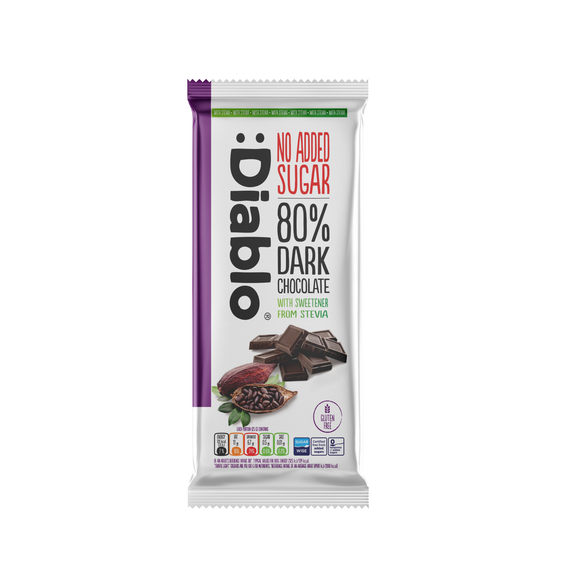
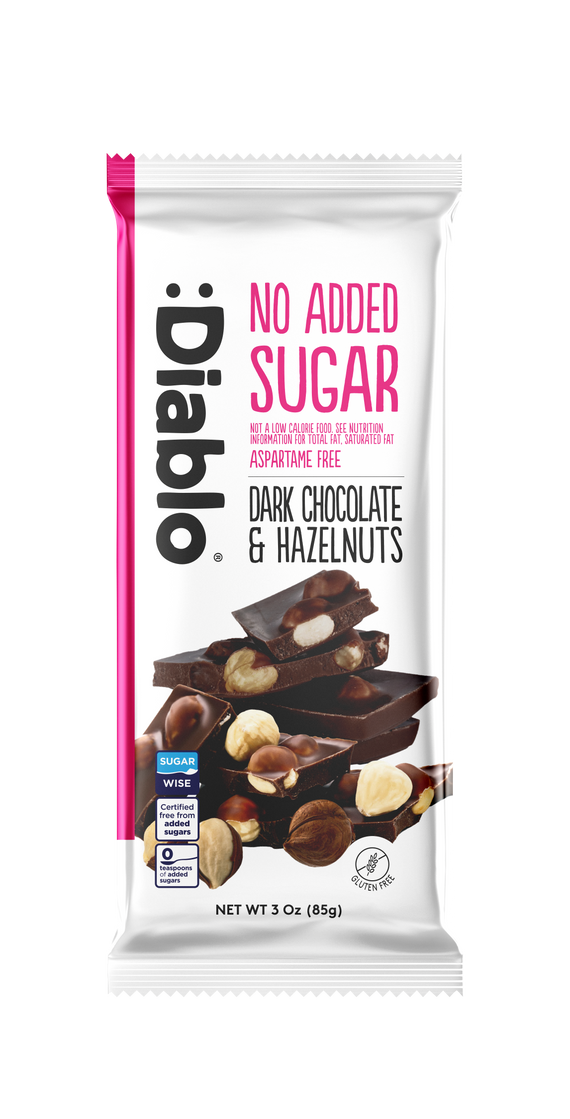
Want chocolate you can pour? Diablo's Sugar Free Chocolate Dessert Sauce (360g) is also dairy-free, with no allergens declared, and is sweetened with maltitol: about 167 kcal, 0.5g of sugar, and 53g of polyols per 100g. It is a simple way to add a sugar-free chocolate hit to fruit, oats, or plant-based desserts.
Where to Buy Vegan Sugar-Free Chocolate in the US
Retail
Health food stores, larger supermarket chains with dedicated wellness aisles, and gym or nutrition-focused retail shops increasingly stock vegan, sugar-free chocolate alongside keto and low-sugar snacks.
Online and Subscription
Direct-to-consumer brand websites and major online grocery platforms offer the widest selection, often with subscription discounts for repeat buyers.
For Retailers, Distributors, and Wholesale Buyers
Supermarkets, health food chains, online grocery platforms, gym nutrition stores, and international distributors looking to stock a plant-based, no-added-sugar confectionery line can source directly through wholesale and private-label programs. This is a growing category with strong repeat-purchase behavior, driven by the low-sugar, keto, and clean-eating consumer segments described throughout this guide.
Frequently Asked Questions
References and Sources
- Centers for Disease Control and Prevention. National Diabetes Statistics Report. Updated 2026. cdc.gov
- American Diabetes Association. Understanding Sugar Substitutes. diabetesfoodhub.org
- U.S. Food and Drug Administration. Guidance on Sugar and Sweetener Labeling Claims. fda.gov
- Mayo Clinic. Artificial Sweeteners and Other Sugar Substitutes. Updated 2025. mayoclinic.org
- Diet Doctor. Keto Sweeteners, The Visual Guide. Updated 2025. dietdoctor.com
- Statista. Size of the Sugar-Free Chocolate Market in the United States. statista.com
Chocolate Made With Sweeteners, Not Added Sugar
Diablo Sugar Free crafts dark chocolate bars made with sweeteners instead of added sugar, alongside a certified vegan, dairy-free chocolate dessert sauce. Made for everyone who refuses to give up life's sweet moments.
Shop Diablo Sugar FreeNo added sugar. Made with sweeteners. Real chocolate, done properly. A few pieces at a time.