 Chocolate Bars
 Dragees
 Cakes & Muffins
 Sweets & Gummies
 Cookies
 Dessert Sauces
 Wafers
 Spreads
 Muesli Bars
 Guilt-free Gifting
 Sales & Promotions

What Does a Sugar Free Snack Actually Change?
Less than the front of pack suggests, unless you read the whole label. Here is what actually matters:
- SwapA sugar free snack only changes your daily totals when it replaces a higher-sugar, higher-calorie snack you would have eaten anyway, not when it is added on top
- LegalUnder UK law, sugar-free means no more than 0.5g of total sugars per 100g. No added sugar can still contain meaningful natural sugar
- FullnessProtein and fibre, not the sugar free label alone, decide whether a snack actually curbs hunger
- NHS limitAdults are advised to keep free sugar intake under 30g a day, roughly seven sugar cubes. Most UK adults eat two to three times that
- NoteWatch the "compensatory effect": feeling virtuous about a sugar free treat can lead to eating more elsewhere in the day
You have cut the sugar in your tea. You have swapped the fizzy drink for sparkling water. And yet 3 pm rolls around, and you still want something sweet. So you reach for a "sugar free" snack and wonder, honestly, what it is actually doing, or whether it just lets you feel better about a habit that has not changed.
It is a fair question, and the honest answer is more useful than the marketing on the packet. The value of a sugar free snack sits entirely in what the label is telling you, and in what it is not.
This guide references current guidance from the NHS, Diabetes UK, the British Dietetic Association, and the UK Food Information Regulations 2014. It is intended for general educational purposes and is not a substitute for personalised medical or dietetic advice.
What "Sugar-Free" Actually Means Under UK Law
This is the part that trips up even careful shoppers, so it is worth getting precise before anything else. Under the UK Food Information Regulations 2014, these labelling terms are not just marketing language; they are legally defined.
- Sugar-free means a product contains no more than 0.5g of total sugars per 100g or 100ml. That includes naturally occurring sugars from every ingredient, not only the sugar a manufacturer chose to add.
- No added sugar means no sugar was deliberately added during manufacturing. Natural sugars from milk, cocoa or fruit can still be present in meaningful amounts.
- Low sugar is a separate threshold, generally 5g or less per 100g for solid foods, and it is a different bar entirely from "sugar-free."
| Label term | UK legal threshold | What it actually tells you |
|---|---|---|
| Sugar-free | 0.5g total sugars or less per 100g or 100ml | Effectively zero sugar from any source |
| No added sugar | No sugar added in manufacturing | Natural sugars from fruit or milk may still be present |
| Low sugar | 5g or less per 100g (solids) | Reduced sugar, but not necessarily low |
Source: UK Food Information Regulations 2014. Always check the "Carbohydrate (of which sugars)" line on the back of the pack rather than relying on the front-of-pack claim alone.
What the Evidence Says About Sugar Free Snacks
The energy balance basics
Energy balance is simply the difference between the energy you take in and the energy you use. Sugar contributes calories with no fibre, protein or micronutrients attached, so cutting it tends to reduce total calorie intake, provided you are not replacing those calories with something else just as dense.
A standard milk chocolate bar can carry well over 20g of sugar and 250 or more calories. The sweeteners used in their place carry less energy per gram: maltitol counts at roughly 2.4 kcal per gram and stevia at effectively zero, against 4 kcal per gram for sucrose. Diablo's Sugar Free dark chocolate, for example, shows 477 kcal and 0.5g of sugars per 100g on its panel, which works out at 67 kcal for a 14g portion.
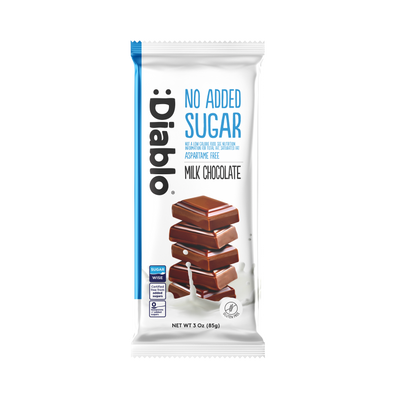
Chocolate Bars
Milk, dark and white bars sweetened with maltitol and stevia. No added sugar.
Shop chocolate bars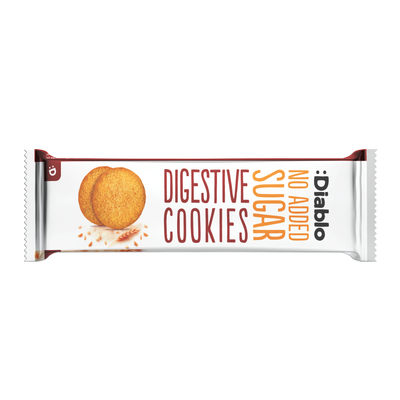
Cookies & Biscuits
Digestives and choco-covered cream cookies made without added sugar.
Shop cookies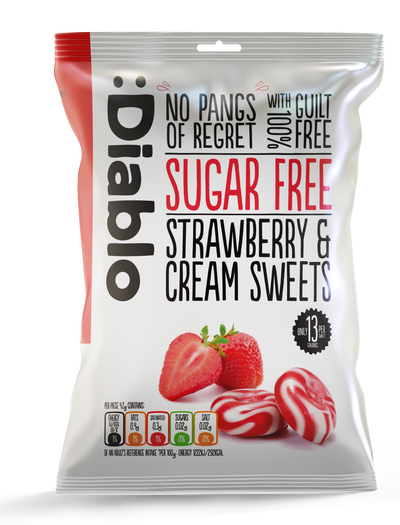
Sweets & Gummies
Boiled sweets and gummies in strawberry, mint, cappuccino and more.
Shop sweetsWhat the research really shows
The evidence here is genuinely mixed, and a trustworthy guide says so rather than overselling it. A large Cochrane review of non-nutritive sweeteners found no clear evidence that they cause weight gain, and some evidence of modest reductions in body weight when they replace sugar, though the authors noted that long-term evidence is still limited. The Mayo Clinic similarly describes sugar substitutes as a reasonable short-term tool for reducing sugar intake, while cautioning that the long-term picture is less clear. Diabetes UK's position is balanced rather than enthusiastic: low-calorie sweeteners can fit into a healthy diet as long as the food carrying them is not itself high in fat or calories.
This is the single biggest reason a sugar free swap changes nothing, and it is psychological rather than chemical. Because a food feels permitted, people can unconsciously eat more of it, or give themselves licence to eat more of something else later in the day. A sugar free chocolate bar that saves you 150 calories does nothing if it is followed by a larger dinner portion because you feel you earned it.
Why the Snack Matters More Than the "Sugar-Free" Label
A snack that is technically sugar-free but offers nothing else nutritionally will not do much for you here. Some sugar-free sweets and jellies fall into this category: they satisfy a craving, but they will not keep hunger away for long. Snacks built around protein, fibre or unsaturated fat slow digestion and keep you fuller for longer, which is what makes a snack useful rather than simply sweet.
This is why a small pot of plain Greek yoghurt with berries tends to outperform a packet of sugar-free jelly sweets for appetite control, even though both can carry a similar or lower sugar count. Diabetes UK's own snack guidance leans heavily on this point, with nuts, seeds, plain yoghurt, hummus with vegetables and hard-boiled eggs appearing repeatedly because they pair low sugar with real satiety.
The 4-Point Snack Check
Rather than memorising a list of approved snacks that will be out of date within a year, use this checklist on anything in front of you, whether it is a packet in a shop or something already in your cupboard.
Sugar
Check "of which sugars" on the back, not the front-of-pack claim. Under 0.5g per 100g is genuinely sugar-free.
Calories
Check calories per portion, not per 100g. A "low-calorie" food in a large bag can still be a high-calorie snack.
Protein or fibre
Look for roughly 5g or more protein, or 3g or more fibre, per serving. Without this, it satisfies your mouth more than your hunger.
Portion
Measure the portion at least the first few times you buy something new. Most overconsumption happens because people eat "a bit," not a measured serving.
If a snack passes three or four of these, it is a genuinely useful choice. If it only passes one, it is a treat, not a tool, and that is fine; occasionally, just be honest about which category it is in.
Sweeteners Explained: Maltitol, Stevia, Erythritol and More
Most UK sugar-free confectionery, biscuits and chocolate use one of two families of sweetener, polyols (sugar alcohols) or steviol glycosides (stevia), sometimes blended together to balance sweetness and texture.
| Sweetener | Type | Calories per gram | Glycaemic index | Rating on the label | Notes |
|---|---|---|---|---|---|
| Stevia | Plant-derived | ~0 kcal | 0 | Best | Very sweet in tiny amounts, it can have a mild aftertaste on its own |
| Monk fruit | Plant-derived | ~0 kcal | 0 | Best | Clean taste, less common due to higher cost |
| Erythritol | Polyol (sugar alcohol) | ~0.2 kcal | 0-1 | Best | Popular in keto-labelled snacks, generally well tolerated |
| Maltitol | Polyol (sugar alcohol) | ~2.4 kcal | ~35 | Good | Closely mimics sugar's taste and texture, the most common sweetener in UK no added sugar chocolate. Absorbed slowly, which is the point; packs over 10 percent polyols carry the standard note that excessive consumption may produce laxative effects |
| Xylitol | Polyol (sugar alcohol) | ~2.4 kcal | ~13 | Good | Common in mints and gum, toxic to dogs, so keep away from pets |
| Sucrose (regular sugar) | Natural sugar | 4 kcal | ~65 | Not sugar-free | The baseline that most sugar-free snacks are designed to replace |
Sources: NHS, Diabetes UK, British Dietetic Association. Calorie and glycaemic index values are approximate and vary slightly by brand and formulation.
Diablo Sugar Free chocolate bars, biscuits and sweets are sweetened primarily with maltitol, with steviol glycosides from stevia in many chocolate bars and isomalt in the hard sweets. The Sugar Free line sits at or below 0.5g of sugars per 100g; the No Added Sugar line has no sugar added, with only the sugars that occur naturally in ingredients such as milk and cocoa. Polyols are absorbed slowly, which is the point; packs over 10 percent polyols note that excessive consumption may produce laxative effects, so enjoy a couple of squares at a time and your gut adjusts. Check the ingredients on the specific pack, as some products also use other permitted sweeteners.
Sugar Free Snacks by Category, and What Each One Gives You
Sweet treat swaps
- Sugar free dark or milk chocolate (maltitol and stevia sweetened), read per portion rather than per 100g
- No added sugar biscuits or wafers, checked against the label for fat content as well as sugar
- Sugar-free boiled sweets, gummies or mints, useful for a sweet craving with minimal calories, though they offer no protein or fibre
- Frozen grapes or frozen berries, a genuinely sugar-free swap recommended by Diabetes UK for a cold, sweet hit with real fibre attached
Savoury low sugar snacks
- Unsalted nuts (almonds, walnuts, pistachios) in a measured 25 to 30g portion
- Plain popcorn, air-popped or lightly oiled, avoiding caramel and toffee varieties
- Vegetable sticks with reduced-fat hummus
- Hard-boiled eggs are genuinely sugar-free and high in protein for very few calories
- Low-fat cottage cheese with cherry tomatoes on an oatcake
Protein-forward snacks
- Plain, unsweetened Greek yoghurt with fresh berries
- A small handful of nuts paired with an apple, balancing fibre with protein and fat
- Protein balls or bars, checked carefully, since "protein" branding does not guarantee low sugar
Quick homemade options
- Chia seed pudding made with unsweetened milk and a few berries
- Chocolate-dipped strawberries using melted sugar-free dark chocolate
- Roasted chickpeas with paprika for a crunchy, savoury, fibre-rich snack
Sugar Free Snacking and Diabetes: What the Rules Say
More than 12 million people in the UK now live with diabetes or prediabetes, and sugar free products come up often in that context. Several genuine points are worth knowing.
Consumption of foods containing maltitol instead of sugar induces a lower blood glucose rise after their consumption compared to sugar-containing foods, per the GB nutrition and health claims register. Polyols are not carbohydrate-free, so checking total carbohydrate per serving still matters for anyone counting carbs or adjusting insulin.
UK and EU law specifically prohibits labelling or marketing any food as "suitable for diabetics" or "diabetic friendly." Diabetes UK actively discourages the old idea of a separate "diabetic food" category, since there is no evidence that such products offer a special benefit over a generally healthy diet, and some can still carry just as much fat and just as many calories as their standard counterparts.
Diabetes UK's official position is that low-calorie sweeteners can be included as part of a healthy approach to managing diabetes, provided the food carrying them is not itself high in fat or calories. This is ultimately a personal choice, best discussed with your diabetes care team. If you want to introduce more sugar-free snacks, a useful first step is checking your blood glucose response an hour or so after eating something new and discussing any regular dietary changes with your GP, diabetes nurse, or a registered dietitian.
Sugar-Free Snack Comparison Table
| Snack (typical portion) | Calories | Sugar | Protein | Fibre | Fullness rating |
|---|---|---|---|---|---|
| Sugar-free dark chocolate, 2 squares (~20g) | ~100 kcal | <0.5g | ~1g | ~1g | Moderate |
| Plain Greek yoghurt + berries (150g) | ~120 kcal | ~6g (natural) | ~15g | ~2g | Best |
| Unsalted almonds (30g) | ~180 kcal | ~1g | ~6g | ~3g | Good |
| Veg sticks + hummus (100g) | ~90 kcal | ~2g | ~4g | ~3g | Good |
| Hard-boiled egg (1 medium) | ~78 kcal | <0.5g | ~6g | 0g | Good |
| Air-popped popcorn (20g) | ~80 kcal | <0.5g | ~2g | ~4g | Good |
| Sugar-free boiled sweets (per sweet) | ~12 kcal | <0.5g | 0g | 0g | Moderate |
| Rice cakes + cottage cheese | ~110 kcal | ~1.5g | ~7g | ~1g | Good |
Figures are approximate for typical UK products and portions. Always check the specific label of the product in front of you, as formulations vary by brand.
A Simple 7-Day Sugar-Free Snacking Plan
A practical starting structure rather than a rigid rule. Pick one sweet and one savoury option per day, and keep portions to what you have measured once and remembered.
| Day | Sweet snack | Savoury snack |
|---|---|---|
| Monday | 2 squares sugar-free dark chocolate | Hard-boiled egg + cherry tomatoes |
| Tuesday | Greek yoghurt with frozen berries | Veg sticks + hummus |
| Wednesday | Frozen grapes | Unsalted almonds (30g) |
| Thursday | Sugar-free jelly pot | Cottage cheese + oatcake |
| Friday | Chia seed pudding | Air-popped popcorn |
| Saturday | 2 squares sugar-free milk chocolate | Roasted chickpeas |
| Sunday | Apple + small handful of nuts | Rice cakes + reduced-fat hummus |
Common Mistakes When Swapping to Sugar Free
- Eating the sugar free snack on top of your normal diet instead of in place of a higher-sugar one. A swap only counts as a swap.
- Ignoring total calories because the front of the pack says "sugar-free." A sugar-free snack can still be high in fat and calories.
- Treating "no added sugar" as identical to "sugar-free." A no-added-sugar flapjack can still carry significant natural sugar from dried fruit and oats.
- Working through a whole pack in one go rather than a few pieces at a time. Polyols are absorbed slowly, and packs over 10 percent polyols carry the standard note that excessive consumption may produce laxative effects.
- Choosing snacks with no protein or fibre at all, then feeling hungry again within the hour and reaching for something else.
- Skipping the carbohydrate line if you are also managing diabetes or following a low-carb plan and focusing on sugar grams alone.
Frequently Asked Questions
References and Sources
- NHS. Sugar: the facts. nhs.uk
- Diabetes UK. Sugar, sweeteners and diabetes. diabetes.org.uk
- Diabetes UK. Healthy food swaps: snacks. diabetes.org.uk
- British Dietetic Association. Sugar and your health. bda.uk.com
- Mayo Clinic. Artificial sweeteners and other sugar substitutes. mayoclinic.org
- Office for Health Improvement and Disparities. Obesity profile: short statistical commentary, May 2025. gov.uk
- Cochrane Database of Systematic Reviews. Non-nutritive sweeteners for weight management in adults and children.
- UK Food Information Regulations 2014, retained from EU Regulation EC No 1924/2006.
Ready to Snack Smarter?
Diablo Sugar Free makes chocolate, biscuits and sweets with no added sugar, for anyone reducing sugar intake without giving up the foods they enjoy. Check the label, read the figures per portion, and make the swap that actually counts.
Shop Diablo Sugar Free ChocolateNo added sugar. Sweetened with maltitol and stevia. Always check the label for your specific product.