 Chocolate Bars
 Dragees
 Cakes & Muffins
 Sweets & Gummies
 Cookies
 Dessert Sauces
 Wafers
 Spreads
 Muesli Bars
 Guilt-free Gifting
 Sales & Promotions

No Sugar Diet Food List: What You Can and Cannot Eat
A no sugar diet, as most people practise it, means keeping free sugars under the NHS limit of 30 g a day rather than cutting every sugar in nature. Unprocessed meat, fish, eggs, vegetables, most whole fruits, plain dairy, whole grains, legumes, nuts and unsweetened drinks all stay on the menu. What goes: table sugar, sweetened drinks, standard confectionery and the surprisingly long list of everyday foods with sugar added at the factory.
Ours, if you want the sweet option sorted before the cupboard audit:

Sugar Free Chocolate Dessert Topping
0.5 g sugars per 100 g, sweetened with maltitol; pour it over plain yoghurt or berries

No Added Sugar Dark Chocolate 85 g
0.5 g sugars per 100 g, occurring naturally in the cocoa, with 8.1 g of fibre
On this page: what you can eat · the 14 day and 30 day list · 100 percent sugar free foods · what to cut · hidden names · FAQ
Free sugars are the kind added to food plus those in juice and honey, and the NHS adult limit is the 30 g above. Most of the UK runs well over it without noticing, because added sugar hides in savoury jars as happily as in sweet wrappers. This is the complete food list, what leaves, the 14 day and 30 day versions and how to catch the sugar that hides.
Added sugar vs natural sugar: the distinction that matters
Sugars that arrive inside whole foods, the lactose in plain milk or the fructose inside an apple, come packaged with protein, fat or fibre and are not the target. Free sugars are the ones to count: everything added by a manufacturer or cook, plus honey, syrups and fruit juice, where the sugar has been freed from the fruit's structure. A sugar free diet is really a free sugar free diet, and that one idea sorts almost every food below.
What can you eat on a no sugar diet?
Proteins
All unprocessed meat and poultry: beef, lamb, pork, chicken, turkey and duck. All fresh fish and seafood, from salmon and cod to prawns and mussels. Eggs any way you like them, plus plain tofu and tempeh. Watch cured and processed meats: many are sugar dusted.
Vegetables
All of them, with non starchy varieties like broccoli, spinach, kale, peppers and courgette the everyday backbone. Root vegetables carry more natural sweetness but remain whole foods and remain on the list.
Fruit
Whole fruit stays. Berries, green apples, grapefruit, kiwi, lemons and limes sit at the lower sugar end; bananas, mangoes, pineapple and grapes at the higher end, still whole foods, just worth portioning. What leaves is fruit in freed form: juices, smoothie shop blends and dried fruit, where dates and raisins concentrate sugar several fold.
Grains and legumes
Plain oats, brown and wild rice, quinoa, barley, lentils in every colour, chickpeas and beans. The trap is the flavoured version: instant oat sachets and most breakfast cereals arrive pre sugared.
Dairy and alternatives
Plain yoghurt, plain Greek yoghurt, cottage cheese, hard cheeses and milk. Unsweetened almond, coconut and oat drinks count too, with the word unsweetened doing real work on that shelf: the flavoured versions are among the most sugared items in the chiller.
Fats, nuts and seeds
Olive, avocado and coconut oils, butter and ghee. Almonds, walnuts, pecans and Brazil nuts. Pumpkin, sunflower, flax and chia seeds. Nut butters qualify when the ingredients list reads nuts and nothing else, exactly like our own peanut butters, which are 100 percent peanuts.
Drinks
Water still or sparkling, black coffee and green, black or herbal tea unsweetened. Lemon, cucumber or mint make water interesting without opening the sugar account.
No sugar diet food list: the 14 day and 30 day versions
A 14 day no sugar diet food list and a 30 day one are the same list, held for a different stretch. What changes is how far you take the label reading.
Days 1 to 14: the full cut
Nothing from the leave list: no table sugar, sweetened drinks, standard confectionery, honey, syrups, juice or dried fruit. Eat freely from the proteins, vegetables, whole fruit, grains, dairy and fats lists. Fourteen days is roughly what the palate needs to reset, which is why the strict fortnight comes first.
Days 15 to 30: the label test
Keep the cut and bring packaged foods back one at a time, reading the of which sugars line first and then the ingredients list for the hidden names below. By day 30 the sweet threshold has moved: a square of 80 percent chocolate or a sugar free sweet reads as a full treat, and the ketchup you used to buy tastes like pudding.
What foods are 100 percent sugar free?
The foods with no sugar at all are mostly animal or fat based: fresh meat, poultry and fish, butter, ghee and cooking oils, plain tea, black coffee and water. Eggs and hard cheeses come close, at under 0.5 g of sugars per 100 g. Nearly every plant food carries some natural sugar. Raw broccoli sits at about 1.7 g per 100 g in the USDA tables, so 100 percent sugar free is rare on the vegetable shelf, and the free sugars limit never counted vegetables anyway. Among sweet things the legal sugar free claim means no more than 0.5 g of sugars per 100 g: our Gummy Bears read 0.1 g and our Fruit Flavoured Toffees 0.2 g, with polyols doing most of the sweetening.
Where does sugar free confectionery fit?
Cutting added sugar does not switch off the wish for something sweet, and this is the category built for exactly that moment. In UK law, sugar free means no more than 0.5 g of sugars per 100 g, and no added sugar means none added, with any sugars occurring naturally, two claims we unpack in sugar free vs no added sugar. The sweetness comes instead from polyols such as maltitol and isomalt, plant based sweeteners covered in our guide to sugar alcohols, and they do not count as free sugars. Two of ours show the shape of it:
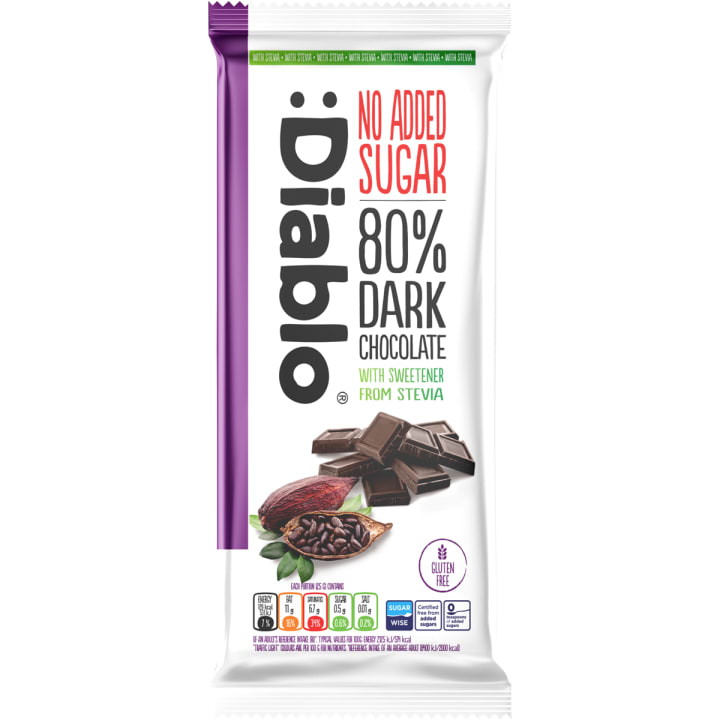
No Added Sugar 80% Dark Chocolate
1.1 g sugars per 100 g, occurring naturally in the cocoa, sweetened with maltitol and steviol glycosides
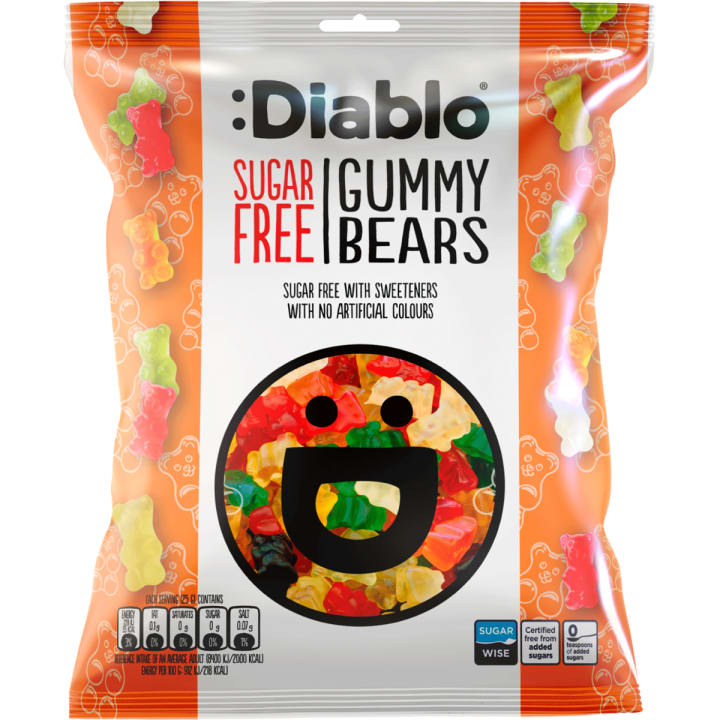
0.1 g sugars per 100 g, sweetened with polyols and steviol glycosides from the stevia leaf
One honest note that belongs in any food list: polyols are absorbed slowly, which is the point of them, so treat a first pack like a high fibre food and enjoy a few pieces at a time. Packs over 10 percent polyols say so themselves.
What can you not eat on a no sugar diet?
The obvious leavers: table sugar in every colour, standard chocolate and sweets, cakes, pastries, biscuits, ice cream, soft drinks, energy drinks and cordials. Honey, maple syrup and agave leave too, natural in origin but free sugars in the body. Then the quiet ones, where most diets actually fail: pasta sauces, ketchup and salad dressings, flavoured yoghurts, breakfast cereals and granolas, meal deal smoothies, white sliced bread and many ready meals. None of these taste like pudding. Their labels say otherwise.
The names sugar hides behind on a label
Manufacturers rarely write sugar when an ingredient list can say it sixty other ways. The families to spot: anything ending in ose (glucose, fructose, dextrose, maltose, sucrose), every syrup (corn, glucose fructose, rice, golden), every nectar and juice concentrate, plus malt extract, molasses, treacle and honey. Two or three of these low on a list can add up to sugar sitting in the top three ingredients overall. The countermove takes ten seconds: read the of which sugars line on the nutrition table, which totals them all whatever they were called.
How to start without white knuckles
Three moves cover the first fortnight. Audit the cupboard against the hidden names list and clear the worst offenders. Restock from the lists above so the easy grab is compliant: nuts, cheese, fruit, plain yoghurt and a sweet option that plays by the rules. Expect the first week to feel oddly flat as your palate recalibrates, because it does recalibrate, and food starts tasting sweeter at lower doses within a couple of weeks. That adjustment, not willpower, is what makes the diet stick.
Keep something sweet on the list
Frequently asked questions
Can you eat fruit on a sugar free diet?
Whole fruit, yes. Its sugars come wrapped in fibre and water inside the fruit's own structure, which is why the NHS free sugars limit does not count them. Juices and smoothies are the forms that cross into free sugars; dried fruit stays outside the count on paper but concentrates sugar several fold, which is why the strict fortnight skips it.
Is there a 14 day no sugar diet food list?
Yes, and it is this list. The 14 day version is the full cut of free sugars using the foods above; the 30 day version keeps the same list and adds the label test for packaged foods in the second fortnight. Neither needs special products, though a sugar free sweet in the cupboard makes the evenings easier.
Is honey allowed on a sugar free diet?
No. Honey is natural but it is free sugar in the body's terms, and the NHS counts it inside the 30 g daily limit alongside table sugar and syrups. The same goes for maple syrup and agave.
What should you check on a sugar free sweet before buying?
Two things. The of which sugars line, which sits at or under 0.5 g per 100 g on a genuine sugar free product. And the sweetener in the ingredients list, most often polyols like maltitol or isomalt, sometimes with steviol glycosides, all of which sit outside the free sugars you are cutting.
How do you spot hidden sugar fastest?
Skip the ingredient decoding and read the nutrition table first: the of which sugars figure totals every added and natural sugar whatever name it wears. Then scan the ingredients for ose endings, syrups and concentrates to see where it came from.