 Chocolate Bars
 Dragees
 Cakes & Muffins
 Sweets & Gummies
 Cookies
 Dessert Sauces
 Wafers
 Spreads
 Muesli Bars
 Guilt-free Gifting
 Sales & Promotions

What Does Sugar-Free Chocolate Actually Mean?
In the US, a sugar-free claim means under 0.5 grams of sugars per labeled serving and per reference amount, under FDA rule 21 CFR 101.60. Here is what that label does and does not tell you.
- 01The test is twofold: under 0.5 g of sugars per labeled serving, and under 0.5 g per reference amount, which is 30 g for chocolate
- 02The sugar is replaced, usually by sugar alcohols such as maltitol or isomalt, or by plant sweeteners such as steviol glycosides
- 03It is not a calorie claim. Cocoa butter still drives the energy, which is why the rule pairs the claim with a not a low calorie food statement
- 04No sugar added is a different claim, and a product carrying it can still show sugars from milk or fruit
- 05Read total carbohydrate, not just the sugars line. Sugar alcohols sit inside total carbohydrate on a US panel
Turn a bar over and it is rarely obvious whether the front of the pack is a legal claim or a marketing line. Both live on the same wrapper. Only one has a number behind it.
What the FDA Rule Actually Requires
Under 21 CFR 101.60, a food may carry a sugar-free claim only if it holds less than 0.5 grams of sugars per labeled serving and per reference amount customarily consumed. Both tests have to pass, which is why serving size matters as much as the recipe, and it is why a panel can print 0 g when a trace is present.
A second requirement gets less attention. Where a sugar-free food is not also low in calories, the label has to say so. Regulators added that because sugar-free was being read as diet food, and chocolate makes the point neatly: take the sugar out and the cocoa butter is still there.
| Label Claim | What It Legally Requires | What It Does Not Guarantee |
|---|---|---|
| Sugar-Free | Under 0.5 g sugars per serving and per reference amount | Fewer calories or fewer carbohydrates |
| No Sugar Added | No sugars added during processing | That the panel reads zero, since milk and fruit sugars remain |
| Reduced Sugar | At least 25 percent less than a named reference food | That the amount left is small |
Source: US Food and Drug Administration, 21 CFR 101.60
Which Sweeteners Do the Work
The brand on the front matters far less than the sweetener in the ingredient list, because that one choice sets the taste, the texture and most of the panel.
Sugar alcohols such as maltitol, isomalt and sorbitol are bulk sweeteners. They occupy the same space in a recipe that sugar does, which is why they carry the snap and melt chocolate needs, and they are absorbed slowly and only in part. On maltitol, the one authorized wording is that consumption of foods containing maltitol instead of sugar induces a lower blood glucose rise after their consumption compared to sugar-containing foods, carried on the GB nutrition and health claims register and reported here as ingredient science rather than a promise about a product.
High intensity sweeteners such as steviol glycosides and monk fruit extract sweeten at tiny doses and add no bulk, so a bar always blends them with something else. High purity steviol glycosides are generally recognized as safe by the FDA.
The part of a sugar alcohol that is not absorbed reaches the colon and ferments there, which is why packs containing over 10 percent polyols carry a note that excessive consumption may produce laxative effects. Two or three squares to start, and most people adjust quickly.
What sugar-free does not change is the energy. Fat from cocoa butter and cocoa mass supplies most of the calories in any chocolate, and that stays put when the sugar comes out, so sugar-free chocolate is not a low calorie food. Check the nutrition information for sugar and calorie content.
The Diablo Range, With the Figures
Diablo runs two separate lines. Sugar Free holds sugars at or below 0.5 g per 100 g. No Added Sugar has nothing sweet added, so any sugars shown occur naturally in the ingredients, which in chocolate means milk or cocoa. Figures below are per 100 g from our product specifications; the pack states the same data per serving.
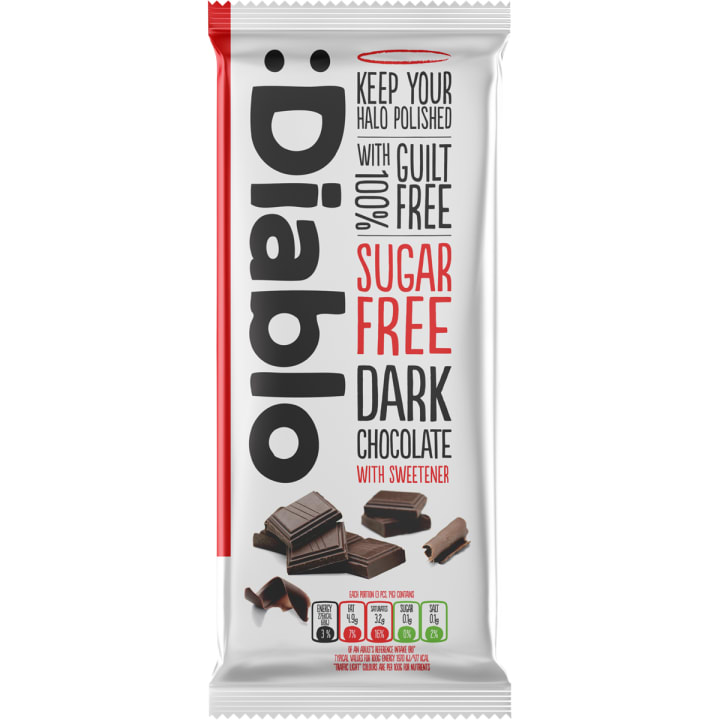 No Added Sugar
No Added Sugar Dark Chocolate 85 g
The lowest sugars figure of the four bars, occurring naturally in the cocoa, with 47 g total carbohydrate and 8.1 g fiber per 100 g. Contains milk and soy.
View product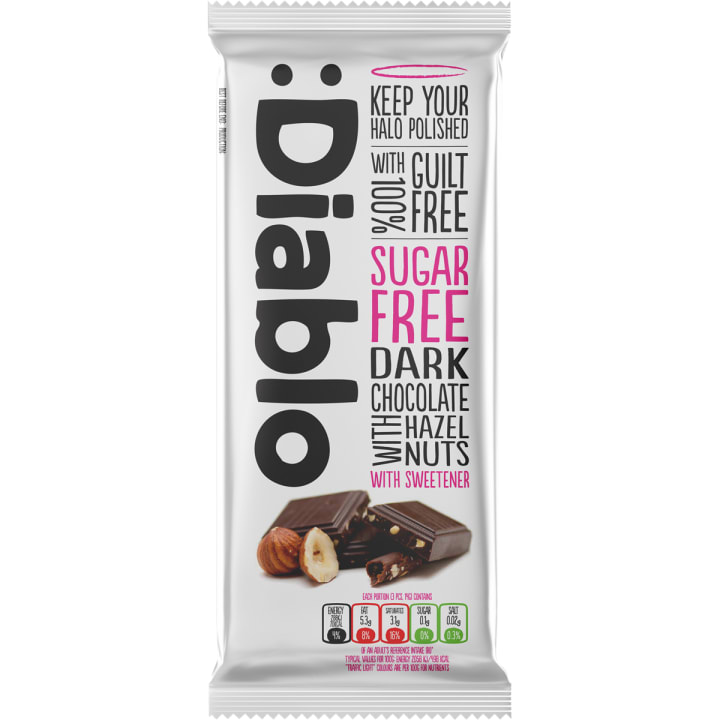 No Added Sugar
Dark Chocolate with Hazelnuts (85g)
Hazelnuts at 10 percent, and 1 g of naturally occurring sugars per 100 g, with 46 g carbohydrate. Contains milk, soy and hazelnut.
View product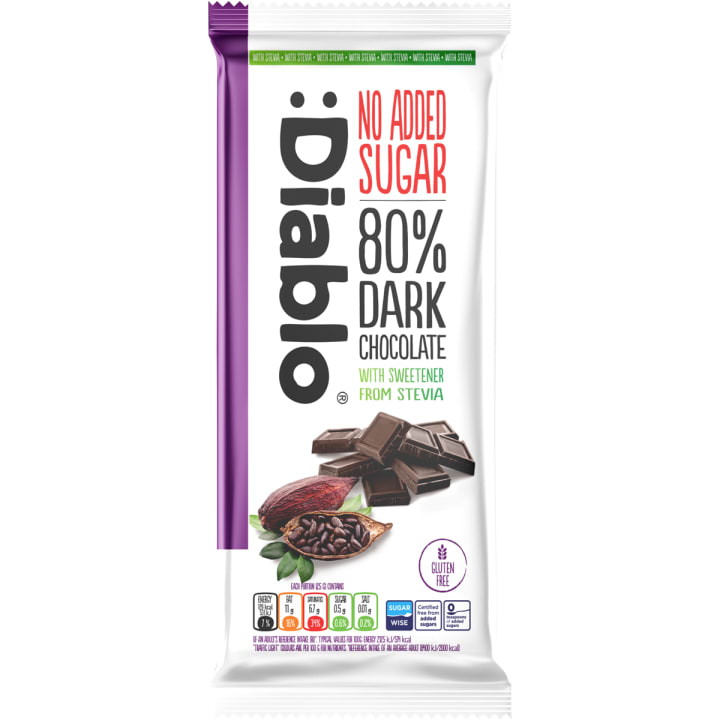 No Added Sugar
80% Dark Chocolate (75g)
Cocoa paste is the first ingredient, ahead of the sweetener, and steviol glycosides at 0.02 percent take the edge off. The lowest carbohydrate figure in the chocolate range at 26 g per 100 g, and the 1.1 g of sugars occur naturally.
View product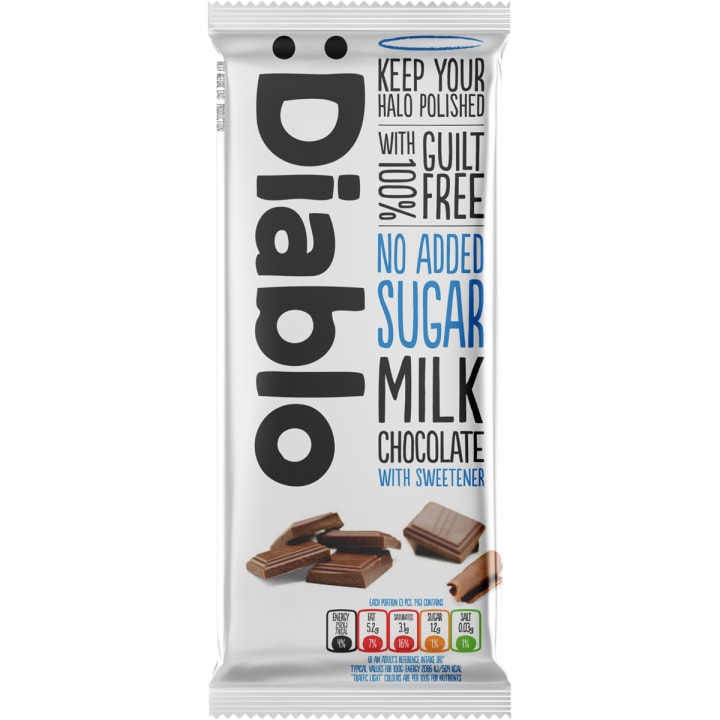 No Added Sugar
Milk Chocolate (85g)
Milk powder is where all 6.7 g of those sugars come from; they occur naturally in the milk and none are added. Hand this one to anyone who says they do not like sugar-free chocolate.
View productSugar Free and No Added Sugar are different claims with different thresholds, and we keep them apart on purpose. If the sugars line is what you track, look at the dark bars. If you want conventional milk chocolate character, the No Added Sugar milk bar carries milk sugars and says so.
How the US Category Is Structured
Sugar-free chocolate in the US is no longer a specialty corner. Two of the most widely stocked lines are owned by mainstream confectioners: Russell Stover has been part of Lindt and Sprungli since 2014, and Lily's part of The Hershey Company since 2021. Which is why formulations vary so widely between products sitting next to each other.
How to Read a US Chocolate Label in Five Steps
- Check which claim is on the front. Sugar-free, no sugar added and reduced sugar are three different rules, and only the first has a hard ceiling.
- Compare the serving size to what you will eat. Claims are calculated per serving, and a serving is often smaller than the piece in your hand.
- Find the sweetener in the ingredient list rather than on the front. Bulk sweetener near the top, high intensity sweetener usually last.
- Read total carbohydrate first, then the sugar alcohol line underneath it, then the sugars line. A pack that also warns about laxative effects at high intakes is being straight with you.
Frequently Asked Questions
References and Sources
- US Food and Drug Administration. 21 CFR 101.60, Nutrient Content Claims for the Calorie Content and Sugar Content of Foods. ecfr.gov
- US Food and Drug Administration. High-intensity sweeteners permitted for use in food in the United States. fda.gov
- Great Britain nutrition and health claims register, authorized wording for maltitol and blood glucose. gov.uk
- American Diabetes Association. Guidance on sugar substitutes. diabetes.org
- Diablo Sugar Free product specifications and certification records, August 2026.
See the Figures on Every Bar
Every Diablo bar names its sweetener and publishes its full panel, so you can compare sugars, polyols and carbohydrate first.
Shop Diablo chocolate barsNot a low calorie food. See the nutrition information for sugar and calorie content.