 Chocolate Bars
 Dragees
 Cakes & Muffins
 Sweets & Gummies
 Cookies
 Dessert Sauces
 Wafers
 Spreads
 Muesli Bars
 Guilt-free Gifting
 Sales & Promotions

Sugar Free Candy and Diabetes: A US Label Guide
On a US label, sugar free is a legal claim: less than 0.5 g of sugars per serving, set by FDA rule 101.60. It is not a claim about carbohydrate, which is the line diabetes care teams usually build plans around. This guide covers what the claim commits a candy to, how to read the sugar alcohols line on the panel and the check most shoppers skip.
A quick word on scope: this is an editorial label guide. If you manage diabetes, the numbers here are exactly the kind of thing to take to your own care team, who know your targets and medication. Nothing on this page is personal medical advice.
What does sugar free legally mean on US candy?
The FDA defines the claim in 21 CFR 101.60: less than 0.5 g of sugars per reference amount and per labeled serving, with no ingredient that is a sugar. Because candy is not a low calorie food, the rule also makes sugar free claims travel with a disclosure such as "not a low calorie food", which is why you see that line printed near the claim on honest packs, ours included.
How do you read the nutrition facts panel?
Three lines carry the story. Total carbohydrate is the figure carb counting starts from. Total sugars and added sugars show what part is sugar, and on a genuine sugar free candy both sit at or near zero. Sugar alcohols, where declared, shows the polyol sweeteners doing the sweetening: maltitol, isomalt and sorbitol are the common ones in sugar free confectionery.
Sugar alcohols are the part worth understanding rather than skimming. They are absorbed slowly and only partially, which is why published research reports a lower and slower blood glucose rise from polyols like maltitol than from sugar, a finding reflected in the UK's authorised health claim wording for maltitol. Lower and slower is the accurate summary; no effect would be an overstatement, and polyol grams still sit inside total carbohydrate. Our guide to sugar alcohols goes deeper on the whole family.
What do the numbers look like on real packs?
Two from our range, figures straight from the nutrition data, stated per 100 g so you can compare like for like:
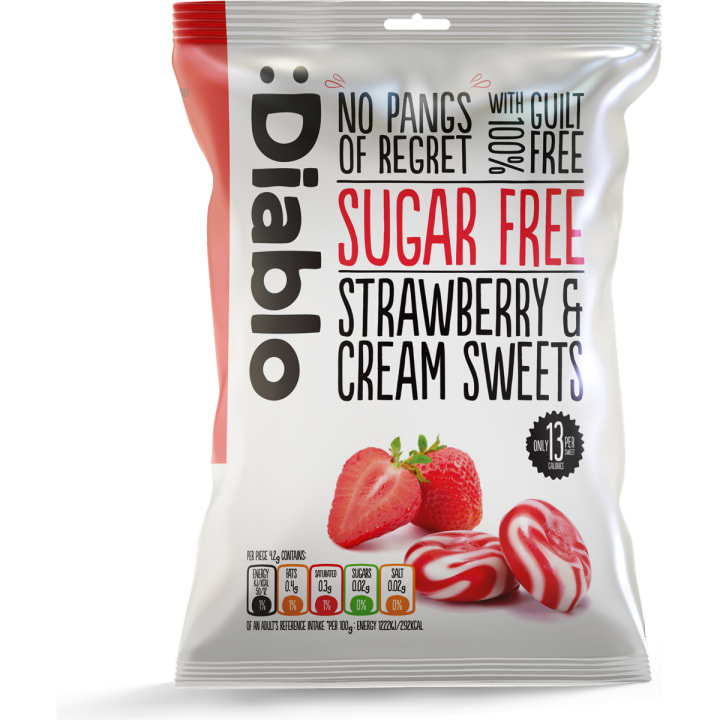
Sugar Free Strawberry and Cream Candy
0.5 g sugars per 100 g, sweetened with isomalt and maltitol syrup, a hard candy with its numbers in plain sight
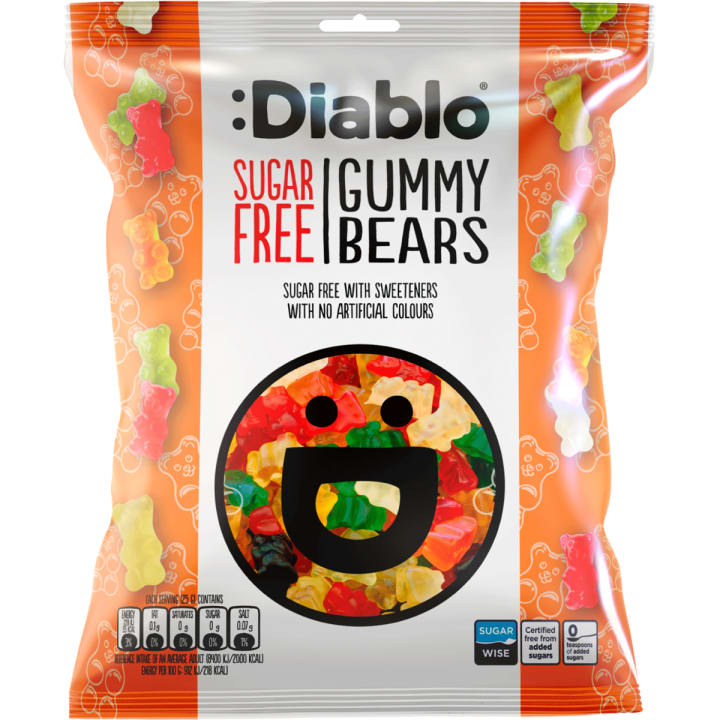
0.1 g sugars and 78 g total carbohydrate per 100 g, sweetened with polyols and steviol glycosides
Not a low calorie food. See nutrition information for sugar and calorie content.
The gummy card shows why the total carbohydrate line always deserves the first look: sugars near zero, carbohydrate still very much present. That is not a flaw, it is how polyol sweetened candy works, and it is exactly the number to carry into any carb counting conversation.
The four point check before you buy
One: total carbohydrate per serving, the figure your care plan probably tracks. Two: the sugar alcohols line and the ingredient list naming which ones. Three: the serving size those numbers describe, against what you will honestly eat. Four: the portion pace. Polyols arrive slowly by design, and a large amount in one sitting can be laxative, a fact stated on packs where polyols pass 10 percent of the recipe. A few pieces at a time is the way in.
Browse the sugar free candy range
Frequently asked questions
Is sugar free candy also carbohydrate free?
No. The sugar free claim only limits sugars, to under 0.5 g per serving. Polyol sweeteners count within total carbohydrate and appear on their own sugar alcohols line, so the carbohydrate figure stays the one to read first.
What are sugar alcohols on a candy label?
Plant derived bulk sweeteners, properly called polyols, that do sugar's job with slower, partial absorption. Maltitol, isomalt and sorbitol are the common ones in candy. Published research reports a lower and slower blood glucose rise from maltitol than from sugar, and the grams still count as carbohydrate.
How much sugar free candy can you eat in a day?
There is no universal number, and anyone managing diabetes should set that with their care team using the carbohydrate figures on the pack. The practical ceiling most people meet first is digestive: polyols in large single sittings can be laxative, so the printed portion size is the sensible unit.