 Chocolate Bars
 Dragees
 Cakes & Muffins
 Sweets & Gummies
 Cookies
 Dessert Sauces
 Wafers
 Spreads
 Muesli Bars
 Guilt-free Gifting
 Sales & Promotions

Is Gluten-Free Chocolate Also Sugar-Free?
Not automatically. Gluten-free and sugar-free are two separate US claims with two separate rules, so a product can meet one and miss the other entirely. Here is what to check.
- 1Gluten-free means under 20 parts per million of gluten under 21 CFR 101.91. Chocolate itself has no gluten in it, but cookie pieces, wafer, malt and shared equipment do
- 2Sugar-free is a separate claim under 21 CFR 101.60, under 0.5 grams of sugars per serving, and it says nothing at all about gluten
- 3Not all gluten-free evidence is equal. An on-pack certification, a batch lab test and a supplier attestation are three different levels of assurance
- 4In the Diablo range, 19 of 21 chocolate lines hold gluten-free evidence. The cookies, cakes, wafers and muesli bars contain wheat
- 5Check both claims every time, including on products you have bought before, because recipes and production lines change
A bar can say gluten-free on the front and still be built mostly on sugar. Another can say no sugar added and still list barley malt extract. The two claims answer different questions, and the only way to get both is to check both.
What the Gluten-Free Claim Actually Guarantees
In the US, gluten-free is a defined claim rather than a description. Under 21 CFR 101.91 a food carrying it must contain less than 20 parts per million of gluten, and that same ceiling covers the wording no gluten, free of gluten and without gluten. The FDA set that level because it is the lowest that validated analytical methods can reliably detect.
What the claim does not tell you is how the manufacturer knows. That is where the useful detail sits, and it comes in three broad forms.
| Kind of evidence | What stands behind it | What to do with it |
|---|---|---|
| Certified on pack | The claim is printed on the packaging, so the manufacturer carries the legal exposure for it directly | The strongest signal on a shelf. Third-party programs such as the Gluten-Free Certification Organization audit to a stricter ceiling than the FDA rule |
| Laboratory test | The finished product has been tested and measured below 20 ppm, whether or not the pack says so | Solid evidence. Ask the brand for the test if you need it in writing |
| Supplier attestation | The ingredient and production supplier states in writing that the product meets the threshold | Reasonable for a low risk recipe, thinner than a test. Worth a question if you are highly sensitive |
Why Chocolate Is a Gluten Risk at All
Cocoa mass, cocoa butter and sweeteners contain no gluten. The risk arrives with everything added afterwards. Cookie and brownie pieces, wafer layers, crisped cereal, malt flavoring and barley malt extract all carry gluten, and a filled or inclusion bar can pick it up from any of them.
Shared equipment is the second route. A line that runs a wafer bar in the morning and a plain bar in the afternoon needs a cleaning protocol between them, which is why an allergen statement mentioning shared facilities is worth reading in full. Reformulation cuts both ways too: taking wheat out of a recipe often means putting starch or extra sugar back in to replace what it was doing.
What the Sugar-Free Claim Guarantees
Under 21 CFR 101.60 a sugar-free claim requires less than 0.5 grams of sugars per labeled serving and per reference amount, which for chocolate is 30 grams. No sugar added is a different claim: nothing sweet was added during manufacture, while sugars that occur naturally in the ingredients stay where they are. On a US panel, sugar alcohols sit inside the total carbohydrate figure, so read that line rather than the sugars line alone.
Polyols such as maltitol are absorbed slowly and only in part, which is exactly why they contribute less energy than sugar. Packs containing over 10 percent polyols carry a note that excessive consumption may produce laxative effects. Start with two or three squares and most people adjust quickly.
The Diablo Chocolate Range, Line by Line
Gluten-free status is recorded product by product rather than claimed for the brand, because that is the only way it is true. Of 21 chocolate lines, 19 hold gluten-free evidence on file. The two that do not are the coated milk chocolate buttons tube and the Dubai chocolate bar. Two lines carry the claim printed on the pack: Dark Chocolate with Orange and White Chocolate with Strawberry. Outside chocolate, all five dessert sauces and six of the seven candy lines hold it, the exception being the fruit toffees. The cookies, sandwich cookies, cakes, wafers and muesli bars are made with wheat flour and are not gluten free.
Figures below are per 100 g from our product specifications. The pack states the same data per serving.
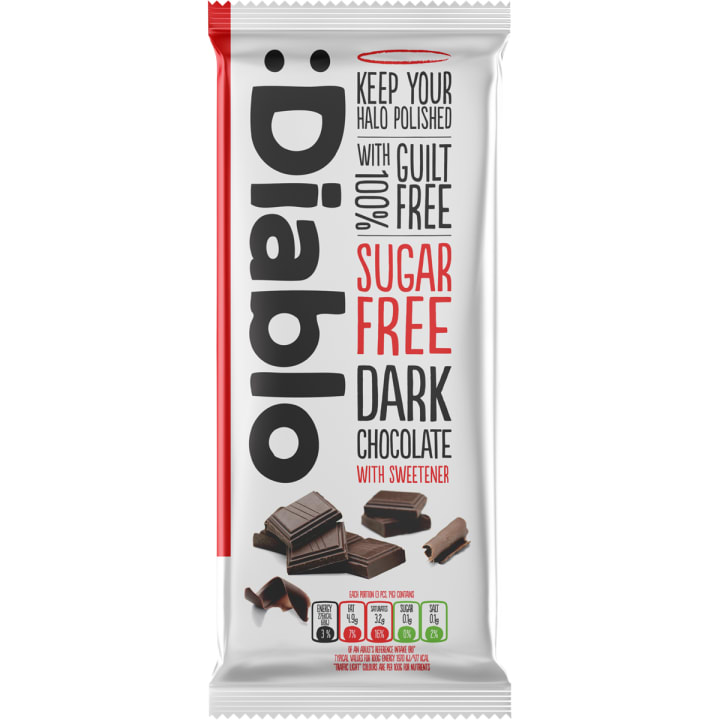 No Added Sugar
No Added Sugar Dark Chocolate 85 g
Tested below 20 ppm, though the claim is not printed on this pack. The sugars occur naturally in the cocoa, with 47 g total carbohydrate and 477 kcal per 100 g. Contains milk and soy.
View product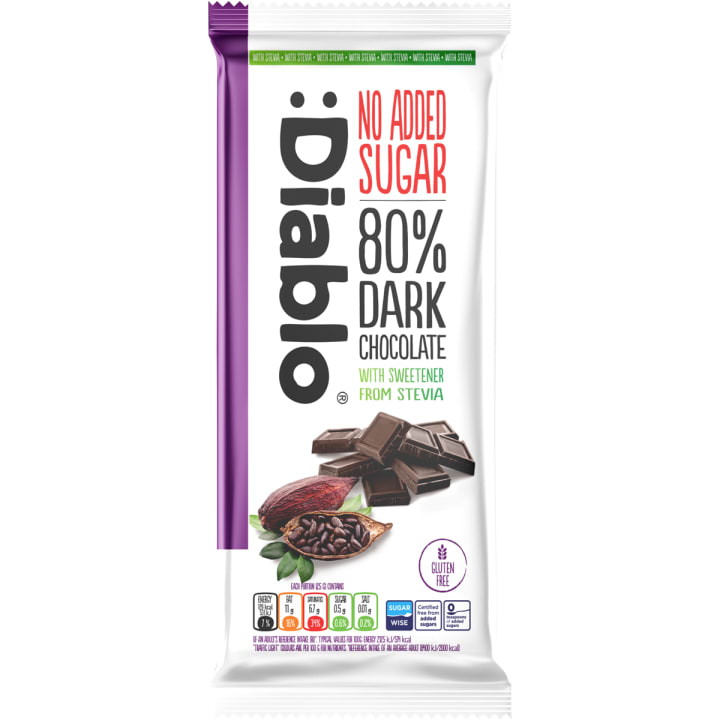 No Added Sugar
80% Dark Chocolate (75g)
A short ingredient list with cocoa paste first and no cereal inclusion anywhere in the recipe. The lowest carbohydrate figure in the Diablo chocolate range, and the 1.1 g of sugars occur naturally.
View product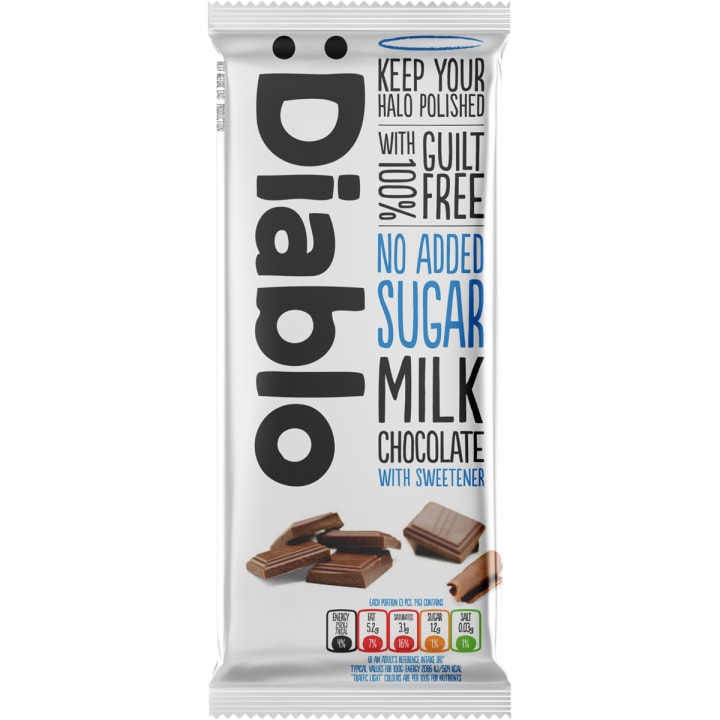 No Added Sugar
Milk Chocolate (85g)
Tested below 20 ppm, claim not printed on pack. All 6.7 g of sugars occur naturally in the milk powder, with nothing added on top. Contains milk and soy.
View productAn on-pack gluten-free statement is the claim you can rely on at the shelf. Where our records show a lab test or a supplier attestation but the pack stays silent, treat that as information rather than as a claim, and contact us or your retailer if you need the documentation before you buy.
How to Check Any Label in Five Steps
- Read the front for both claims separately. One does not imply the other, and neither implies low calorie.
- Look for a certification mark rather than the words alone, and prefer a scheme that publishes its ceiling.
- Scan the ingredient list for cereal words: wheat, barley, rye, malt, malt extract, wafer, cookie pieces, crisped cereal.
- Read the allergen statement underneath, including any shared facility or shared line wording.
- Check total carbohydrate and the sugar alcohol line, not just the sugars line, then compare the serving size to what you will actually eat.
Frequently Asked Questions
References and Sources
- US Food and Drug Administration. 21 CFR 101.91, Gluten-Free Labeling of Food. ecfr.gov
- US Food and Drug Administration. 21 CFR 101.60, Nutrient Content Claims for the Calorie Content and Sugar Content of Foods. ecfr.gov
- Celiac Disease Foundation. Label reading and the gluten-free diet. celiac.org
- Diablo Sugar Free product specifications and certification records, August 2026.
Check the Evidence, Not Just the Front of the Pack
Every Diablo chocolate product page carries the ingredient list, the allergen statement and the gluten-free evidence held for that exact item.
Shop Diablo chocolate barsNot a low calorie food. See the nutrition information for sugar and calorie content.