 Chocolate Bars
 Dragees
 Cakes & Muffins
 Sweets & Gummies
 Cookies
 Dessert Sauces
 Chocolate Gift Boxes
 Wafers
 Spreads
 Muesli Bars
 Hampers
 Sales & Promotions

Best Sugar Free Chocolate Bars in the US:
A 2026 Buyer's Guide
What the sweetener, the sugars line and the carbohydrate line actually tell you, plus the verified figures behind every Diablo bar
How to choose a sugar free chocolate bar
Three lines on the back of the pack decide it: the sweetener, the sugars figure and the carbohydrate figure, which includes any polyols. In the US a bar can only say sugar free at less than 0.5 g of sugars per serving. No added sugar means none was added, so any sugars listed occur naturally, usually from milk. Here is where the Diablo bars land.
- Sugar Free Dark Chocolate 85 g. 0.5 g sugars and 47 g carbohydrate per 100 g, sweetened with maltitol
- Sugar Free Dark Chocolate with Hazelnuts 85 g. 0.4 g sugars per 100 g, hazelnuts at 10 percent
- No Added Sugar Milk Chocolate 85 g. 8.9 g sugars per 100 g, naturally occurring from milk powder
- No Added Sugar 80% Dark Chocolate 75 g. 1.1 g sugars and 26 g carbohydrate per 100 g
Sugar free chocolate earned a bad name a decade ago with bars that ate chalky and finished strangely. The recipes have moved on. Packaging has not, and two bars on the same shelf can carry very different claims behind similar wording.
Sugar free and no added sugar are claims about sugar, not about calories. Not a low calorie food. See nutrition information for sugar and calorie content. Every figure here comes from Certificate of Analysis data for that exact pack, stated per 100 g.
What should you check before you buy a bar?
Five checks, in the order they matter.
The sweetener
Usually the first ingredient. Maltitol behaves like sugar in the kitchen. Stevia and monk fruit are intense, so they are used at tiny doses with a bulking agent.
The sugars line
Under 0.5 g per serving is what lets a bar say sugar free. On a no added sugar bar, whatever sugars are listed occur naturally in the milk or the cocoa.
The carbohydrate line
Polyols count inside the carbohydrate figure and are printed on their own line beneath it. That is why a sugar free bar can still show 47 g of carbohydrate.
Texture and cocoa
Cocoa butter and cocoa mass high in the ingredient list point to a proper snap and a slow melt. Bars bulked out with fiber powders eat drier.
Price per 100 g
Compare per 100 g or per ounce, never per pack. An 85 g bar and a 75 g bar are not the same purchase.
Sugar free or no added sugar: what is the difference?
Sugar free is a defined claim. In the US the food has to hold less than 0.5 g of sugars per reference serving and per labeled serving, with no sugar ingredient added. Polyols are not sugars, which is why the bar still tastes sweet.
No added sugar means no sugars or sweetening ingredients went in during manufacture. Naturally occurring sugars can remain, and in chocolate they come almost entirely from milk powder. Our No Added Sugar Milk Chocolate 85 g shows 8.9 g of sugars per 100 g for that reason: the recipe is 21.2 percent whole milk powder, and those sugars occur naturally in it.
| Sweetener | What it is | What it does in a bar |
|---|---|---|
| Maltitol | A polyol, made from starch | Sweetens close to sugar's level and holds the same snap and melt. Counts toward carbohydrate |
| Steviol glycosides | Extract of the stevia leaf | Intensely sweet, used at tiny doses. Several Diablo bars list it at 0.02 percent alongside maltitol |
| Monk fruit | Extract of luo han guo | Zero calorie and very intense, so most products pair it with a bulking sweetener |
Maltitol sweetens at close to sugar's level and gives a bar the snap and slow melt you expect, which is why it does the work in every Diablo bar. The GB nutrition and health claims register carries this authorized wording for it: "Consumption of foods containing maltitol instead of sugar induces a lower blood glucose rise after their consumption compared to sugar-containing foods." Polyols are absorbed slowly, which is the point, and packs over 10 percent polyols note that excessive consumption may produce laxative effects. A few pieces at a time and your gut adjusts.
Which Diablo bar suits which taste?
Four bars, four jobs. All figures per 100 g.
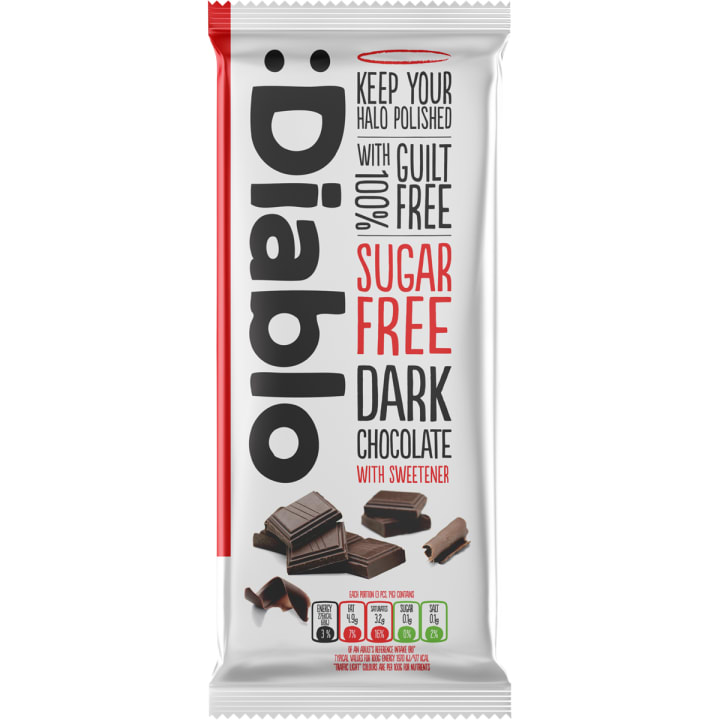
The strictest bar in the range and the shortest ingredient list: maltitol, cocoa mass, cocoa butter, cocoa powder. The cocoa carries the flavor rather than the sweetness, so it eats like a plain dark bar.
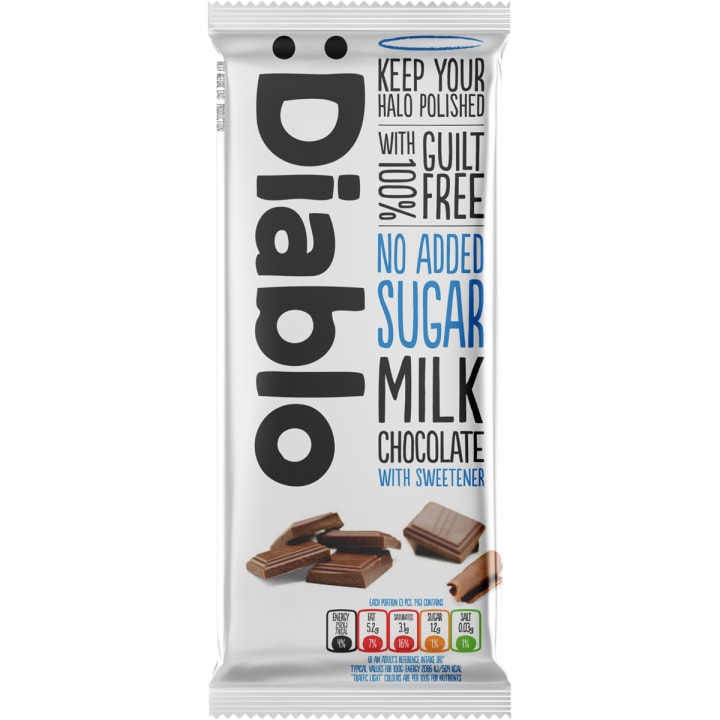
Milk chocolate is the hardest thing to reformulate, because standard recipes lean on sugar for the creamy mouthfeel. This one leans on whole milk powder, which is where the naturally occurring sugars come from. Hand it to anyone who says they dislike sugar free chocolate.
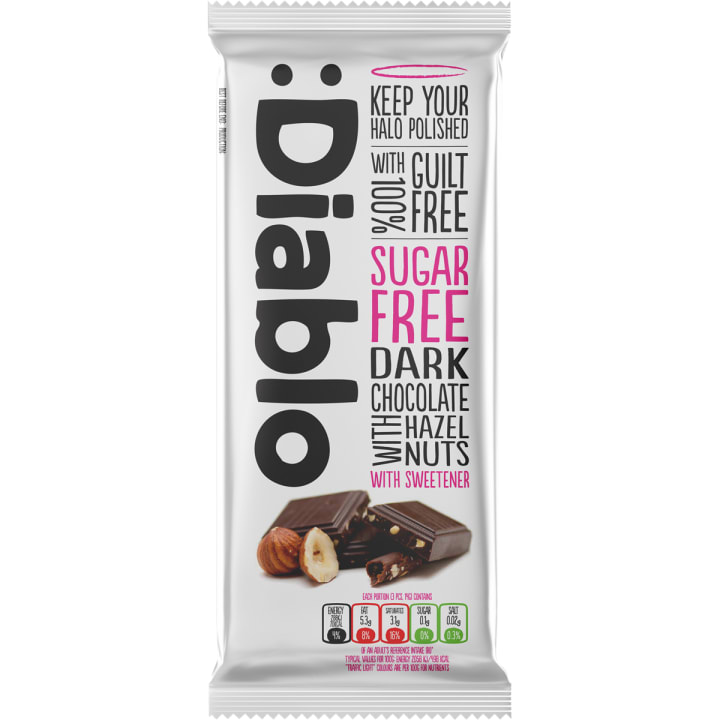
The same dark base with whole hazelnuts through it, so every square has something to bite. Worth checking first: it contains hazelnuts, milk and soy, and shares a line with peanuts and other nuts.
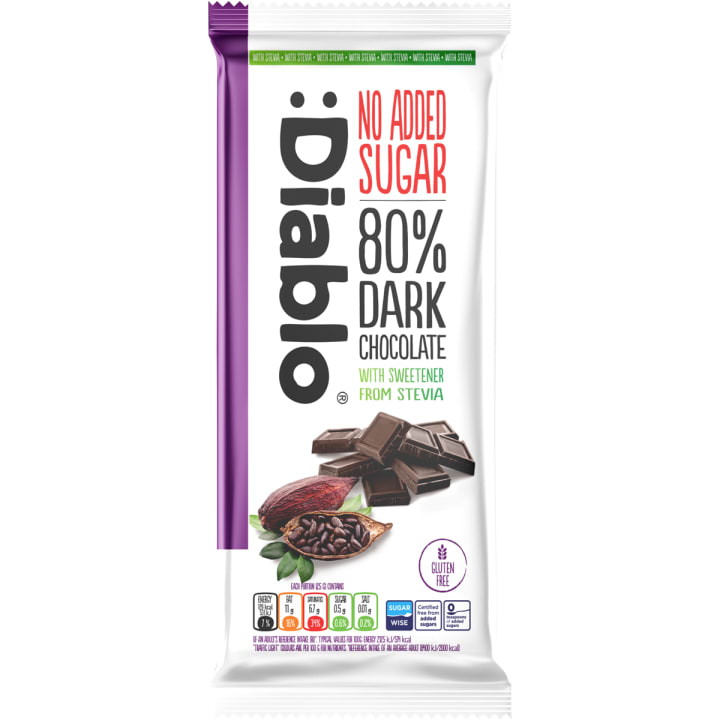
Cocoa paste is the first ingredient, ahead of the sweetener, which is why this one tastes closest to a conventional high cocoa bar. It carries the lowest carbohydrate figure of any Diablo chocolate bar. Stevia leaf extract at 0.02 percent takes the edge off the bitterness.
How do the Diablo bars compare on paper?
| Bar | Claim | Sugars | Polyols | Carbohydrate | Energy |
|---|---|---|---|---|---|
| Dark Chocolate 85 g | Sugar Free | 0.5 g | 42 g | 47 g | 477 kcal |
| Dark Chocolate with Hazelnuts 85 g | Sugar Free | 0.4 g | 38 g | 43 g | 498 kcal |
| 80% Dark Chocolate 75 g | No Added Sugar | 1.1 g | 20 g | 26 g | 514 kcal |
| Dark Chocolate with Orange 75 g | No Added Sugar | 2 g | 44 g | 49 g | 448 kcal |
| Milk Chocolate with Almonds 75 g | No Added Sugar | 6.3 g | 44 g | 51 g | 483 kcal |
| Milk Chocolate 85 g | No Added Sugar | 8.9 g | 38 g | 46 g | 504 kcal |
| White Chocolate 75 g | No Added Sugar | 10 g | 46 g | 57 g | 486 kcal |
Per 100 g, from Diablo Certificate of Analysis data. On the No Added Sugar bars the sugars occur naturally, from ingredients such as milk powder and fruit.
What else is on the US shelf?
Other brands sell into this category, Lily's and Russell Stover among the names in grocery and drugstore aisles. Their recipes differ, which is why the label reading above matters. Whichever pack you pick up, find the sweetener, the sugars figure and the carbohydrate line, then compare per 100 g.
Diablo makes chocolate, cookies, wafers and candy sweetened with polyols instead of sugar. Sugar Free products hold a maximum of 0.5 g of sugars per 100 g. No Added Sugar products have none added, with naturally occurring sugars remaining. Packs containing polyols note that excessive consumption may produce laxative effects.
Frequently Asked Questions
References and Sources
- FDA. Food labeling: nutrient content claims, sugar free and no added sugars. eCFR 21 CFR 101.60
- FDA. Additional information about high intensity sweeteners permitted for use in food. fda.gov
- GB nutrition and health claims register. Authorized claim wording for maltitol and other polyols. gov.uk
- Diablo Sugar Free. Certificate of Analysis nutritional data for every SKU quoted on this page.
See the whole range in one place
Every Diablo bar, with the sugars, polyols and carbohydrate figures on each product page.
Shop Diablo chocolate barsSweetened with polyols. Excessive consumption may produce laxative effects.