 Chocolate Bars
 Dragees
 Cakes & Muffins
 Sweets & Gummies
 Cookies
 Dessert Sauces
 Chocolate Gift Boxes
 Wafers
 Spreads
 Muesli Bars
 Hampers
 Sales & Promotions

Net Carbs Explained:
The US Keto Shopper's Guide to Sugar-Free Candy
How to calculate net carbs, read a candy label in 30 seconds, and work out what a "sugar-free" claim does and does not tell you
How Do You Calculate Net Carbs in Sugar-Free Candy?
Net carbs are total carbohydrates minus fiber and most sugar alcohols. Here is what the formula actually looks like on a real candy label:
- 01Net Carbs = Total Carbs - Fiber - Erythritol - Allulose - (Other Sugar Alcohols / 2)
- 02Erythritol, stevia, monk fruit, and allulose can generally be subtracted in full
- 03Maltitol, xylitol, isomalt and sorbitol are conventionally subtracted at half their listed value, because more of them is absorbed
- 04The FDA does not officially recognize "net carbs" as a labeling term, so the number on the front of the pack is a manufacturer's own calculation
- 05Most ketogenic diet plans target 20 to 50 grams of net carbs per day
You flip the bag over. "Sugar Free" is printed in bold letters on the front. But the nutrition panel says 18 grams of total carbohydrates, and somewhere underneath that, a smaller number labeled "net carbs" claims to be only 2 grams. Which number is real? Which one should actually count toward your keto macros or your daily carb budget?
This confusion is one of the most common reasons low-carb and keto shoppers get caught out by candy that looks safe on the shelf. Net carb claims on sugar-free candy are not regulated the way calories or total fat are, which means two products can both say "low net carbs" while behaving very differently in your body.
This guide breaks down exactly how net carbs are calculated, which sweeteners actually get subtracted, and how to read any sugar-free candy label in about 30 seconds flat. By the end, you will be able to verify a net carb claim yourself instead of taking the package's word for it.
This guide references FDA labeling rules, published glycemic index data, and Diablo Sugar Free's own product specifications. It is intended for general education, not medical advice. Always consult your physician or a registered dietitian before making changes to your diet, particularly if you are managing diabetes or prediabetes.
What "Net Carbs" Actually Means
Net carbs refer to the carbohydrates in a food that your body actually digests and absorbs into your bloodstream as glucose. The idea is simple: not every carbohydrate on a nutrition label behaves the same way once it hits your digestive system.
Here is the part that surprises most shoppers: the FDA does not officially recognize "net carbs" as a labeling term. There is no legal definition, and it is not a metric used by the American Diabetes Association either. What you see printed as "net carbs" on a candy wrapper is a manufacturer's own calculation, not a government-verified figure.
That does not make the concept useless. It means the responsibility for checking the math falls on you, the shopper. The FDA does require manufacturers to list total carbohydrates, dietary fiber, total sugars, added sugars, and sugar alcohols (when present) on every nutrition panel. Those individual numbers are legally regulated. Net carbs are simply what you calculate from them.
The Net Carbs Formula, Step by Step
Here is the core formula used across the low-carb and keto community:
Net Carbs = Total Carbohydrates - Dietary Fiber - Sugar Alcohols
Some sweeteners only get subtracted at half value, which is where most people miscalculate. The more precise version looks like this:
Net Carbs = Total Carbohydrates - Fiber - Erythritol - Allulose - (Other Sugar Alcohols / 2)
Why Fiber Gets Subtracted
Fiber passes through your small intestine largely undigested. Your body cannot break it down into glucose, so it does not raise blood sugar the way starch or table sugar does. This applies to both soluble and insoluble fiber.
Why Sugar Alcohols Are Treated Differently
Sugar alcohols, also called polyols, are only partially absorbed by your small intestine. Research shows absorption rates ranging from roughly 2 percent to 90 percent depending on the specific compound, which is why there is no single universal subtraction rule. Erythritol sits at the low-absorption, low-impact end of that range and is commonly subtracted in full. Maltitol sits closer to the high-absorption end and is typically only subtracted at half value.
Worked Example: Two "Sugar Free" Chocolate Bars, Very Different Results
Say you are holding a maltitol-sweetened sugar-free chocolate bar with this nutrition panel per serving:
- Total Carbohydrates: 18g
- Dietary Fiber: 2g
- Sugar Alcohols (Maltitol): 12g
Calculation: 18 - 2 - (12 / 2) = 18 - 2 - 6 = 10 grams of net carbs
Now compare that to a stevia and erythritol-sweetened bar with a similar total carb count:
- Total Carbohydrates: 18g
- Dietary Fiber: 3g
- Sugar Alcohols (Erythritol): 13g
Calculation: 18 - 3 - 13 = 2 grams of net carbs
Both bars say "sugar-free" on the front of the pack. One delivers five times the digestible carb load of the other. This is exactly why checking the sweetener and doing your own math matters more than trusting the headline claim.
The net carb figure depends entirely on which sweetener was used. The front-of-pack claim tells you what is missing, which is sugar. The ingredient list and the nutrition panel tell you what is there instead, and those are the lines the arithmetic runs on.
Not All Sugar Alcohols Are Equal: The Sweetener Guide
The word "sugar-free" on a candy label does not automatically mean low net carbs. It depends entirely on which sweetener was used.
Erythritol
Erythritol is fermented from glucose and has one of the lowest glycemic indexes of any sweetener on the market, at approximately 0 to 1. Research suggests roughly 90 percent of it is excreted unchanged in urine rather than metabolized, which is why many keto followers subtract it in full when calculating net carbs.
Maltitol
Maltitol tastes the closest to real sugar of any polyol, which is exactly why so many chocolate makers use it: it carries the texture and the sweetness without the sugar. Its published glycemic index runs from roughly 35 to 52 depending on the form, against 65 for table sugar, and more of it is absorbed than of erythritol. That is why the convention is to subtract half its listed value rather than all of it. The GB nutrition and health claims register permits one claim about it: consumption of foods containing maltitol instead of sugar induces a lower blood glucose rise after their consumption compared to sugar-containing foods.
Xylitol and Isomalt
Both sit in the moderate range, with glycemic indexes between 7 and 13. They are common in hard candy and gum because they hold up well in that format. Subtract half their value, and note that xylitol carries specific toxicity risks for dogs if you have pets in the house.
Allulose
Allulose is a newer, low-digestible sweetener that the FDA now allows manufacturers to exclude from the Total Sugars and Added Sugars lines entirely, and it is counted at just 0.4 calories per gram instead of the usual 4. It behaves almost like a non-carb for net carb purposes and is increasingly common in caramels and gummy candy.
Stevia and Monk Fruit
Neither is a sugar alcohol. Both are plant derived, carry no meaningful calories and have a published glycemic index of 0. Because they are used in tiny amounts, they contribute almost nothing to the total carbohydrate figure in the first place, so there is usually very little to subtract.
Complete Sweetener Comparison
| Sweetener | GI Score | Subtraction Rule | Type | Common In |
|---|---|---|---|---|
| Stevia | 0 | Subtract in full | High intensity | Chocolate, gummies, drink mixes |
| Monk Fruit | 0 | Subtract in full | High intensity | Chocolate, hard candy |
| Allulose | ~0 | Subtract in full | Rare sugar | Caramels, gummies and chocolate |
| Erythritol | 0 to 1 | Subtract in full (widely accepted) | Polyol | Keto chocolate, hard candy, baked goods |
| Isomalt | ~9 | Subtract half | Polyol | Hard candy, boiled sweets |
| Xylitol | 7 to 13 | Subtract half | Polyol | Gum, mints, hard candy |
| Sorbitol | ~9 | Subtract half | Polyol | Gummies, chewy candy |
| Maltitol | 35 to 52 | Subtract half | Polyol | Chocolate bars, caramels, gummy candy |
GI values are reference figures from published research and may vary by formulation and individual response.
Net Carbs vs. Total Carbs: Which Should You Actually Count?
For Keto Dieters
Most people following a ketogenic diet count net carbs because the goal is to limit the carbohydrates that actually convert to glucose and interfere with ketosis. A typical keto carb budget runs 20 to 50 grams of net carbs per day, which is why a single candy bar with 10 grams of net carbs can consume a meaningful share of your daily allowance.
If You Have Diabetes or Prediabetes
This is where guidance diverges, and it is a conversation for your care team rather than a candy blog. Some diabetes educators suggest counting total carbohydrates rather than net carbs, because a portion of fiber and sugar alcohols can still be partially absorbed and affect blood glucose in some people. If you use insulin-to-carb ratios or are new to a low-sugar diet, this distinction matters. Individual responses to sugar alcohols vary, so keeping a short food-and-glucose log and reviewing it with your physician, endocrinologist, or registered dietitian is the safest way to work out what fits your situation.
Net carb math is a useful shopping tool, not a medical guarantee. Individual blood glucose responses to sugar alcohols vary considerably between people. If you are managing diabetes, confirm your personal carb-counting approach with your care team before relying on net carbs alone.
How to Read a Sugar-Free Candy Label in 30 Seconds
Find the Serving Size
Everything else on the panel is based on this portion, not the whole bag.
Note Total Carbohydrates
This is your starting number before any subtraction.
Subtract Dietary Fiber
Fiber is not digested, so it never counts toward net carbs.
Check for Sugar Alcohols
If none are listed under Total Carbohydrate, you are already done.
Identify the Sweetener
Erythritol: subtract in full. Anything else: subtract half.
Multiply by Servings Eaten
Eating the whole bar instead of one labeled portion multiplies every number.
Common Mistakes That Wreck a Net Carb Count
- Trusting the front-of-pack net carb number without checking the ingredient list. Manufacturers calculate net carbs differently, and some subtract all sugar alcohols regardless of type.
- Ignoring serving size. A "2 grams net carbs" claim often applies to a tiny portion, not the handful you actually ate.
- Assuming every sugar alcohol behaves like erythritol. Absorption differs from one polyol to the next, which is what the half subtraction convention is there to account for.
- Forgetting allulose can appear in the ingredient list but not the Total Carbohydrate line, which can make the sugar count look artificially low without explanation.
- Not accounting for US versus international labeling differences. In the US and Canada, fiber is included inside the Total Carbohydrate number and must be manually subtracted. In the UK, EU, and Australia, fiber is often already excluded, so subtracting it again produces an inaccurate result.
Net Carbs Across Popular Sugar-Free Candy Types
| Candy Type | Typical Sweetener | Net Carbs / Serving | Subtraction Rule to Apply |
|---|---|---|---|
| Sugar-Free Chocolate (Erythritol / Stevia) | Erythritol, stevia | 0 to 2g | Subtract polyols in full |
| Sugar-Free Caramels | Allulose, monk fruit | 0 to 2g | Subtract in full |
| Keto Gummy Candy | Erythritol or allulose | 1 to 3g | Subtract in full |
| Sugar-Free Hard Candy | Isomalt or maltitol | 1 to 3g | Subtract half |
| Sugar-Free Chocolate (Maltitol-Based) | Maltitol | 2 to 10g | Subtract half |
| Sugar-Free Jelly Beans | Maltitol | Varies by brand, check the panel | Subtract half |
Figures are approximate ranges based on commonly available US products and vary by brand and formulation. Always verify against the specific product's current nutrition label.
Why Polyol Packs Carry a Note About Laxative Effects
Polyols are absorbed slowly, which is the point of using them: slow, partial absorption is exactly what keeps them off the sugars line and out of a full net carb count. The portion that is not absorbed in the small intestine continues into the colon, which is why candy made with polyols carries the standard note that excessive consumption may have a laxative effect. That note is a labelling requirement tied to the dose, not a defect in the product. Enjoy a few pieces at a time rather than a full bag in one sitting and your gut adjusts.
Diablo Sugar Free's Approach to Net Carbs
Diablo Sugar Free builds most of its chocolate, cookie, and confectionery range around maltitol, usually blended with a small amount of stevia (steviol glycosides), and some products also use acesulfame K. Because maltitol is the main polyol across much of the range, the subtraction rule from earlier is the one to apply: count half of the "of which polyols" figure, not all of it, for the most accurate net carb estimate.
To work out the net carbs on any Diablo pack, take the total carbohydrate figure, subtract the fiber, then subtract half the "of which polyols" number. A quick note on where the numbers come from: some net carb figures quoted online subtract polyols in full, which produces a much lower headline number than the half-maltitol method used here. Because values differ across the range and can change when a recipe is updated, always use the figures printed on the specific bar you buy rather than a general estimate.


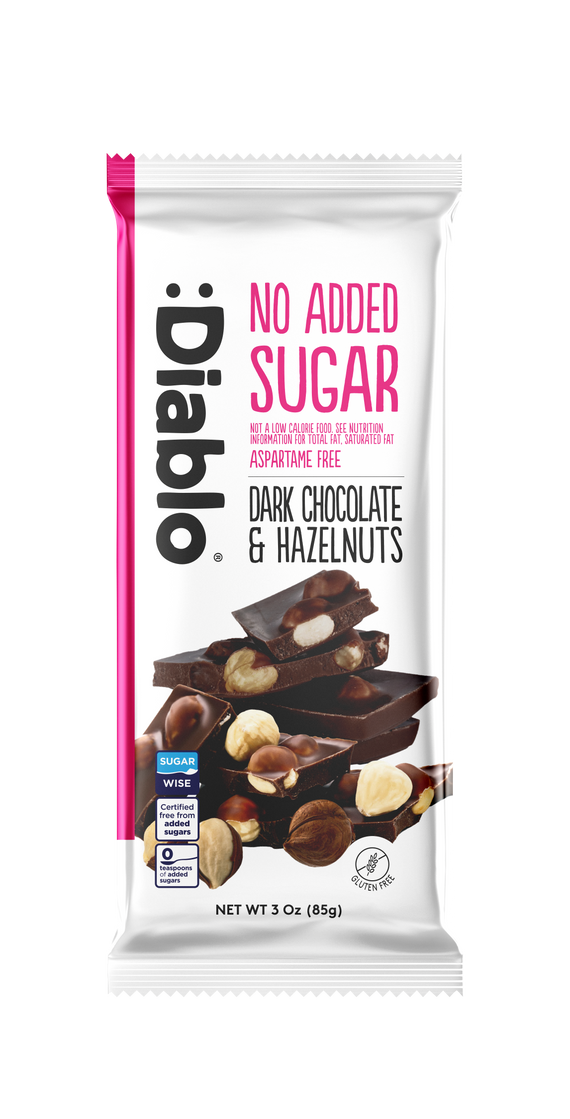
Prices and availability shown for the US store and may change. Check the nutrition panel and the "of which polyols" line on each product page for current figures, since values vary across the range. Products contain polyols; excessive consumption may have a laxative effect.
Browse the full US range of chocolate, cookies, and sweets, all made with sweeteners instead of added sugar. Check the "of which sugars" and "of which polyols" figures on each product's nutrition panel, since formulations can vary across the range.
Frequently Asked Questions
References and Sources
- U.S. Food and Drug Administration. Food Labeling: Nutrition Facts Label. fda.gov
- Healthline. How to Calculate Net Carbs. healthline.com/nutrition/net-carbs
- UCSF Diabetes Teaching Center. Carbohydrate Counting Guidance. Cited via Biology Insights, 2026.
- The Primal. 25 Best Low-Carb Candy Brands. theprimal.com
- Omni Calculator. Net Carbs Calculator. omnicalculator.com/health/net-carbs
- Diablo Sugar Free. Keto Sweets: A Label Reading Guide. diablosugarfree.com
- Diablo Sugar Free. Sugar-Free Chocolate in the US: 2026 Guide. diablosugarfree.com
- Diablo Sugar Free. Diablo Sugar-Free FAQ. diablosugarfree.com
Ready to Shop With Confidence?
Diablo Sugar Free crafts chocolates, cookies, and sweets with no added sugar, made with sweeteners instead of sugar, so you can check the label once and enjoy the treat without second-guessing it.
Shop Diablo Sugar FreeAlways check the individual product label for current sweetener and net carb information.
Content written and verified by Diablo Sugar Free. This article is for general information only. For any health or medical concern, please check with your doctor or a qualified healthcare professional first.