 Chocolate Bars
 Dragees
 Cakes & Muffins
 Sweets & Gummies
 Cookies
 Dessert Sauces
 Wafers
 Spreads
 Muesli Bars
 Guilt-free Gifting
 Sales & Promotions

Going Sugar-Free:
Your 30-Day American Starter Plan
A week-by-week plan to cut added sugar, calm cravings, and discover no-added-sugar snacks that actually satisfy.
What Is a 30-Day No Sugar Challenge?
A 30-day no sugar challenge means eliminating added sugars, not the natural sugars in fruit, vegetables, or plain dairy, for one month. Here is what to expect:
- TimelineMost people notice fewer cravings within 10 to 14 days, and steadier energy by week 3.
- Daily limit25g (women) / 36g (men) of added sugar per day is the American Heart Association benchmark.
- Where to startAudit your kitchen, read labels for hidden sugar, and stock no-added-sugar snacks before day one.
- Who it helpsAnyone cutting back on sugar, following a low-carb or keto pattern, or tired of afternoon energy crashes.
- Key toolProtein- and fiber-rich snacks blunt cravings far better than willpower alone.
If you have ever stood in a US grocery aisle squinting at a nutrition label, wondering how a granola bar somehow has more sugar than a candy bar, you already know the problem. The average American adult eats far more added sugar than any health authority recommends, and most of it hides in places you would never expect: bread, pasta sauce, coffee creamer, and salad dressing.
This guide gives you a real, week-by-week, 30-day no-sugar challenge built for how Americans shop, snack, and eat, along with the no-added-sugar snacks that keep you full and on track. The plan works the same if you follow a low-carb pattern, train for a race, or are simply tired of the 3 p.m. crash.
This guide references data from the Centers for Disease Control and Prevention (CDC), the American Heart Association, and the USDA Dietary Guidelines for Americans. It is intended for general education only and is not medical advice. Always talk with your physician or a registered dietitian before making significant dietary changes, particularly if you take any prescribed medication.
Why Cut Added Sugar? What the Guidelines Say
This is not about fear over an occasional dessert. It is about closing the gap between what Americans actually eat and what health authorities recommend.
How Much Added Sugar Is Too Much
The USDA's 2020-2025 Dietary Guidelines for Americans recommend keeping added sugar under 10% of total daily calories, which works out to roughly 50 grams on a 2,000-calorie diet. The American Heart Association sets a tighter bar: no more than 36 grams (9 teaspoons) a day for men and 25 grams (6 teaspoons) for women. The average American adult eats around 17 teaspoons of added sugar a day, roughly two to three times the AHA recommendation.
Added Sugar vs Natural Sugar
Whole fruit, vegetables, and plain dairy contain natural sugar bundled with fiber, water, and nutrients that slow absorption. A 30-day sugar-free challenge targets added sugar, the kind poured into products during processing, not the sugar naturally present in whole foods. That distinction is what makes this plan livable for a full month rather than a crash diet.
Cutting added sugar works best when you replace it, not just remove it. Pairing protein and fiber at every meal is what actually keeps hunger and cravings in check, and it is the single biggest predictor of whether people finish the 30 days.
What Happens When You Cut Sugar for 30 Days
Understanding the timeline helps you push through the hard days instead of quitting on day four.
The Adjustment
Expect headaches, irritability, and strong cravings as your body adjusts to fewer quick glucose hits. This is normal and temporary.
Cravings Peak, Then Fade
Many people find this the hardest week and also the turning point. Taste buds recalibrate, so naturally sweet foods start tasting sweeter.
Stabilizing
Energy levels even out, afternoon slumps become less severe, and choices that felt like a chore in week one start to feel automatic.
Your 30-Day No Sugar Challenge, Week by Week
Week 1: Audit and Reset
- Go through your pantry and fridge and check labels on packaged foods for added sugar
- Remove the obvious offenders: soda, candy, sweetened cereal, flavored coffee creamer
- Stock your kitchen with no-added-sugar snacks so you are never caught without an option
- Start a simple food log, even just notes on your phone, to spot where sugar was sneaking in
Week 2: Build New Habits
- Swap one sugary habit at a time: black coffee or unsweetened tea instead of a flavored latte, sparkling water instead of soda
- Plan snacks ahead for work, the gym, and the car, since decision fatigue is the number one reason people slip
- Add protein and fiber to every meal, since both slow digestion and keep you fuller for longer
Week 3: Strengthen and Socialize
- Practice navigating restaurants, the office candy jar, and social events without falling back on old habits
- Batch-cook a few staples for the week: roasted chickpeas, hard-boiled eggs, homemade trail mix
- Reassess cravings. Most people notice a real drop by this point
Week 4: Lock In for Life
- Identify which changes you want to keep permanently versus which were just for the challenge
- Reintroduce natural sugars mindfully if you eliminated them, since whole fruit is not the same as added sugar
- Build a maintenance list of your favorite no-added-sugar snacks so good choices stay easy long after day 30
How to Read US Nutrition Labels for Hidden Sugar
Sugar has dozens of aliases on US ingredient lists, and manufacturers know most shoppers only scan for the word "sugar." Look for anything ending in "-ose" (dextrose, fructose, maltose, sucrose) and these common aliases:
- Cane juice or cane syrup
- High-fructose corn syrup
- Corn syrup solids
- Agave nectar
- Rice syrup or brown rice syrup
- Malt syrup
- Fruit juice concentrate
- Honey and molasses (natural, but still added sugar on a label)
- Maltodextrin and dextrin
On a US Nutrition Facts label, check "Added Sugars" specifically, not just "Total Sugars." Total sugars include naturally occurring sugars from fruit or dairy, while added sugars is the number that matters for this challenge.
Sugar Replacers Compared
| Sweetener | Type | Common Use | Notes |
|---|---|---|---|
| Stevia | Plant leaf extract | Beverages, chocolate, baking | Intense sweetener |
| Monk Fruit | Fruit extract | Baking, coffee, chocolate | Intense sweetener |
| Erythritol | Polyol | Candy, baking | Bulk sweetener |
| Allulose | Rare sugar | Baking, sauces | Used mainly in the US |
| Xylitol | Polyol | Gum, baking | Keep away from dogs |
| Maltitol | Polyol | Chocolate, cookies, confectionery | Bulk sweetener |
Types and typical uses vary by brand and formulation.
Polyols (also called sugar alcohols) include maltitol, erythritol, xylitol, sorbitol, and isomalt. Polyols are not sugars. Consumption of foods containing maltitol instead of sugar induces a lower blood glucose rise after their consumption compared to sugar-containing foods (GB nutrition and health claims register). Polyols are absorbed slowly, which is the point of using them, and packs containing more than 10 per cent polyols note that excessive consumption may produce laxative effects. Enjoy a few pieces at a time and your gut adjusts.
Stocking Your Challenge Pantry
Snacking is where most added sugar sneaks into an otherwise clean diet. The lists below are grouped by situation, so you can build a shortlist around how you actually eat.
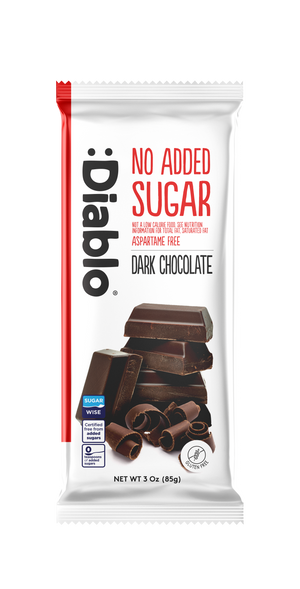
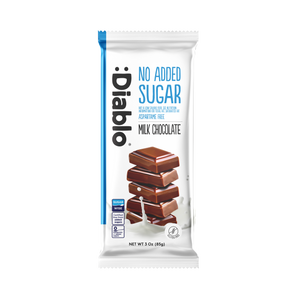
Diablo No Added Sugar Chocolate Bars
When a chocolate craving hits mid-challenge, a no-added-sugar bar is a more useful tool than white-knuckling it. The Diablo 85g bars are sweetened with maltitol, a sugar replacer rather than a sugar. The dark bar carries 0.5 g of sugars per 100 g, the dark hazelnut bar 1 g and the milk bar 8.9 g, and in the No Added Sugar bars those sugars occur naturally in the milk and cocoa rather than being added.
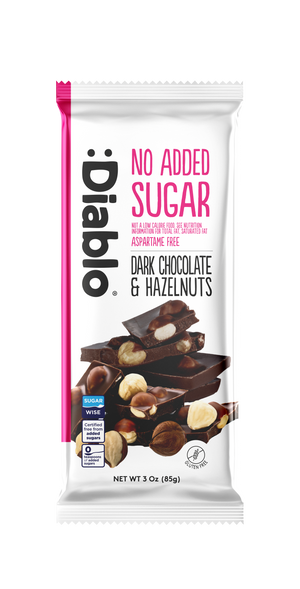
Stocking up for the full 30 days? Multipacks are available: 6-pack $29.99 / 15-pack $66.99. Prices shown are US store prices and may change. See chocolate bars, cookies and sweets for the full range.
Diablo products are sweetened with maltitol, a polyol. Polyols are absorbed slowly, which is the point of using them, so enjoy a few pieces at a time and your gut adjusts. Packs note that excessive consumption may produce laxative effects, and that the product is not recommended for children under 3 years of age. Products contain or may contain milk, soya, nuts and peanuts. Always check the pack for the full ingredient and allergen list before eating.
High-Protein, No-Added-Sugar Snacks
- Hard-boiled eggs with a pinch of salt
- Celery or cucumber slices with natural nut butter
- A small handful of raw almonds or walnuts
- Plain Greek yogurt with cinnamon, no fruit syrup
- String cheese with a few whole-grain crackers
Best Snacks for Keto and Low-Carb Eating
- Avocado slices with sea salt
- Pork rinds or protein chips
- Cheese crisps
- Olives with a splash of olive oil
- Homemade nut-based energy bites with no added sugar
Best Snacks for Kids
- Apple slices with sunflower seed butter, a school-safe, nut-free option
- Homemade trail mix with unsweetened dried fruit and seeds
- Air-popped popcorn with a light dusting of cinnamon
- Cheese cubes with whole-grain crackers
- Veggie sticks with hummus
Best On-the-Go Snacks for Work
- Roasted chickpeas
- Beef or turkey jerky with no added sugar
- Individually portioned nut packs
- Rice cakes topped with avocado or nut butter
- Unsweetened protein shakes
Sample Snack Comparison
| Snack | Added Sugar | Protein | Best For |
|---|---|---|---|
| Hard-boiled egg | 0g | 6g | High protein, keto |
| Plain Greek yogurt + cinnamon | 0g | 15-17g | Breakfast, high protein |
| Roasted chickpeas (1/4 cup) | 0g | 5-6g | Work, fiber intake |
| Apple + sunflower seed butter | 0g | 3-4g | Kids, natural sweetness |
| Cheese + whole-grain crackers | 0-1g | 7-8g | On-the-go |
| Diablo no added sugar dark chocolate, 14g portion | 0g added sugar | About 1g | Chocolate cravings |
Figures reflect added sugar only and are approximate. Values vary by brand. Diablo products contain maltitol; see the polyol note above.
Common Mistakes to Avoid
- Cutting out fruit entirely. Whole fruit contains fiber and nutrients that slow sugar absorption. It is not the same as added sugar.
- Treating "sugar-free" as "eat freely." No-added-sugar products still contain calories, and polyol-sweetened items should be enjoyed in sensible portions.
- Going in without a plan. Willpower fades by mid-afternoon. A stocked snack drawer beats good intentions every time.
- Skipping protein and fiber. Both are what actually keep hunger and cravings under control, not sugar avoidance alone.
- Treating day 30 as a finish line. The goal is a sustainable pattern, not a one-month sprint back to old habits.
Navigating Social Situations, Holidays, and Workplaces
American food culture makes sugar hard to avoid: office candy jars, birthday cake in the break room, Halloween candy, Thanksgiving desserts. A few practical strategies:
- Eat a protein- or fiber-rich snack before parties or potlucks, so you are not arriving hungry and heading straight for the dessert table
- Bring your own no-added-sugar snack or dessert to share, which guarantees you have an option and often introduces others to something new
- Have one polite, simple response ready for social pressure, such as "I'm doing a 30-day challenge, I'll catch the next one"
Reducing added sugar suits most people when done in a balanced way, but restrictive eating patterns are not right for everyone. If you have a history of disordered eating, or if tracking and eliminating foods tends to become stressful for you, please speak with a doctor or registered dietitian before starting any elimination-style challenge.
Frequently Asked Questions
References and Sources
- U.S. Department of Agriculture and U.S. Department of Health and Human Services. Dietary Guidelines for Americans, 2020-2025.
- American Heart Association. Added Sugars Recommendations.
- Centers for Disease Control and Prevention. Nutrition Data and Statistics. cdc.gov
- Department of Health and Social Care. GB nutrition and health claims register. Authorised claim for maltitol.
- Commission Regulation (EU) No 432/2012 establishing a list of permitted health claims made on foods.
Ready to Start Your 30 Days?
Diablo Sugar Free makes chocolates, cookies and sweets with no added sugar, sweetened with maltitol instead of sugar, so your 30 days never have to feel like deprivation.
Shop Diablo No Added SugarNo added sugar. Real chocolate taste. Sweetened with maltitol; enjoy a few pieces at a time.