 Chocolate Bars
 Dragees
 Cakes & Muffins
 Sweets & Gummies
 Cookies
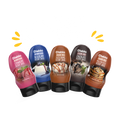 Dessert Sauces
 Wafers
 Spreads
 Muesli Bars
 Guilt-free Gifting
 Sales & Promotions

Diablo Sugar Free FAQ:
Your Questions Answered
Real answers on sweeteners, diabetes, keto, halal, kosher, laxative effects, label reading, and everything in between
What Is Diablo Sugar Free?
Diablo Sugar Free is a British confectionery brand by B Healthy Limited that makes chocolates, cookies, wafers, sweets, cakes, spreads, and dessert sauces with no added sugar. Here is what you need to know at a glance:
- ✓Sweeteners used: Maltitol (polyol) and stevia. No artificial sweeteners, no refined sugar
- ✓Certifications: Halal, Kosher, and Gluten-Free across qualifying product lines
- ✓Who buys it: people cutting sugar, keto followers, health-conscious consumers, and parents seeking reduced-sugar options
- ✓Where to buy: DiabloSugarFree.com, Amazon UK, Amazon US, and selected health food retailers worldwide
- ⚠Important: "No added sugar" and "sugar-free" are legally distinct labels. Always read the "of which sugars" line on the nutrition panel
- ⚠Laxative effect: Possible if consumed in excess. The adult threshold for maltitol is approximately 40g. Moderate portions are well tolerated by most people
If you have ever stood in a health food aisle holding a Diablo chocolate bar, squinting at the back panel and wondering whether "no added sugar" actually means anything useful, you are not alone. The sugar-free confectionery market has grown rapidly, and with that growth has come genuine confusion.
This Diablo sugar-free FAQ answers the 50 most searched, most asked, and most genuinely confusing questions about the brand, its products, its ingredients, and who should or should not eat them. Every answer draws on verified information from DiabloSugarFree.com, peer-reviewed nutrition research, and UK food labelling law. Nothing here is guesswork.
This guide is written for people managing diabetes, keto followers, halal and kosher shoppers, parents watching sugar intake, and retailers considering stocking Diablo.
This guide references peer-reviewed research, UK food labelling regulations, and verified Diablo brand information. It is intended for educational purposes. Always consult your GP, diabetes nurse, or registered dietitian for personalised dietary advice.
- Part 1: About the Brand (Q1-Q7)
- Part 2: Ingredients and Sweeteners (Q8-Q15)
- Part 3: Health and Diet (Q16-Q26)
- Part 4: Certifications (Q27-Q32)
- Part 5: Taste and Storage (Q33-Q35)
- Part 6: Purchasing and Support (Q36-Q40)
- Part 7: Comparisons (Q41-Q44)
- Part 8: Label Reading (Q45-Q47)
- Part 9: Common Misconceptions (Q48-Q50)
- Sweetener Comparison Table
- People Also Ask
About the Brand
Diablo Sugar Free is a confectionery brand dedicated entirely to products made without added sugar. It operates under the parent company B Healthy Limited, headquartered at 155-163 Golders Green Road, London NW11 9BX. The brand was built around a single principle: cutting sugar from your diet should never require cutting out the pleasure of genuinely great-tasting confectionery.
The brand's tagline, "All the Taste Without the Sugar," is not simply a marketing phrase. The product development team focuses specifically on replicating the texture, mouthfeel, and sweetness of traditional confectionery by using polyol sweeteners and natural plant-derived alternatives like stevia.
Diablo Sugar Free is a British brand. Its head office is in London. The company operates fulfilment warehouses in Welwyn Garden City, Hertfordshire (UK) and Klatovy, Czech Republic. The Czech Republic warehouse allows fast, cost-efficient fulfilment across continental Europe, while the UK warehouse serves domestic and British export orders.
The Diablo range is one of the most comprehensive sugar-free confectionery ranges available in the UK or internationally. Product categories include:
- Chocolate bars - milk, dark, and white varieties with flavour inclusions such as crispy rice and hazelnut
- Cookies and biscuits - including coconut, chocolate, and assorted flavours
- Wafers - a long-standing bestselling category in the Diablo range
- Sweets and gummies - dragees, fruit gummies, toffees, and boiled sweets in multiple flavours
- Cakes and muffins - including chocolate, lemon, apple, and forest fruit varieties
- Spreads - chocolate hazelnut and similar alternatives to traditional sugar-laden spreads
- Dessert sauces - chocolate, caramel, maple, and strawberry syrups
- Muesli bars
- Chocolate gift boxes and hampers - curated gift sets for gifting without the added sugar
Yes. Diablo Sugar Free is a registered British business under B Healthy Limited. Products carry third-party certifications, including Halal, Kosher, and Gluten-Free verification across qualifying product lines. The brand is stocked by major retail and wholesale platforms and has a verifiable UK business address. Customer service is reachable at suk@diablosugarfree.com or by telephone at +44 207 222 5 222.
Diablo Sugar Free has been active in the UK sugar-free confectionery market for over a decade, building one of the most recognisable product ranges in the category. The brand has expanded significantly in recent years as demand for sugar-free, keto, and reduced-sugar products has grown across the UK, European, Middle Eastern, and North American markets.
- The official website at DiabloSugarFree.com (direct to consumer, international shipping)
- B2B wholesale portal at b2bdiablosugarfree.com
- Amazon UK and Amazon US
- Health food retailers including Holland and Barrett
- Independent convenience stores and speciality food shops
- Gym nutrition stores and online health food platforms
- International distributors in Europe, the Middle East, and North America
Yes. Diablo offers international shipping directly from DiabloSugarFree.com. Shipping availability, delivery timelines, and charges vary by destination. All options and costs are calculated at checkout based on your delivery address. The dual-warehouse setup in the UK and the Czech Republic means faster fulfilment for European orders.
Ingredients and Sweeteners
Diablo primarily uses two types of sweeteners across its product range:
Maltitol is a polyol (sugar alcohol) derived from starch sources such as corn and wheat. It provides approximately 75 to 90 percent of the sweetness of regular sugar and closely mimics sugar's texture, solubility, and mouthfeel, which is why it performs so well in chocolate manufacturing. It provides around 2.1 calories per gram compared to sugar's 4 calories per gram.
Stevia (steviol glycosides) is a natural, plant-derived sweetener extracted from the leaves of the Stevia rebaudiana plant. It has a glycemic index of zero and zero calories. Diablo uses stevia typically in small quantities (often noted as 0.02% on ingredient lists) to enhance and round the sweetness profile of maltitol without adding a significant stevia aftertaste.
Some specific products in the range also use isomalt or other approved polyols, depending on the formulation requirements of that product category.
Maltitol is a sugar alcohol (polyol) approved for use by the European Food Safety Authority (EFSA), the UK Food Standards Agency, and the US Food and Drug Administration (FDA). It occurs naturally in small amounts in some plants but is commercially produced from starch. The key facts about maltitol:
- Approximately 2.1 calories per gram, compared to sugar's 4 calories per gram
- Glycemic index of approximately 35 (powdered form), significantly lower than sugar's GI of 65
- Not a sugar: polyols are listed separately from sugars on the nutrition panel
- Metabolised slowly, producing a lower and slower blood glucose rise than sugar
- Excessive consumption can cause digestive discomfort (addressed fully in Q20)
Stevia is a natural sweetener derived from the leaves of the Stevia rebaudiana plant, native to South America. The compounds responsible for its sweetness are called steviol glycosides, which are 200 to 300 times sweeter than regular sugar. Stevia has a glycemic index of zero and zero calories. It is one of the most widely researched sweeteners in modern food production. Diablo uses steviol glycosides in its formulations to complement maltitol and produce a balanced sweetness profile.
This is one of the most important questions in this guide, and one of the most misunderstood at the shelf.
Under UK food labelling law (retained from EU Regulation EC No 1924/2006, updated by the Food Information Regulations 2014):
- Sugar-Free (SF) means the product contains less than 0.5g of total sugars per 100g, including naturally occurring sugars from all ingredients combined
- No Added Sugar (NAS) means no sugar was deliberately added during manufacturing. However, naturally occurring sugars from ingredients such as milk solids, cocoa, or fruit may still be present in meaningful amounts
Diablo produces products in both categories. A Diablo Sugar Free dark chocolate bar may contain as little as 0.5g sugars per 100g, while a No Added Sugar milk chocolate contains naturally occurring sugars from milk. The critical habit: always read the "of which sugars" line under Total Carbohydrates on the nutrition panel on the back of the pack. That number is legally regulated and independently verified. Front-of-pack claims are marketing shorthand, not guarantees.
No. Diablo does not use artificial sweeteners such as aspartame, saccharin, acesulfame potassium (Ace-K), or sucralose. The brand uses polyols (primarily maltitol) and stevia. Polyols are low-digestible carbohydrates derived from plant sources. Stevia is extracted directly from a plant. Neither category is classified as an artificial sweetener under UK or EU food law. This is one of the meaningful differentiators between Diablo and some lower-cost competitors that rely on synthetic sweetener blends.
Yes. Polyols and sugar alcohols are two names for the same category of ingredient. Despite the name, they contain no alcohol (ethanol). They are low-digestible carbohydrates formed when hydrogen is added to a parent sugar compound. Common polyols include maltitol, erythritol, xylitol, sorbitol, and isomalt. You can identify them on ingredient labels because their names end in "-ol." Diablo primarily uses maltitol, which is widely regarded as the best-performing polyol for chocolate applications because of its close resemblance to sucrose in taste and texture.
Because maltitol provides approximately half the calories of regular sugar (2.1 kcal/g versus 4 kcal/g for sucrose), Diablo products are generally 20 to 40 per cent lower in calories than their sugar-sweetened equivalents, depending on the specific product. However, they are not calorie-free. Fat, protein, and other carbohydrates in each product all contribute calories. Always check the energy figure on the Nutrition Facts panel for the precise calorie count of any specific Diablo product.
Many Diablo products carry gluten-free certification, and many others are naturally free from gluten. However, some products in the range, particularly certain cakes, biscuits, and cookies, do contain wheat flour or other gluten-containing ingredients. Always check the allergen information on the individual product packaging or the product page at DiabloSugarFree.com before purchasing if you have coeliac disease or a gluten sensitivity. Gluten-free certified products display the relevant certification mark on their packaging.
Health, Diabetes, and Dietary Questions
"Healthy" requires context, so here are the facts instead of a verdict. Diablo products are confectionery made without added sugar: the Sugar Free lines contain a maximum of 0.5g sugars per 100g, maltitol provides around 2.1 kcal per gram against sugar's 4, and polyols are not sugars.
They are not nutritional health foods. They are confectionery. The Academy of Nutrition and Dietetics classifies sugar-free sweets as occasional treats within a balanced diet, not substitutes for nutritious whole foods. Enjoy them in sensible portions as part of a considered dietary plan.
No, and we will not pretend otherwise. The verifiable part is arithmetic: maltitol provides around 2.1 kcal per gram against sugar's 4, so Diablo products are generally lower in calories than their sugar-sweetened equivalents, and the exact energy figure sits on every nutrition panel.
Calories from any source still count, including calories from sugar-free confectionery. Anyone tracking intake should read the energy value per serving and keep portions sensible.
The plain fact: polyols such as maltitol are not sugars, and they are listed separately from sugars on the nutrition panel. Dental health depends on your overall diet and oral hygiene, so for anything beyond that fact, your dentist is the right person to ask.
Many parents choose Diablo as a reduced-sugar alternative for children's treats, and many products in the range are certified Halal and Kosher. The "of which sugars" line on each pack shows exactly what is inside.
Two considerations apply specifically. First, children are more sensitive to the digestive effects of polyols than adults. The approximate threshold at which maltitol can produce a laxative effect in children is around 25g, compared to approximately 40g for adults. Keep portions smaller for children than for adults. Second, some Diablo products contain gluten, dairy, or nuts. Always verify allergen information before giving any product to a child.
Yes, excessive consumption of products containing polyols such as maltitol can cause digestive discomfort, including bloating, gas, and diarrhoea. This is one of the most commonly asked sugar-free sweets questions, and it deserves an honest, direct answer.
Here is the mechanism. Polyols are not fully absorbed in the small intestine. They pass into the large intestine where they draw water osmotically and are fermented by gut bacteria, producing gas and accelerating bowel movements. The FDA requires products containing sorbitol or mannitol at relevant levels to carry the warning "excess consumption may have a laxative effect."
The operative word is "excessive." The Academy of Nutrition and Dietetics indicates that up to 10 to 15g of sugar alcohols per day is generally well tolerated by most adults. For adults, approximately 40g of maltitol is the threshold at which laxative effects become likely. For children, that threshold is approximately 25g. Eaten in sensible portions as an occasional treat, Diablo products are well tolerated by the vast majority of consumers.
People with Irritable Bowel Syndrome (IBS) or other diagnosed digestive sensitivities may experience a reaction to polyols at considerably lower doses than the general population. If you follow a Low-FODMAP diet, consult your dietitian before consuming maltitol-containing products.
Polyols, including maltitol, are classified as FODMAPs (Fermentable Oligosaccharides, Disaccharides, Monosaccharides and Polyols) and are restricted during the elimination phase of a Low-FODMAP diet. If you are managing IBS through a Low-FODMAP approach, ask your registered dietitian how polyol-containing products fit your plan before adding them.
That depends on your numbers, so run them rather than taking anyone's word for it. In most low-carb nutritional frameworks, polyols such as maltitol are subtracted from total carbohydrates when calculating net carbs because they are not fully absorbed.
Maltitol is not a zero-GI sweetener, though: powdered maltitol has a glycemic index of approximately 35, against 0 for erythritol or stevia. Strict keto dieters who track net carbs carefully should check the nutrition panel of each specific Diablo product and calculate accordingly. Those with very tight carbohydrate limits may prefer products where stevia is the primary sweetener.
We do not make suitability claims for any medical condition, so here are the facts instead. Consumption of foods containing maltitol instead of sugar induces a lower blood glucose rise after their consumption compared to sugar-containing foods (GB nutrition and health claims register). Stevia, used across the Diablo range, has a GI of zero.
That said, maltitol is not zero-impact. At meaningful serving sizes, it can raise blood glucose, particularly in people who are highly insulin-resistant or who consume large quantities. The critical step for anyone with diabetes: check the "of which sugars" line and total carbohydrate content per serving on the nutrition panel of the specific product you are eating. Always discuss any new food additions with your GP, diabetes nurse, or registered dietitian.
Diablo Sugar Free chocolates, cookies, and sweets are sweetened using maltitol and stevia. No added refined sugar. No artificial sweeteners. No artificial colours on qualifying lines. Always read the individual product nutrition panel for precise carbohydrate figures relevant to your dietary plan.
That is a decision for you and your diabetes care team. Because maltitol is a carbohydrate, people with type 1 diabetes who carb-count for insulin dosing should not treat sugar-free products as carb-free. Always check total carbohydrates and the "of which sugars" figure per serving, and discuss how to account for polyol-containing foods in your insulin dosing with your diabetes care team.
People with pre-diabetes are usually advised to reduce sugar and refined carbohydrate intake, and that plan belongs with your GP or dietitian rather than a confectionery brand. What the label tells you: Diablo Sugar Free products contain a maximum of 0.5g sugars per 100g, and foods containing maltitol instead of sugar produce a lower and slower blood glucose rise than sugar-containing foods. Moderation and label-reading remain essential.
We do not make insulin claims, and individual responses vary. The registered wording for maltitol covers blood glucose only: foods containing maltitol instead of sugar produce a lower blood glucose rise after consumption than sugar-containing foods. For anything insulin-specific, from dosing to sensitivity, your diabetes care team is the right guide.
Dietary Certifications and Specific Diets
Yes, many Diablo products carry Halal certification. The Halal certification mark is displayed on qualifying products. Diablo sweets, many chocolate bars, and several other product lines are Halal approved. To confirm Halal certification on a specific product, check the individual product packaging or the relevant product page on DiabloSugarFree.com.
Yes, many Diablo products carry Kosher certification. As with Halal, certification varies by product line. Always verify by checking the specific product packaging or the product page at DiabloSugarFree.com. Kosher-certified products display the relevant certification mark prominently on their packaging.
Not all Diablo products are vegan. Products containing milk chocolate, milk solids, or other dairy ingredients are not suitable for vegans. Some products are suitable for vegetarians but not vegans. The brand recommends checking the individual product packaging or the product-specific page at DiabloSugarFree.com for precise dietary suitability information. Products that are vegan-suitable will display the vegan symbol.
Many Diablo products carry gluten-free certification. However, some products, such as certain cakes, cookies, and biscuits contain wheat flour. The gluten-free certification mark is displayed on qualifying products. Individuals with coeliac disease or a medically diagnosed gluten sensitivity should always verify gluten-free status on the individual product label before consuming.
Polyols are counted differently from regular carbohydrates in most low-carb nutritional frameworks: most approaches subtract polyol content from total carbohydrates when calculating net carbs. To calculate net carbs: take Total Carbohydrates and subtract the polyol figure if it is listed separately on the nutrition label. The result is your approximate net carb count for that serving, which you can set against your own daily target.
This depends on your definition of clean eating. Diablo products do not contain added refined sugar, and many qualifying product lines are free from artificial colours and flavourings. For most health-conscious consumers following a balanced or reduced-sugar dietary approach, Diablo products represent a compatible occasional treat. For those following an extremely strict whole-foods-only protocol that excludes any processed sweeteners whatsoever, polyol-containing products would fall outside that framework.
Taste, Quality, and Storage
This is where Diablo has made its most significant investment. The most common complaint about sugar-free confectionery historically has been an artificial, bitter, or chemical aftertaste. Diablo addresses this by using maltitol as its primary sweetener, because maltitol most closely mimics the taste, texture, and mouthfeel of regular sugar among all commonly available polyols.
Stevia is used at very low concentrations, typically around 0.02 percent, specifically to avoid the liquorice-like aftertaste that stevia can produce at higher concentrations. No sugar-free product tastes identical to its sugar-sweetened counterpart, and taste is personal, so the honest answer is to try one bar before committing to a multipack.
Aftertaste in sugar-free chocolate is determined by the type and quantity of sweetener used. Stevia at higher concentrations produces a liquorice-like or faintly bitter note. Artificial sweeteners such as saccharin produce a metallic aftertaste. Erythritol can produce a cooling sensation in the mouth at higher doses. Maltitol, which Diablo uses as its primary sweetener, produces the fewest aftertaste complaints among commonly used polyols. This is why it is the preferred sweetener for premium sugar-free chocolate manufacturing. Diablo uses stevia only at very low levels, specifically to minimise this effect while still benefiting from stevia's ability to enhance sweetness balance.
Storage instructions vary by product type. Always follow the specific guidance on the packaging. General guidance:
- Chocolate bars and dragees: store in a cool, dry place below 20 degrees Celsius, away from direct sunlight. Avoid refrigerating unless the ambient temperature exceeds 20 degrees. Condensation from refrigeration can cause sugar bloom (white surface streaks) and affect texture
- Cookies, biscuits, and wafers: store in a cool, dry place. Seal the packaging after opening
- Cakes and muffins: follow individual packaging instructions. Some require refrigeration after opening
- Dessert sauces and syrups: follow individual packaging instructions. Most require refrigeration after opening and use within the stated period
Purchasing, Wholesale, and Customer Service
Yes. Diablo operates a dedicated B2B wholesale portal at b2bdiablosugarfree.com. Wholesale pricing tiers apply at increasing order thresholds, with significantly larger discounts available for higher-volume orders. Retailers, including supermarkets, health food stores, gym nutrition outlets, online grocery platforms, and international distributors, can register for a wholesale account directly through the portal. Trade and sales enquiries can also be directed to info@diablosugarfree.com.
Diablo handles returns and exchanges on a case-by-case basis. If you receive a damaged, incorrect, or faulty product, contact the customer service team via the contact form at DiabloSugarFree.com, by email at suk@diablosugarfree.com, or by telephone at +44 207 222 5 222. Full policy details are published in the Returns and Refunds section of the website.
- Contact form: DiabloSugarFree.com/pages/contact-us
- Customer service email: suk@diablosugarfree.com
- Sales and trade enquiries: info@diablosugarfree.com
- Telephone: +44 207 222 5 222
- Head office: B Healthy Limited, 155-163 Golders Green Road, London NW11 9BX
Yes. Diablo offers chocolate gift boxes and curated hampers, available directly on DiabloSugarFree.com. These are popular choices for anyone cutting sugar, and for health-conscious recipients who would appreciate a treat that fits how they eat. Mixed-product hampers and chocolate gift selections are available in the dedicated hampers category. For corporate or custom gifting enquiries, contact the customer service team directly.
DiabloSugarFree.com accepts: Visa, Mastercard, American Express, Maestro, PayPal, Apple Pay, Google Pay, and Shop Pay.
Comparisons and Context
Fairly, if you compare on the two things anyone can check on a pack: which sweetener is in the recipe, and what the nutrition panel says. Everything else is marketing.
On Diablo: maltitol does the sweetening across most of the range, with steviol glycosides at around 0.02 percent in some lines and isomalt in the boiled sweets. The Sugar Free lines carry 0.5g of sugars or less per 100g; the No Added Sugar lines keep the sugars that arrive in milk, fruit or cereals and declare them on the panel. The range runs to 92 SKUs across chocolate, gummies, boiled sweets, biscuits, wafers, cakes, spreads, muesli bars and dessert sauces, and certification is held per SKU rather than claimed for the brand.
For any other bar, find the sweetener in the ingredient list and the "of which sugars" line on the back, and compare per 100g rather than per serving, because serving sizes differ between brands. One thing worth knowing: allergen-free and free-from brands are a different category, and several use ordinary cane sugar, so a free-from label is not a sugar claim.
No, and this legal distinction matters. Under current UK law, foods can no longer be marketed as specially suitable for people with diabetes, following a regulatory ruling that such labelling can be misleading to consumers. Products cannot carry that description.
Diablo products are positioned as "no added sugar" and "sugar-free" confectionery for people managing their sugar intake. They are not medical foods and carry no medical certification. Anyone managing diabetes should lean on their care team for personal advice on what fits their plan.
For chocolate manufacturing specifically, maltitol is widely regarded as the best-performing polyol available. It most closely mimics the taste, texture, solubility, and mouthfeel of sucrose. It creates smooth, creamy chocolate that closely resembles sugar-sweetened chocolate in a way no other polyol can achieve. Its main trade-off compared to erythritol or stevia is a higher glycemic index (approximately 35 for powdered maltitol versus 0 for erythritol or stevia).
A technical distinction worth knowing: powdered maltitol has a lower glycemic index (approximately 35) than maltitol syrup (approximately 52), which appears in some lower-cost sugar-free products. Powdered maltitol is the form used in premium sugar-free confectionery manufacture.
The reference figures: the glycemic index of powdered maltitol (approximately 35) is lower than that of regular sugar (GI 65 to 70) or white bread (GI 70+), and stevia has a GI of zero. Nutrition professionals, including registered dietitians, recommend pairing any confectionery treat with foods containing fat, fibre, or protein: for example, a Diablo cookie alongside Greek yoghurt, or a square of Diablo chocolate with a small handful of almonds.
Nutrition and Label Reading
Reading a Diablo label correctly requires focusing on three specific lines:
- Total Carbohydrates per serving: This is the starting figure. It includes all carbohydrate sources in the product.
- "Of which sugars": This is the legally regulated figure. It tells you the actual sugar content per 100g. On Diablo Sugar Free (SF) products, this will be very low, often below 0.5g per 100g.
- Polyols (sugar alcohols): Where listed separately, you can subtract this from Total Carbohydrates to estimate net carbs for low-carb calculations.
Never make a dietary decision based solely on the front-of-pack claim. Always read the "of which sugars" line on the back panel. That is the only figure that is legally regulated and independently verified by food standards enforcement.
Yes, some do. Allergen content varies by product. Common allergens present across parts of the Diablo range include milk, wheat (gluten), soy, and nuts. Products free from specific allergens carry the relevant certification or clearly state "free from" status. Always read the allergen information on the individual product packaging, particularly if you or a family member has a diagnosed food allergy. Product-specific ingredient and allergen details are also available on each product page at DiabloSugarFree.com.
There is no single universal answer, as appropriate serving sizes depend on your individual dietary goals, health status, and tolerance for polyols. Practical guidance:
- Most adults tolerate up to 10 to 15g of polyols per day without digestive discomfort, according to the Academy of Nutrition and Dietetics
- The laxative threshold for maltitol in adults is approximately 40g; for children, approximately 25g
- For people managing diabetes, calorie intake, or a low-carb diet, attention to total daily carbohydrate and calorie targets is a more relevant guide than a single serving rule
- Start with a small portion, particularly if you have not consumed polyol-containing products before, to assess your individual digestive response
- If you have diabetes or another condition requiring careful dietary management, consult your dietitian or diabetes care team for personalised portion guidance
Common Misconceptions
No. "No added sugar" and "sugar-free" are legally distinct labels under UK food law. A product labelled "no added sugar" has had no refined sugar added during manufacturing, but it may still contain naturally occurring sugars from ingredients such as milk, fruit, or cocoa. A product labelled "sugar-free" must contain less than 0.5g of total sugars (including naturally occurring sugars from all ingredients) per 100g. Diablo produces products across both categories. Always read the "of which sugars" figure on the Nutrition Facts panel to understand the actual sugar content of any specific product.
No. A widespread misconception is that sugar-free automatically means low-calorie or calorie-free. Diablo products are lower in calories than sugar-sweetened equivalents because polyols provide roughly half the calories of sugar. However, the fat, protein, and other carbohydrates in each product all contribute calories that are not insignificant. If calorie management is a specific goal, always check the energy value per serving on the Nutrition Facts panel rather than relying on the sugar-free claim alone.
Not by themselves, but they can be an effective part of a broader strategy. Sugar cravings have both physiological and behavioural components. Sugar activates reward pathways in the brain, and transitioning away from regular sugar does produce a real adjustment period for many people. High-quality sugar-free confectionery like Diablo products provides a genuine taste and texture substitute for sugar-sweetened treats.
Combined with a broadly reduced-sugar diet, regular balanced meals, and adequate protein and fibre intake, many people who use Diablo products as a direct replacement for sugar-sweetened treats find the pull of sugar eases over weeks and months. The goal is substitution, not deprivation.
Sweetener Comparison Table
Not all sweeteners are equal. This table shows how the sweeteners used across the sugar-free confectionery market compare on glycemic index, calories per gram, and typical use.
| Sweetener | GI | Calories/gram | Common Use |
|---|---|---|---|
| Regular Sugar (Sucrose) | 65 | 4 kcal | Standard confectionery |
| Maltitol (powdered) | 35 | 2.1 kcal | Chocolate, baked goods |
| Maltitol Syrup | 52 | 3 kcal | Lower-cost sugar-free products |
| Erythritol | 0 | 0.2 kcal | Keto products |
| Stevia (steviol glycosides) | 0 | 0 kcal | Wide range of products |
| Xylitol | 7-13 | 2.4 kcal | Gum, oral products |
| Isomalt | 9 | 2 kcal | Hard candy, lollipops |
| Monk Fruit (mogrosides) | 0 | 0 kcal | Premium sugar-free products |
Sources: Polyols.org, Yale New Haven Health, NCBI peer-reviewed research (PMC7400077), International Polyols Chemistry Manufacturers. GI values are reference figures and may vary slightly by source.
People Also Ask: Five Key Questions
How Much Should You Eat? A Practical Portion Guide
Portion awareness is the single most important habit when consuming sugar-free confectionery, whether for blood sugar management, calorie control, or digestive comfort. These are the reference points most people find useful.
Squares or pieces
The ideal starting portion for anyone new to polyol-containing products. Allows you to assess your individual digestive tolerance before increasing.
Daily polyol limit for comfort
The Academy of Nutrition and Dietetics guideline for sugar alcohol intake is generally well tolerated by most adults without digestive side effects.
Maltitol laxative threshold (adults)
The approximate quantity above which maltitol is likely to produce a laxative effect in adults. Children are more sensitive, with a threshold of approximately 25g.
Optimal timing
Consuming any confectionery treat after a balanced meal blunts the blood glucose response. Protein, fat, and fibre from the meal slow absorption.
Break off your portion before you begin eating, then put the rest away. This simple habit, used by registered dietitians working with diabetes patients, removes the unconscious decision-making that leads to excess consumption. Applied consistently, it makes portion control effortless rather than willpower-dependent.
References and Sources
- Diablo Sugar Free. Frequently Asked Questions. DiabloSugarFree.com/pages/frequently-asked-questions. Verified June 2026.
- Diablo Sugar Free. Sugar-Free vs No Added Sugar. DiabloSugarFree.com/blogs/guide/sugar-free-vs-no-added-sugar. April 2024.
- Diablo Sugar Free. Chocolate and Diabetes: What UK Guidance Says. DiabloSugarFree.com/blogs/guide/can-diabetics-eat-chocolate. March 2026.
- Polyols.org. Facts About Maltitol. International Polyols Chemistry Manufacturers. polyols.org
- Grembecka M. (2015). Maltitol: Analytical Determination Methods, Applications in the Food Industry, Metabolism and Health Impacts. PMC7400077. ncbi.nlm.nih.gov
- Yale New Haven Health. Eat Any Sugar Alcohol Lately? ynhh.org
- Academy of Nutrition and Dietetics. Sugar Alcohol Tolerance Guidelines. eatright.org
- American Dental Association. Polyols and Dental Caries. ada.org
- US Food and Drug Administration. Sugar Alcohol Labelling Requirements. fda.gov
- UK Food Information Regulations 2014. Retained from EU Regulation EC No 1924/2006. legislation.gov.uk
- Mayo Clinic. Artificial Sweeteners and Other Sugar Substitutes. Updated 2025. mayoclinic.org
- MedShun. The Laxative Effect of Sugar-Free Sweets. Updated July 2024. medshun.com
Ready to Find Your Perfect Sugar-Free Treat?
Diablo Sugar Free crafts chocolates, cookies, wafers, sweets, cakes, and dessert sauces with no added sugar. Halal and Kosher certified across qualifying lines. Shipped internationally. All the taste, without the sugar.
Shop Diablo Sugar FreeNo added sugar. No compromise on taste.